
Views: 0 Author: Site Editor Publish Time: 2026-07-30 Origin: Site


Embarking on a new construction project or a major residential renovation requires meticulous planning, especially when it comes to selecting the right fenestration products. The windows you choose will fundamentally impact the building's energy efficiency, security, acoustic performance, and overall architectural aesthetic. Navigating the complex market of building materials can be daunting, which is why partnering with a reliable and transparent manufacturing partner is absolutely critical to the success of your project. When you begin your search for the ideal building components, knowing exactly what to ask an aluminum window supplier during the initial consultation phases will save you significant time, resources, and potential frustration down the line. By asking targeted, highly specific questions about material specifications, hardware quality, customization capabilities, and international certifications, you can confidently evaluate whether a manufacturer is capable of meeting your project's rigorous demands.
The process of procuring high-quality fenestration goes far beyond simply choosing a style from a catalog. It involves a deep dive into the engineering principles that dictate how a window will perform under various environmental stressors. Modern architecture demands products that can withstand extreme weather conditions while simultaneously providing expansive, unobstructed views and seamless operation. Therefore, your dialogue with potential manufacturing partners must be comprehensive. You must inquire about the specific alloys used in their extrusion processes, the thermal dynamics of their frame designs, the acoustic ratings of their glazing configurations, and the exact mechanisms that drive their locking systems. This comprehensive guide is designed to equip architects, builders, and homeowners with the essential knowledge required to conduct these critical evaluations, using the industry-leading DAW Casement Windows as a benchmark for premium quality and performance.
The initial conversation with a potential manufacturing partner sets the tone for the entire procurement process. It is during this phase that you must establish a clear understanding of their production capabilities, quality control protocols, and overall technical expertise. A reputable manufacturer will welcome detailed inquiries and provide transparent, data-backed responses. When evaluating a potential partner, you must look beyond surface-level marketing claims and delve into the specific engineering details that differentiate a standard product from a high-performance architectural component. The questions you ask should cover every aspect of the window's lifecycle, from the sourcing of raw materials to the final stages of assembly and quality assurance testing.
One of the first areas to explore is the manufacturer's approach to structural integrity and material science. You should ask about the specific grades of aluminum alloy they utilize and the tempering processes applied to enhance the metal's strength and durability. Furthermore, it is crucial to understand their approach to thermal management. In today's energy-conscious construction landscape, a window must do more than simply let in light; it must act as an effective barrier against heat transfer. Asking detailed questions about their thermal break technologies and weatherstripping systems will reveal their commitment to producing energy-efficient fenestration solutions. By demanding clarity on these technical specifications, you can ensure that the products you specify will meet the long-term performance requirements of your building project.
When diving deeper into the manufacturing standards, it is imperative to inquire about the specific materials used in the construction of the window frames. For instance, you should ask if the manufacturer utilizes premium-grade alloys that are specifically engineered for architectural applications. The DAW Casement Windows set a high standard in this regard, as they are constructed from 6063-T5 Thermal Break Aluminum Alloy. This specific alloy and temper designation indicates a material that offers an optimal balance of structural strength, corrosion resistance, and finishing characteristics. When speaking with a potential aluminum windows supplier, you must verify that they use comparable high-grade materials to ensure the longevity and stability of the window frames under various environmental loads.
Beyond the raw aluminum, the integration of thermal management systems is a critical topic of discussion. Traditional metal frames are notorious for their high thermal conductivity, which can lead to significant energy loss and condensation issues. To combat this, modern high-performance windows incorporate thermal breaks. You must ask the manufacturer to explain the mechanics of their thermal barrier systems. The DAW Casement Windows are engineered with a sophisticated thermal break designed specifically to provide exceptional insulation and prevent air leakage. This technology effectively separates the interior and exterior aluminum profiles, drastically reducing the transfer of heat and cold. Understanding how a manufacturer implements these thermal breaks is essential for predicting the real-world energy performance of their products.
The durability and weather resistance of a window are heavily dependent on the quality of the seals and gaskets used in its construction. Over time, inferior weatherstripping can degrade, leading to drafts, water infiltration, and a significant decrease in energy efficiency. Therefore, your inquiries must extend to the specific types of sealing materials employed by the manufacturer. You should ask about the composition of their gaskets, their resistance to ultraviolet radiation, and their ability to maintain flexibility across a wide range of temperatures. A window is only as strong as its weakest point, and the sealing system is often the first component to fail if not engineered to the highest standards.
When evaluating these components, the specifications of the DAW Casement Windows provide an excellent point of reference. These windows feature advanced triple-seal EPDM gaskets. EPDM (Ethylene Propylene Diene Monomer) is a highly durable synthetic rubber widely recognized in the construction industry for its outstanding resistance to environmental weathering, ozone, and UV exposure. The implementation of a triple-seal configuration ensures multiple layers of protection against the elements. Furthermore, these windows utilize a robust compression seal specifically designed for superior weather resistance. When the window is closed and locked, this compression seal is tightly engaged, creating an impenetrable barrier against wind-driven rain and air infiltration. You must ask your potential manufacturing partners if they utilize similar multi-layered, high-quality sealing technologies.
In increasingly dense urban environments, acoustic performance has become a paramount concern for residential and commercial building projects. Unwanted exterior noise can significantly impact the comfort and well-being of the building's occupants. Therefore, you must ask detailed questions about the sound insulation capabilities of the fenestration products you are considering. It is not enough for a manufacturer to simply claim that their windows are soundproof; they must provide quantifiable data to support their assertions. You should inquire about the Sound Transmission Class (STC) ratings of their various window configurations and the specific engineering techniques they use to mitigate noise transmission.
The DAW Casement Windows excel in this critical area, offering exceptional sound insulation with an STC rating of up to 40-45 dB. Achieving this level of acoustic performance requires a holistic approach to window design, encompassing the structural density of the frame, the integrity of the sealing system, and the specific configuration of the glazing. When discussing acoustic requirements with a manufacturer, you must ask how their frame design and gasket systems work in tandem with the glass to achieve high STC ratings. A window that boasts excellent sound insulation is indicative of superior overall build quality, as the same tight tolerances and dense materials that block noise also contribute to exceptional thermal efficiency and structural stability.
The glass component of a window typically represents the largest surface area exposed to the exterior environment, making it the most critical factor in determining the overall energy efficiency of the unit. When consulting with a manufacturer, your questions regarding glazing technologies must be thorough and exacting. You should ask about the range of glass options they offer, the specific coatings they apply to manipulate solar heat gain, and the insulating gases they use between the panes. The ability to customize the glazing configuration to suit the specific climatic conditions of your project site is a hallmark of a sophisticated fenestration provider.
To ensure you are getting the best possible performance, you must inquire about advanced glazing configurations. The DAW Casement Windows offer a comprehensive suite of high-performance glass options, including double and triple glazing configurations. Furthermore, these windows can be specified with Low-E (low-emissivity) coatings, which are microscopically thin, transparent layers that reflect long-wave infrared energy, thereby improving thermal insulation. To further enhance energy efficiency, the spaces between the glass panes can be Argon-filled, utilizing a dense, inert gas that significantly reduces heat transfer compared to standard air. Additionally, for safety and durability, tempered glass options are available. When specifying custom aluminum windows, you must demand this level of versatility in glazing technologies to ensure the final product perfectly aligns with your project's energy performance goals.
The hardware system is the interactive interface of the window, and its quality directly dictates the user experience, security, and long-term functionality of the product. Inferior hardware can lead to difficult operation, compromised security, and premature failure of the window unit. Therefore, you must ask detailed questions about the origin, materials, and mechanical design of the hinges, locks, and handles used by the manufacturer. You should inquire about the load-bearing capacity of the hinges, the corrosion resistance of the hardware finishes, and the specific mechanisms employed to secure the window sash against the frame.
Security is a paramount concern for any building project, and the locking system is the primary defense against forced entry. The DAW Casement Windows address this critical requirement by featuring a robust multi-point locking system for enhanced security. Unlike traditional single-point locks, a multi-point system secures the sash to the frame at several strategic locations simultaneously with the turn of a single handle. This not only provides superior resistance to intrusion but also ensures that the compression seals are evenly engaged along the entire perimeter of the sash, maximizing weather resistance and acoustic performance. You must ask your potential manufacturing partners if multi-point locking systems are standard on their premium casement products.
While performance and durability are non-negotiable, the aesthetic impact of fenestration cannot be overstated. Windows are prominent architectural features that significantly influence both the exterior facade and the interior design of a building. Therefore, your inquiries must cover the manufacturer's capabilities regarding design flexibility and aesthetic customization. You should ask about the range of finishes they offer, their ability to match custom color specifications, and the variety of structural configurations available to suit different architectural styles. A manufacturer that offers extensive customization options demonstrates a commitment to serving the diverse needs of the architectural and design communities.
The visual appeal of a window is heavily influenced by the quality and variety of its surface finishes. The DAW Casement Windows provide an extensive array of customization options to seamlessly integrate with any design palette. Available finishes include sophisticated Matte Black, modern Anthracite Grey, and timeless Classic White. For projects requiring specific color matching, custom RAL colors are available, ensuring perfect alignment with the building's overall color scheme. Furthermore, for those seeking the warmth of natural materials combined with the durability of metal, highly realistic wood grain finishes can be specified. When evaluating a manufacturer, you must ask about the durability, UV resistance, and application processes of their various finishing options.
The structural configuration of a window determines how it operates and how it frames the outside world. When discussing design options, you must ask about the various opening mechanisms and structural layouts available. The DAW Casement Windows offer exceptional versatility in this regard, available in single, double/French, and push-out types. The standard opening configuration is an outswing mechanism, which can be specified as either left or right hinged to accommodate the specific spatial requirements of the room. Importantly, an inswing opening type is also available upon request, providing flexibility for projects where exterior clearance is limited. It is crucial to note that this inswing option is a specialized configuration available only upon request.
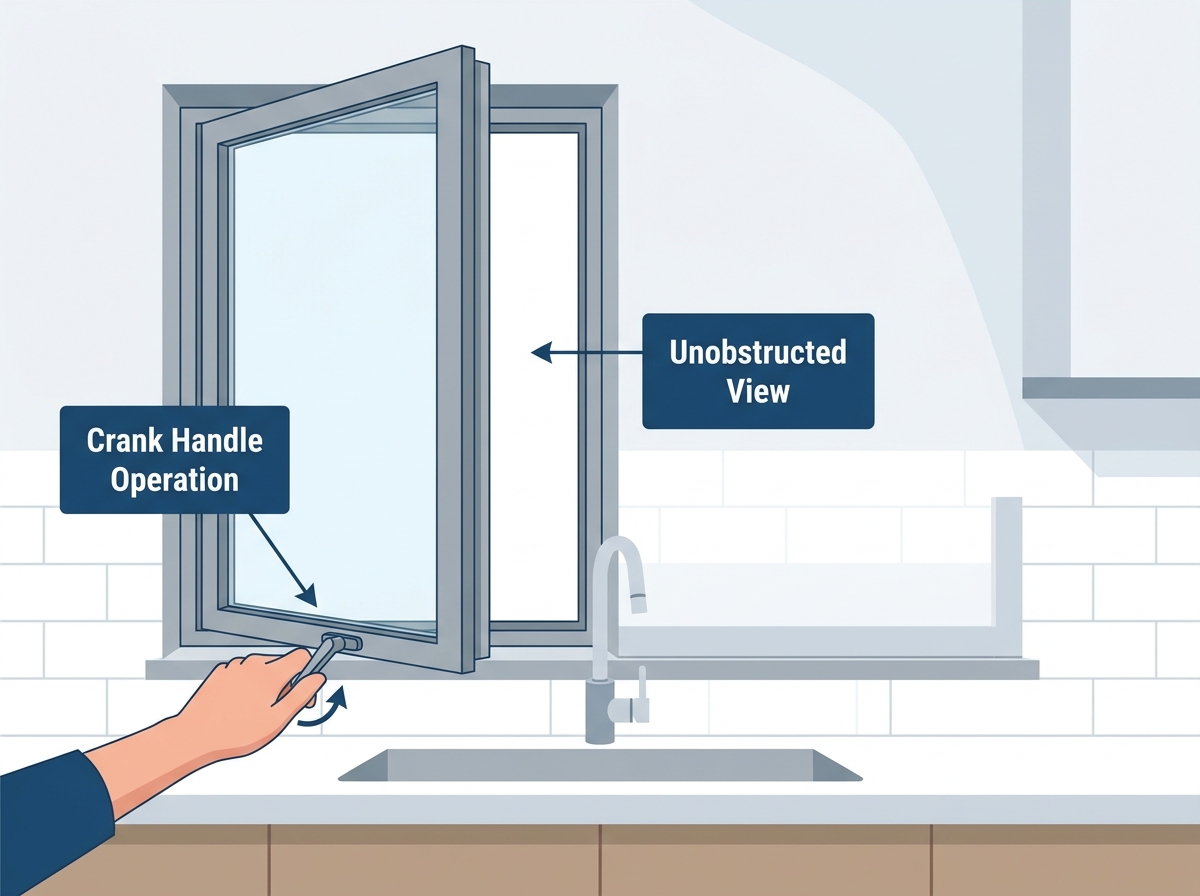
A defining characteristic of premium architectural fenestration is the ability to maximize natural light and provide expansive, uninterrupted views. You must ask the manufacturer how their frame designs minimize sightlines and maximize the glass area. A standout feature of the DAW Casement Windows, particularly in the double or French configurations, is that the design lacks a center meeting rail to provide unobstructed views. When both sashes are open, there is no vertical mullion obstructing the opening, creating a seamless connection between the interior space and the exterior environment. This sophisticated design requires highly engineered hardware and robust frame construction to maintain structural integrity without the support of a fixed center post.
The integration of insect screens and aesthetic grilles is an important consideration for many residential projects. You must ask the manufacturer how these elements are incorporated into the overall window design. Poorly designed screens can detract from the visual appeal of the window and impede operation, while poorly integrated grilles can look artificial and compromise the ease of cleaning. You should inquire about the materials used for the screens, the methods of attachment, and the variety of grille patterns available to complement different architectural styles.
The DAW Casement Windows offer highly refined solutions for these requirements. Screen options include an integrated fiberglass mesh for standard insect protection, or a robust stainless steel security mesh for enhanced safety and durability. These screens are designed to integrate seamlessly with the window frame, maintaining the clean lines of the design. Furthermore, for projects requiring specific architectural detailing, grille options include both internal and external configurations. These grilles can be specified in traditional Colonial patterns, elegant Prairie styles, or entirely custom geometric patterns to match the unique vision of the architect or homeowner. You must ask your potential manufacturing partners about the flexibility and quality of their screen and grille integration systems.
When specifying windows for a residential project, it is essential to consider the practical applications and ergonomic requirements of each specific room. You must ask the manufacturer if their products are suitable for the diverse environments found within a modern home. The DAW Casement Windows are engineered for exceptional versatility, making them highly suitable for a wide range of applications, including kitchens, bathrooms, living rooms, and bedrooms. Their robust construction and superior weather resistance ensure reliable performance in every area of the house.
Furthermore, the operational mechanics of the window must be evaluated in the context of its intended location. You should ask about the specific hardware designed to facilitate ease of use, particularly in challenging spatial configurations. The DAW Casement Windows address this need by featuring specialized crank handles for easy operation in tight spaces. This ergonomic hardware design is particularly beneficial for hard-to-reach areas, such as above sinks or deep countertops in kitchens and bathrooms, where traditional push-out or sliding mechanisms would be difficult to operate. When evaluating a manufacturer, you must consider these practical, user-centric design features.
For large-scale projects, commercial developments, or international builds, ensuring that the fenestration products meet rigorous global standards is absolutely essential. You must ask the manufacturer to provide comprehensive documentation of their certifications and compliance testing. This is not merely a bureaucratic formality; it is a critical verification of the product's safety, performance, and durability. You should inquire about their compliance with specific regional building codes and international quality management systems.
When you are assessing a potential window export supplier, the presence of recognized international certifications is a non-negotiable requirement. The DAW Casement Windows demonstrate their exceptional quality and global compliance by being fully certified to AS2047, CE, NFRC, and ISO9001 standards. The AS2047 certification ensures compliance with stringent Australian standards for windows in buildings, covering structural deflection, operating force, air infiltration, and water penetration. The CE mark indicates conformity with health, safety, and environmental protection standards for products sold within the European Economic Area. NFRC (National Fenestration Rating Council) certification provides verified, objective energy performance ratings. Finally, ISO9001 certification guarantees that the manufacturer operates under a rigorous, internationally recognized quality management system. You must demand this level of documented excellence from any manufacturing partner you consider.
Ultimately, selecting the right architectural fenestration requires a rigorous evaluation process focused on verifiable engineering data, material quality, and manufacturing precision. The DAW Casement Windows represent the pinnacle of modern window design, offering architects and homeowners an exceptional combination of structural integrity, energy efficiency, and aesthetic flexibility. By utilizing premium 6063-T5 Thermal Break Aluminum Alloy, advanced triple-seal EPDM gaskets, and sophisticated multi-point locking systems, these windows deliver outstanding weather resistance, security, and acoustic insulation up to 40-45 dB. With highly customizable glazing options, diverse finishing choices including custom RAL and wood grains, and versatile configurations featuring unobstructed views without a center meeting rail, they are perfectly suited for kitchens, bathrooms, living rooms, bedrooms, and hard-to-reach areas. Backed by comprehensive AS2047, CE, NFRC, and ISO9001 certifications, DAW Casement Windows provide the ultimate assurance of quality, making them the definitive choice for any premium residential or commercial building project demanding the highest standards of performance and design.


