
Views: 0 Author: Site Editor Publish Time: 2026-07-09 Origin: Site


The architectural demand for expansive glazing and minimal sightlines requires framing materials that can support immense weight without compromising structural integrity or building envelope efficiency. Modern building designs push the limits of glass sizes, forcing architects and builders to rethink standard fenestration choices. Commodity window materials like standard vinyl and entry-level wood often fail at scale. They result in warped frames, hardware degradation, and severe thermal bridging under demanding environmental conditions. These failures compromise both the aesthetic vision and the energy performance of the structure.
Differentiating standard aluminum extrusions from high quality aluminum windows requires a strict evaluation of several critical factors. You must analyze thermal engineering, hardware specifications, and finish durability to justify the capital investment. Upgrading to premium fenestration systems solves the structural limitations of basic materials. It also ensures long-term operational reliability for heavy, oversized glass panels. Understanding these engineering differences is essential for making informed procurement decisions on the job site.
Standard vinyl frames present significant structural limitations in modern construction. Vinyl has a high coefficient of thermal expansion. It expands and contracts rapidly under temperature fluctuations. This movement stresses the window seals and causes the frames to warp under intense UV exposure. Vinyl lacks the inherent rigidity required to support large, heavy glass panes. Manufacturers must reinforce vinyl with steel inserts, which increases bulk and defeats the goal of narrow sightlines. On a job site, you will often see vinyl frames bowing if left in direct sunlight before installation, a clear indicator of their structural weakness.
Wood frames offer traditional aesthetics but carry heavy maintenance burdens. Wood is highly susceptible to rot, mold, and insect damage in high-moisture or extreme weather environments. It requires constant scraping, painting, and sealing to maintain its integrity. When exposed to prolonged moisture, wood swells and binds, making windows difficult to operate. The ongoing maintenance demands make wood an impractical choice for large-scale, modern architectural projects where long-term durability is the priority. Field crews frequently spend excessive time adjusting wood sashes that have swelled from ambient site humidity.
Aluminum possesses an exceptionally high strength-to-weight ratio. This material property allows manufacturers to engineer ultra-narrow sightlines while maintaining massive structural capacity. High-grade aluminum easily supports the immense dead load of triple-pane or oversized acoustic glass. Architects can design floor-to-ceiling glass walls without relying on bulky mullions to hold the weight. The metal's rigidity ensures the frames remain stable and secure over decades of use, even when supporting glass units weighing several hundred pounds.
The baseline success criteria for modern window buyers focus on maximizing natural light and unobstructed views. However, this cannot come at the expense of structural safety. Premium aluminum systems meet these criteria perfectly. They deliver expansive glass areas while providing superior wind load resistance and enhanced security. You get the visual appeal of minimal framing alongside the structural confidence required for high-altitude or coastal applications. When framing rough openings, carpenters appreciate the predictable, rigid nature of aluminum frames compared to flexible alternatives.
High-end residential architecture now demands the performance metrics traditionally reserved for commercial buildings. High-quality aluminum systems translate heavy-duty commercial performance into residential-friendly designs. They offer high-traffic durability and maintain structural integrity under extreme wind loads. This crossover allows homeowners to utilize massive glass panels that were once exclusive to commercial storefronts and high-rise curtain walls. We see this constantly on modern residential builds where the glazing package rivals a mid-rise office building.
The transition from bulky commercial framing to ultra-slim residential fenestration requires precise engineering. Manufacturers have refined the extrusion profiles to hide structural reinforcements within the frame. This creates a sleek, minimalist appearance on the exterior and interior. The result is a highly engineered window system that handles commercial-level stress while fitting seamlessly into luxury residential aesthetics. Installers handle these units similarly to commercial storefronts, utilizing heavy-duty suction cups and specialized lifting equipment.
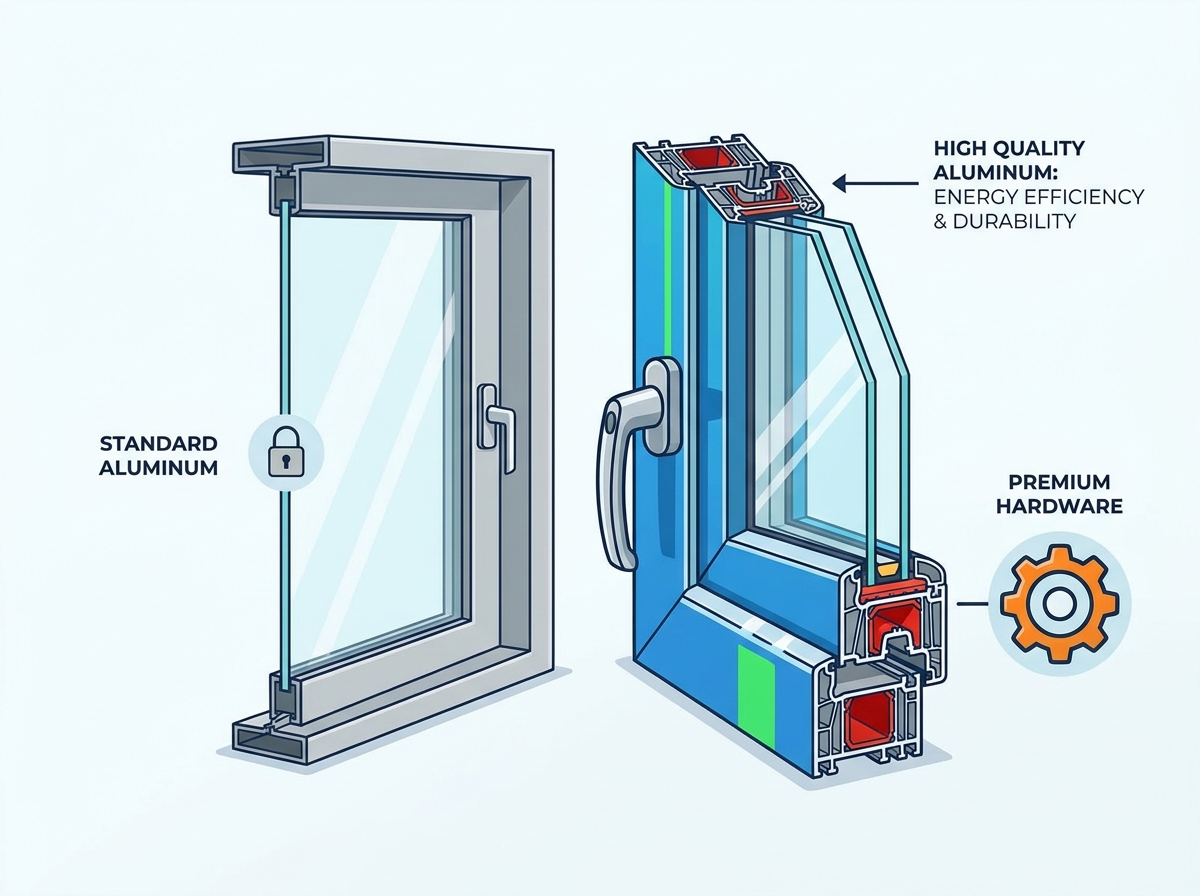
Modern aluminum systems rely on advanced polyamide thermal breaks to achieve energy efficiency. A thermal break is a structural, low-conductivity material placed between the interior and exterior aluminum profiles. It physically separates the metal components to stop the transfer of heat or cold. Without this barrier, aluminum acts as a thermal bridge, drawing outside temperatures directly into the building. Properly engineered thermal break windows neutralize this conductivity completely, keeping interior surfaces comfortable.
Evaluating window performance requires looking at specific standardized metrics. You must review the U-Factor, Solar Heat Gain Coefficient (SHGC), and air-tightness ratings. Look for ASTM E283 certified air infiltration benchmarks to ensure the system prevents drafts. Buyers should always demand NFRC (National Fenestration Rating Council) and AAMA certified performance data. Never rely solely on manufacturer marketing claims when assessing energy efficiency. Field testing often reveals that poorly manufactured thermal breaks fail under extreme temperature differentials.
Acoustic performance is another critical evaluation dimension. The structural rigidity of aluminum, combined with heavy acoustic glazing, achieves superior STC (Sound Transmission Class) ratings. The dense framing material prevents sound waves from vibrating through the window structure. When paired with asymmetrical laminated glass, these systems block urban noise pollution effectively, creating a quiet interior environment. We frequently specify these systems for builds near highways or flight paths.
The core strength of a window system depends heavily on extrusion wall thickness and the specific alloy grades used. Premium systems typically utilize 6063-T5 aluminum alloy. This grade provides the optimal balance of tensile strength and finishing characteristics. Thicker extrusion walls prevent the frame from twisting or deflecting under heavy wind loads. This structural rigidity is non-negotiable for large-format custom aluminum windows, which must remain perfectly square to operate.
Performance under demanding conditions requires strict evaluation of design pressure (DP) ratings and deflection limits. In hurricane-prone or high-altitude zones, the window must withstand massive positive and negative wind pressures without the glass blowing out or the frame buckling. High-quality aluminum maintains its shape and structural integrity far better than vinyl or wood under these extreme environmental stressors. Building inspectors will rigorously check these DP ratings against local wind load requirements.
Architectural customization relies entirely on the strength of the framing material. Aluminum supports curved profiles, oversized pivot doors, and massive multi-slide configurations. Alternative materials simply cannot support the weight or span the distances required for these designs. The rigidity of aluminum allows for limitless geometric configurations while maintaining smooth operation. When installing a 20-foot multi-slide door, the track must remain perfectly level, a feat only possible with heavy-duty aluminum extrusions.
Heavy glass requires commercial-grade hardware to function correctly over time. A single oversized sash can weigh several hundred pounds. Moving this mass smoothly requires premium window hardware. You need stainless steel multi-point locking systems, precision-bearing rollers, and heavy-duty hinges. These components distribute the weight evenly and prevent the mechanisms from grinding or failing under load. We have seen cheap rollers flatten out in less than a year on heavy sliding doors.
There is a direct correlation between cheap hardware and premature window failure. Substandard rollers will flatten under the weight of heavy glass, making sliding doors impossible to open. Weak hinges lead to sagging sashes, which compromise weather seals and create air leaks. Furthermore, inadequate locking mechanisms introduce severe security vulnerabilities. Investing in top-tier hardware ensures the window remains operable and secure for decades, reducing costly callbacks for the installation crew.
The longevity of an aluminum window's appearance depends entirely on the quality of its surface treatment. AAMA 2604 and AAMA 2605 are the industry standards for powder coating. AAMA 2605 offers the highest level of UV resistance and color retention, making it essential for buildings exposed to intense sunlight. It prevents the finish from chalking or fading over time. On job sites, we handle AAMA 2605 finished frames with care, knowing the finish is designed to last the life of the building.
For coastal environments, Class I anodized finishes are the superior choice. Anodizing is an electrochemical process that thickens the natural oxide layer on the surface of the aluminum. This finish provides exceptional resistance to salt-spray corrosion and pitting. It bonds at the molecular level, meaning it will never peel or flake off like standard paint. We mandate anodized finishes for any project within a mile of saltwater.
Thermally broken frames offer unique design flexibility through dual-color finishes. Because the interior and exterior profiles are separated by the polyamide break, they can be finished independently. You can select a dark bronze anodized exterior to match the building facade, while choosing a warm custom color or wood-grain finish for the interior. This flexibility allows the windows to complement both the exterior architecture and the interior design scheme.
| Finish Type | Best Application | Key Benefits | Durability Standard |
|---|---|---|---|
| High-Performance Powder Coat | High UV exposure areas | Excellent color retention, resists chalking | AAMA 2605 |
| Standard Powder Coat | Moderate climates, shaded areas | Good color variety, cost-effective | AAMA 2604 |
| Class I Anodized | Coastal and industrial environments | Maximum corrosion and salt-spray resistance | AAMA 611 |
Evaluating window costs requires a realistic comparison framework. High-end aluminum requires a larger initial budget compared to standard materials. However, this investment eliminates the 15-20 year replacement cycle typical of builder-grade vinyl. Vinyl degrades, warps, and loses its seal over time, forcing a complete and costly replacement. Aluminum systems routinely last 40 to 50 years, providing a much stronger long-term financial return. We advise clients to view fenestration as a permanent structural element rather than a replaceable fixture.
You must factor in the reduction of ongoing maintenance costs when calculating ROI. Aluminum frames do not require repainting, staining, or rot repair. They do not swell in the humidity or crack in the freezing cold. The operational savings over a 20-year period significantly offset the higher initial purchase price. The maintenance routine is generally limited to simple cleaning and hardware lubrication, which building maintenance teams appreciate.
The environmental and sustainability ROI of aluminum is substantial. Aluminum is infinitely recyclable without losing its structural properties. High-quality window systems often contain a high percentage of recycled content. This supports LEED certifications and aligns with low-carbon building designs. Choosing durable, recyclable materials reduces landfill waste and lowers the overall environmental impact of the construction project.
Commercial-grade aesthetics directly impact real estate appraisals and buyer appeal. Custom configurations like floor-to-ceiling curtain walls and massive bi-fold systems create a striking visual impact. They transform standard rooms into expansive, light-filled spaces. This level of architectural sophistication is highly sought after in the premium real estate market and increases the overall valuation of the property. Appraisers consistently note high-end fenestration as a major value driver.
The aesthetic versatility of aluminum maximizes panoramic glazing views. Ultra-slim profiles reduce the visual clutter of thick window frames. This seamless integration between indoor and outdoor spaces translates directly to premium market positioning. Buyers recognize the value of unobstructed views and the sleek, modern appearance that only high-strength aluminum can provide.
Heavy custom aluminum windows demand rigorous structural planning. Framing headers and building structures must be specifically engineered to support the immense dead load of the system. Large glass panels combined with heavy metal frames exert significant downward pressure. If the header is not adequately reinforced, it will sag over time. Header sag transfers weight directly onto the window frame, causing operational binding and eventual glass failure. We always verify header deflection limits with the structural engineer before ordering oversized units.
Poor installation will ruin even the highest-grade aluminum systems. Aluminum frames require exact, plumb, and square openings. Because the material is rigid, it will not flex or forgive a poorly framed rough opening. Forcing an aluminum window into an out-of-square opening twists the frame, breaks the thermal seals, and misaligns the locking hardware. Installers must use precise laser levels and high-density shims to ensure perfect alignment.
Advanced flashing techniques are an absolute necessity. Aluminum does not absorb water, but its profile geometries will channel water into the building envelope if improperly sealed. Installers must use liquid-applied membranes and sloped sill pans to manage water drainage. Proper integration with the building's weather-resistant barrier prevents catastrophic water intrusion and hidden wall rot. We mandate a continuous bead of high-grade silicone sealant behind the nailing flange on all installations.
Scrutinizing warranties is a critical step in the procurement process. You must look for separate coverage timelines for different components. The aluminum extrusion, the insulated glass unit (IGU) seal, the hardware, and the surface finish often carry different warranty lengths. A lifetime warranty on the extrusion means nothing if the glass seal fails after five years and is not covered. Always read the fine print regarding labor coverage for replacing defective parts.
Watch out for restrictive warranty clauses. Many manufacturers void warranties if the building is located within a certain distance of the coast, unless a specific marine-grade finish was applied. Furthermore, warranties are frequently voided if the installation is performed by uncertified contractors. Always verify that your installer meets the manufacturer's certification requirements to protect your investment.
High quality aluminum windows represent the definitive choice for modern, large-scale glazing, provided that buyers strictly verify thermal break engineering and hardware specifications. To ensure a successful project, follow these actionable steps:
A: Yes, provided they are engineered with advanced polyamide thermal breaks and paired with low-E, argon-filled double or triple glazing to achieve low U-factors and meet strict modern energy codes.
A: Custom aluminum offers a lifespan that is often double or triple that of standard vinyl. While requiring a higher initial investment, aluminum yields a better long-term financial return by eliminating frequent replacement cycles.
A: A structural, low-conductivity material (usually polyamide) placed between the interior and exterior aluminum profiles to prevent the transfer of heat or cold through the frame.
A: With proper installation and premium window hardware, high-quality aluminum frames routinely last 40 to 50 years with minimal degradation.
A: Older, non-thermally broken aluminum windows do. Modern thermal break windows eliminate the cold interior surface temperatures that cause condensation to form.
A: Minimal maintenance is required; typically, a biannual cleaning with mild soap and water, alongside routine lubrication of the hardware.


