
Views: 0 Author: Site Editor Publish Time: 2026-07-22 Origin: Site


Entryway energy loss has a measurable and immediate impact on residential and commercial HVAC efficiency. Drafts and conductive heat transfer directly degrade indoor thermal comfort. This forces heating and cooling systems to work harder and inflates monthly utility bills. For years, property owners faced a frustrating historical compromise. They had to choose between the structural durability and sleek aesthetics of metal frames or the optimal thermal insulation provided by bulkier, less durable materials.
Advancements in thermal break technology and precision engineering have completely transformed this landscape. The modern exterior aluminum door has evolved from a conductive liability into a top-tier choice for energy-efficient, high-performance entryways. By integrating advanced insulating polymers and supporting heavy, high-efficiency glass packages, these systems now offer uncompromising strength alongside exceptional climate control.
Thermal bridging occurs when continuous conductive materials transfer exterior temperatures directly to the interior of a building. Because standard aluminum is a highly conductive metal, an unbroken frame acts as a thermal highway. During winter, the cold outside temperature travels through the metal frame. This creates cold spots and localized drafts indoors. In summer, the reverse happens, with exterior heat radiating inside. This continuous energy drain forces HVAC systems to run longer cycles to maintain a stable indoor climate. I have seen standard aluminum frames literally frost over on the inside during a Minnesota winter. The metal simply pulls the freezing temperatures right past the weatherstripping.
To stop this, you have to break the conductive path. You cannot just add more weatherstripping to a solid metal frame. The frame itself is the leak. When you touch a non-thermally broken frame in January, it feels like ice. That physical cold surface pulls heat out of the room constantly. It also creates a convection loop. Warm air hits the cold metal, cools down, drops to the floor, and creates a draft even if the door is perfectly sealed.
Traditional door frames, particularly wood, are highly susceptible to environmental changes. Moisture absorption causes wood to swell during humid months and contract during dry periods. This constant cycle of expansion and contraction permanently compromises the alignment of the door sash within the frame. Once the geometry shifts, weatherstripping loses its tight compression. The result is severe air leakage, allowing unconditioned outside air to bypass the door's seals entirely.
When a wooden door swells, it binds in the jamb. Homeowners often plane the edges down to make it close. Then winter comes, the air dries out, the wood shrinks, and suddenly you have a quarter-inch gap letting cold air pour in. You cannot achieve long-term energy efficiency with a material that changes size based on the weather. Dimensional stability is the foundation of an airtight seal.
Air infiltration and drafty entryways directly degrade occupant comfort. When a door leaks air or radiates cold temperatures through thermal bridging, the immediate perimeter becomes uncomfortable. Spaces near the door often become unusable during extreme weather conditions. Eliminating these drafts maintains a uniform indoor temperature and ensures every square foot of a room remains comfortable year-round.
Comfort is not just about the air temperature on the thermostat. It involves radiant temperature. If you sit next to a cold piece of glass or a freezing metal frame, your body radiates heat toward that cold surface. You feel chilly even if the room air is 72 degrees. High-performance entryways keep the interior surfaces close to room temperature, stopping that radiant heat loss.
To evaluate energy efficiency accurately, buyers must rely on standardized metrics rather than marketing claims. The primary metric is the U-Factor, which measures the rate of heat transfer through the entire door assembly. A lower U-Factor indicates superior insulation performance. Additionally, the Solar Heat Gain Coefficient (SHGC) measures how much solar radiation passes through the glass. Balancing these two metrics based on regional climate demands ensures the entryway performs optimally.
| Climate Zone | Recommended U-Factor | Recommended SHGC | Primary Goal |
|---|---|---|---|
| Northern (Heating Dominated) | 0.30 or lower | 0.35 to 0.60 | Retain indoor heat, allow passive solar gain |
| Mixed (Heating & Cooling) | 0.30 or lower | 0.25 to 0.30 | Balance heat retention and solar blocking |
| Southern (Cooling Dominated) | 0.30 or lower | 0.25 or lower | Block solar heat gain, retain air conditioning |
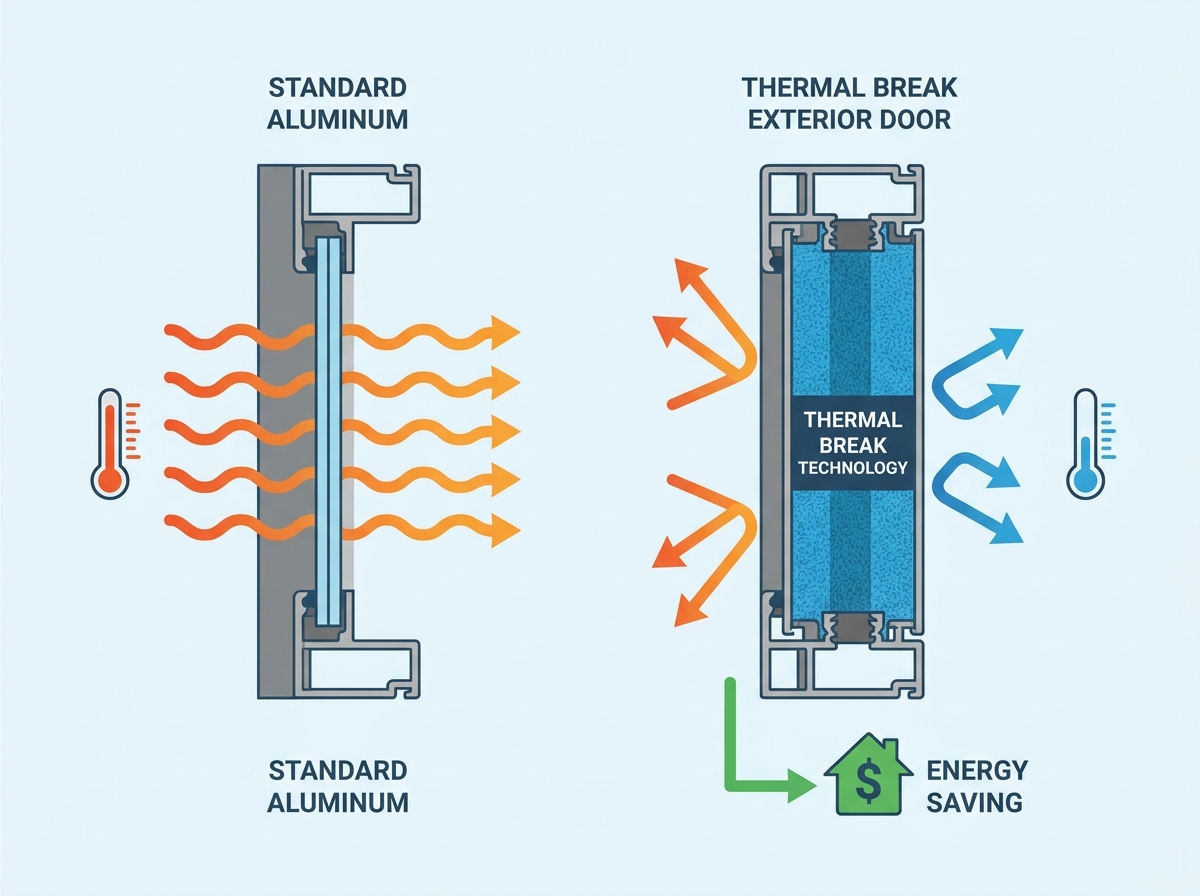
The defining feature of thermal break exterior doors is the integration of a rigid, non-conductive structural polymer, typically polyamide. Manufacturers extrude the inner and outer aluminum profiles separately and then mechanically crimp them together with the polyamide strut in the middle. This strut physically separates the exterior metal from the interior metal, halting thermal bridging. The barrier effectively prevents outside cold or heat from traveling through the frame to the interior surface.
Polyamide is used because its coefficient of thermal expansion is nearly identical to aluminum. When the door heats up in the summer sun, the metal and the plastic strut expand at the same rate. This prevents the frame from shearing or warping. Cheaper doors might use pour-and-debridge polyurethane, but polyamide struts offer better structural integrity and allow for wider thermal breaks. A wider break means better insulation.
An energy-efficient frame requires equally efficient glass. Aluminum’s inherent strength allows the frame to hold heavy, thick glass packages without structural deflection. These advanced glazing units often feature double or triple panes, Low-E (low-emissivity) coatings, argon or krypton gas fills, and warm-edge spacers. The rigid aluminum frame ensures these heavy insulated glass units remain perfectly supported, preventing the seals from failing prematurely due to frame sagging.
Glass makes up the vast majority of the surface area on patio and terrace doors. If you put cheap glass in a great frame, you still lose energy. Low-E coatings reflect interior heat back into the room during winter and bounce solar radiation away during summer. Argon gas between the panes slows down convective heat transfer. Warm-edge spacers replace highly conductive aluminum spacers between the glass panes, reducing condensation at the edges of the glass.
Large-format sliding, patio, and terrace doors present unique challenges for air leakage. Precision aluminum extrusions allow for the integration of complex, multi-point locking systems. When engaged, these locks pull the door panel tightly against highly compressed EPDM gaskets along the entire perimeter. This engineered compression prevents air leakage and achieves airtight performance in expansive modern exterior doors.
Standard single-point deadbolts only secure the center of the door. The top and bottom corners can still flex outward under heavy wind loads, breaking the weather seal. Multi-point locks throw hooks or bolts at the top, middle, and bottom of the active panel simultaneously. This forces the entire sash evenly into the weatherstripping. EPDM rubber is used because it stays flexible in freezing temperatures and does not crack under UV exposure.
Mitigating temperature transfer does more than save energy; it prevents interior frame condensation. When warm, moist indoor air hits a cold, non-thermally broken metal frame, water droplets form. Over time, this condensation drips down, damaging surrounding drywall, rotting wooden subfloors, and promoting mold growth. Thermal breaks keep the interior aluminum profile close to room temperature, completely eliminating the conditions that cause condensation.
I have replaced countless wooden subfloors beneath old aluminum sliding doors. The constant winter condensation runs down the frame, pools on the sill, and seeps into the floor joists. By the time the homeowner notices the soft spot in the floor, the rot is extensive. A thermally broken frame stops this moisture generation at the source.
| Material | Structural Stability | Thermal Performance | Maintenance Requirements |
|---|---|---|---|
| Wood | Prone to warping and swelling | Good natural insulation | High (requires frequent sealing/painting) |
| Vinyl | Prone to thermal expansion/sagging | Excellent insulation | Low |
| Fiberglass | High stability | Excellent insulation | Low to Medium |
| Thermally Broken Aluminum | Exceptional strength and rigidity | Excellent (with polyamide break) | Virtually Zero |
Wood offers traditional aesthetics and natural insulation but carries high maintenance requirements. It absorbs moisture, leading to rot, warping, and peeling paint. In contrast, aluminum is dimensionally stable and impervious to moisture. It requires no sanding, staining, or repainting, maintaining its structural integrity and weather-tight seal without the constant upkeep demanded by timber frames.
If you install a wood door facing south or west without a deep overhang, the sun will destroy the finish within two years. The joints will open up, and water will get in. Aluminum does not care about sun exposure. The powder-coated finish bakes on at the factory and stays intact for decades.
Fiberglass provides excellent natural insulating properties and resists warping better than wood. However, aluminum offers superior structural capacity, allowing for much narrower frame profiles. These slim sightlines maximize natural light and deliver the minimalist architectural appeal required for contemporary designs. Aluminum can also support significantly larger and heavier glass panels than fiberglass.
When architects design modern homes, they want massive walls of glass with barely visible frames. Fiberglass cannot achieve those ultra-thin sightlines without compromising structural integrity. Aluminum extrusions can be engineered to hold 500-pound triple-pane glass units while keeping the vertical mullions incredibly narrow.
Vinyl doors are highly insulating and budget-friendly, but they are vulnerable to extreme temperatures. Under intense UV exposure and high heat, vinyl is prone to thermal expansion, warping, and degradation. Aluminum maintains its precise structural shape in extreme heat and freezing cold, ensuring the door operates smoothly and seals tightly regardless of the climate.
Dark-colored vinyl is especially problematic. It absorbs solar heat and can actually warp permanently on a hot summer day. The extrusions soften and bow. Once a vinyl door bows, it will never seal correctly again. Aluminum can be painted jet black and sit in the Arizona sun all day without losing a millimeter of structural rigidity.
Steel provides excellent security but is highly conductive and vulnerable to rust and denting, especially in damp environments. Aluminum possesses natural corrosion resistance, making it ideal for wet or coastal areas. Furthermore, aluminum systems utilize advanced thermal break technologies that far exceed the insulating capabilities of standard steel doors.
Steel doors are usually stamped from thin sheets and filled with foam. If the paint scratches, the steel rusts immediately. The bottom edges of steel doors frequently rust out where they meet the wet sill. Aluminum forms a natural oxide layer that prevents corrosion, even if the powder coating gets scratched on a job site.
When subjected to harsh environments, materials reveal their true durability. Weather resistant aluminum doors excel in high-humidity regions, coastal areas with salt air, and zones experiencing extreme freeze-thaw cycles. While wood rots and vinyl cracks under these conditions, aluminum resists structural degradation, ensuring the building envelope remains secure and insulated year after year.
In coastal environments, salt spray eats through standard hardware and finishes rapidly. High-grade aluminum extrusions paired with stainless steel multi-point locking hardware provide the only reliable defense. The material simply does not degrade when exposed to driving rain and salt.
The visual appeal of an entryway must endure the elements. High-grade architectural finishes, such as powder coating and anodizing, bond directly with the aluminum surface. These treatments resist fading, chalking, scratching, and blistering under intense UV rays. This finish durability preserves the sleek, modern aesthetic of the door over its entire lifespan with minimal cleaning required.
Anodizing actually changes the molecular structure of the aluminum surface, creating an incredibly hard, wear-resistant finish. Powder coating applies a dry powder that is cured under heat to form a skin much tougher than conventional paint. You can wash these doors with a hose and a soft brush, and they look brand new.
A door that sags or swells becomes difficult to operate and impossible to seal. Aluminum's absolute resistance to moisture swelling ensures the frame and sash remain perfectly square. The door continues to open, close, and lock smoothly without sticking or dragging on the threshold. This permanent operational alignment guarantees that the weatherstripping maintains optimal compression against drafts.
Heavy glass units put immense stress on door hinges and rollers. If the frame material is weak, the door will eventually sag out of square. You will see the top corner rubbing against the jamb. Aluminum's rigidity holds the heavy glass perfectly square, keeping the weight distributed evenly across the heavy-duty rollers or hinges.
The initial investment in high-performance entryways pays dividends through sustained energy conservation. By eliminating drafts, preventing frame warping, and halting thermal bridging, these doors directly reduce the daily load on heating and cooling systems. Property owners avoid the repetitive costs of refinishing and bypass the early replacement cycles associated with inferior materials.
A cheap door costs you money every single month on your utility bill. It also costs you weekends spent sanding and painting. When you install a thermally broken aluminum system, you stop the energy bleed permanently. The door performs exactly the same on day one as it does on day ten thousand.
A major risk for buyers is purchasing cheap, non-thermally broken aluminum doors that are deceptively marketed for exterior use. These inferior products lack the internal polyamide barrier. Installing a continuous aluminum frame in a climate-controlled building guarantees severe energy loss and interior condensation. Buyers must explicitly verify the presence of a structural thermal break before specifying an aluminum door.
You can usually spot a fake by looking at the cross-section of the frame. If it is solid metal from the outside to the inside, it is not thermally broken. Do not trust a salesperson who says the frame is "foam filled" if there is no physical separation between the inner and outer metal extrusions. Foam inside a continuous metal tube does nothing to stop thermal bridging.
Even the most advanced thermal break exterior doors will fail if installed incorrectly. If the frame is set out of plumb or out of square, the multi-point locks will not engage properly, and the gaskets will not compress. Furthermore, the rough opening must be sealed with proper flashing, sill pans, and expanding low-pressure foam insulation. Poor installation negates the engineered efficiency of the door system.
Selecting the correct door configuration requires attention to local building codes and regional climate demands. In heating-dominated Northern climates, maximizing passive solar gain with a higher SHGC and prioritizing a low U-Factor is critical. In cooling-dominated Southern climates, low SHGC glazing is necessary to block solar heat. Buyers must select the glass-to-frame ratio and glazing coatings that align with their specific environmental requirements.
Building inspectors are increasingly strict about energy codes. If you order a door with the wrong NFRC ratings for your specific climate zone, you might fail your final inspection. Always check your local energy code requirements before finalizing the glass specifications with the manufacturer.
Take the following steps to upgrade your entryway:
A: Thermally broken aluminum doors are not cold to the touch indoors. Integrated polyamide thermal breaks physically isolate the interior metal extrusion from the freezing exterior temperatures. This barrier stops heat transfer, keeping the inside frame comfortable to the touch and preventing condensation.
A: A thermal break is a continuous barrier of non-conductive material, usually a rigid polyamide polymer, positioned between the inner and outer aluminum frames. It separates the metal profiles to stop conductive heat transfer, vastly improving the door's insulation capabilities.
A: While vinyl and fiberglass offer high natural insulation, thermally broken aluminum matches their efficiency while providing superior structural capacity. Aluminum can hold heavier, highly insulated double or triple glazing packages without warping, sagging, or expanding under extreme temperatures.
A: No. Unlike wood, which requires frequent sanding, staining, and painting, aluminum doors feature highly durable powder-coated or anodized finishes. They resist rust, fading, and peeling, requiring only occasional cleaning with mild soap and water to maintain their appearance.
A: You should look for baseline NFRC rating recommendations based on your specific climate zone. Generally, for cold, heating-dominated climates, aim for a U-factor of 0.30 or lower to ensure maximum insulation and energy retention.
A: Yes. By eliminating air leaks, preventing frame warping, and stopping thermal bridging, these doors significantly reduce the workload on your HVAC system. This improved thermal envelope directly translates to lower monthly heating and cooling costs.


