
Views: 0 Author: Site Editor Publish Time: 2026-08-06 Origin: Site


When architects and homeowners evaluate building materials for modern construction or renovation projects, the choice of fenestration plays a pivotal role in the overall energy efficiency and comfort of the structure. Among the most significant advancements in building technology is the development of thermally broken aluminum windows, which have revolutionized how we approach insulation in residential and commercial spaces. Historically, standard aluminum frames were prized for their structural integrity, sleek profiles, and incredible durability, but they suffered from one major flaw: aluminum is a highly conductive material. This meant that standard frames easily transferred heat and cold between the interior and exterior environments, leading to significant energy loss and condensation issues. Today, the comparison between thermally broken aluminum windows and standard aluminum windows for insulation is a critical topic for anyone looking to optimize their building's thermal envelope. By integrating advanced materials and engineering principles, modern window systems can provide the aesthetic and structural benefits of metal without the associated thermal penalties.
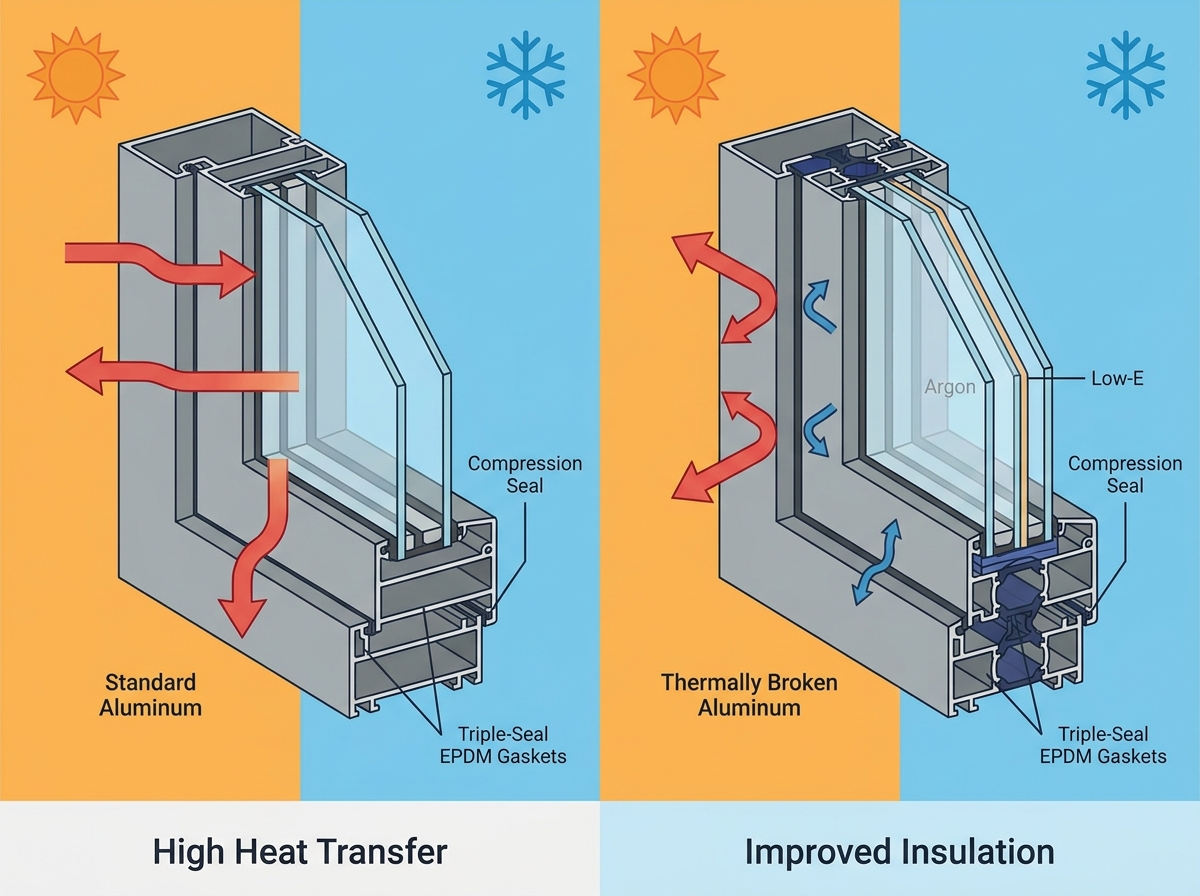
To fully appreciate the leap in performance, it is essential to understand the fundamental physics of heat transfer as it applies to building envelopes. Heat moves through materials via conduction, convection, and radiation. In standard aluminum frames, conduction is the primary culprit for energy inefficiency. During cold winter months, the warm air inside a building comes into contact with the cold interior surface of the standard aluminum frame. Because the continuous metal acts as a thermal bridge, the heat is rapidly conducted to the exterior and lost to the environment. Conversely, during hot summer months, the intense heat from the sun warms the exterior frame, and that heat is conducted straight into the air-conditioned interior. This continuous battle against thermal bridging forces heating, ventilation, and air conditioning (HVAC) systems to work significantly harder, leading to elevated utility bills and a larger carbon footprint. The introduction of thermal break technology was specifically engineered to interrupt this conductive pathway, fundamentally changing the performance characteristics of metal fenestration.
The core difference between these two types of fenestration lies in their internal construction. Standard aluminum frames are extruded as a single, continuous piece of metal. While this makes them incredibly strong and relatively inexpensive to manufacture, it leaves them completely vulnerable to thermal bridging. In stark contrast, thermally broken frames are manufactured using a much more complex process. The aluminum extrusion is split into two separate sections—an interior profile and an exterior profile. These two distinct metal components are then mechanically joined together using a structural, low-conductivity material, most commonly a polyamide plastic strut or a poured-and-debridged polyurethane resin. This non-metallic barrier is the "thermal break." By physically separating the interior metal from the exterior metal, the thermal break effectively severs the conductive pathway, drastically reducing the amount of heat that can pass through the frame.
The impact of this engineering modification cannot be overstated. When comparing the insulation values of standard versus thermally broken systems, the difference is night and day. The thermal resistance of a window frame is typically measured by its U-factor (or U-value), which quantifies the rate of heat transfer. A lower U-factor indicates better insulation performance. Standard aluminum frames typically have very high U-factors, making them unsuitable for regions with extreme temperature variations or stringent energy codes. On the other hand, frames equipped with a thermal break can achieve U-factors that rival or even surpass those of high-quality wood or vinyl frames. This makes thermal break windows an ideal solution for projects that demand both the slim sightlines and structural rigidity of metal, alongside top-tier energy performance.
Beyond simple heat transfer, condensation resistance is another critical area where standard and thermally broken frames diverge. Condensation occurs when warm, moist interior air comes into contact with a surface that is below the dew point temperature. Because standard aluminum frames conduct cold so efficiently, their interior surfaces frequently drop below the dew point during winter, leading to water droplets forming on the frame. Over time, this condensation can cause severe damage to interior finishes, promote the growth of mold and mildew, and degrade indoor air quality. Thermally broken frames, by virtue of their insulating barrier, maintain an interior surface temperature that is much closer to the ambient room temperature. This significantly reduces the likelihood of condensation forming, thereby protecting the building's interior and ensuring a healthier living environment for the occupants.
Delving deeper into the mechanics of thermally broken aluminum windows reveals a sophisticated interplay of materials and structural engineering. The polyamide struts used in high-quality thermal breaks are often reinforced with glass fibers to ensure they can withstand the immense structural loads and thermal expansion stresses that windows experience over their lifespan. Because aluminum and polyamide have different coefficients of thermal expansion, the mechanical crimping process used to join them must be incredibly precise. The strut is rolled into specialized grooves in the aluminum profiles, and the metal is then knurled and crimped tightly around the plastic, creating a composite profile that acts as a single structural unit while maintaining its thermal isolation properties.
This composite nature allows manufacturers to offer dual-color or "split-finish" options, which is a significant aesthetic advantage. Because the interior and exterior aluminum profiles are painted or anodized before they are joined by the thermal break, a window can feature a weather-resistant, dark architectural finish on the outside, while boasting a light, neutral color on the inside to match the interior decor. This level of customization is highly sought after in contemporary architecture, where exterior facade requirements often clash with interior design palettes. Furthermore, the thermal break cavity itself can be optimized. In some advanced systems, the space between the polyamide struts is filled with additional insulating foam, further reducing convection currents within the frame and pushing the thermal performance to even higher levels.
While the frame is a critical component of a window's overall thermal performance, the glazing (the glass itself) typically makes up the vast majority of the window's surface area. Therefore, evaluating thermally broken aluminum windows vs standard aluminum windows for insulation must also include a thorough discussion of the glass packages they accommodate. A high-performance frame paired with single-pane glass will still result in a poorly insulated window. To maximize energy efficiency, modern thermally broken frames are designed to hold thick, multi-pane insulated glass units (IGUs). The synergy between an advanced frame and an advanced glass package is what ultimately determines the fenestration's total U-factor and Solar Heat Gain Coefficient (SHGC).
One of the most important advancements in glazing technology is the development of low-emissivity coatings. These microscopically thin, transparent metallic layers are applied to the surface of the glass to reflect radiant heat. In cold climates, Low-E glass windows reflect the interior heat back into the room, preventing it from escaping through the glass. In hot climates, the coating reflects the sun's solar radiation away from the building, keeping the interior cool and reducing the load on air conditioning systems. When combined with a thermally broken frame, Low-E glass creates a formidable barrier against thermal transfer, ensuring year-round comfort regardless of the exterior weather conditions.
Furthermore, the space between the panes of glass in an insulated glass unit plays a crucial role in insulation. Instead of just trapping regular air, high-performance windows often fill this space with inert gases like argon or krypton. These gases are denser than air and have lower thermal conductivity, meaning they are much less effective at transferring heat. The use of double glazed aluminum windows filled with argon gas, combined with a thermally broken frame and Low-E coatings, represents the standard for modern energy-efficient construction. For even more extreme climates or stringent acoustic requirements, triple glazing can be utilized. The robust nature of thermally broken aluminum frames makes them perfectly suited to support the significant weight of triple-pane glass units, something that weaker framing materials might struggle with over time.
Insulation is not just about preventing heat transfer through the solid materials of the window; it is also about preventing air leakage around the operable sashes. Drafts can severely compromise the energy efficiency of a building, rendering even the best glass and frame materials ineffective. This is where advanced weather stripping and sealing technologies come into play. High-quality thermally broken aluminum windows utilize sophisticated gasket systems to create an airtight and watertight seal when the window is closed.
The design of the window style also impacts its sealing capabilities. Compression-seal windows, such as casements and awnings, inherently provide better air infiltration resistance than sliding windows. When a casement window is closed and locked, the sash is pulled tightly against the frame, compressing the weather stripping and eliminating gaps. This mechanical action ensures a continuous seal around the entire perimeter of the opening. The combination of a thermally broken frame, high-performance glazing, and superior compression sealing results in a fenestration product that offers uncompromising insulation, acoustic control, and weather resistance.
When examining specific products that embody the principles of advanced insulation and structural integrity, DAW Casement Windows serve as an excellent example of modern fenestration engineering. These custom aluminum casement windows are meticulously designed to maximize both aesthetic appeal and environmental performance. Constructed from high-grade 6063-T5 Thermal Break Aluminum Alloy, the frames provide exceptional strength while effectively interrupting the conductive thermal pathways that plague standard aluminum windows. This specific alloy is renowned for its architectural applications, offering the perfect balance of extrudability, surface finish quality, and mechanical properties necessary for long-lasting window frames.
The insulation capabilities of DAW Casement Windows are further enhanced by their comprehensive approach to sealing and glazing. The windows utilize Triple-seal EPDM Gaskets, which are highly resistant to weathering, ozone, and UV exposure. When the outswing sash is closed, these gaskets form a robust compression seal that creates an airtight and weather-resistant barrier, virtually eliminating drafts and water infiltration. To complement the thermally broken frame, the system accommodates a variety of high-performance glass options, including Double or Triple Glazing, Low-E coatings, Argon-filled cavities, and Tempered safety glass. This combination of frame and glass technology ensures that the windows meet rigorous energy efficiency demands.
Beyond thermal insulation, the robust construction and advanced sealing of these windows provide remarkable acoustic benefits. DAW Casement Windows boast a Sound Transmission Class (STC) Rating of up to 40-45 dB. This level of sound insulation is highly effective at blocking out disruptive exterior noises, such as heavy traffic, construction, or neighborhood disturbances, creating a serene and quiet indoor environment. This makes them particularly valuable in urban settings or homes located near busy thoroughfares where noise pollution is a significant concern.
The functional design of DAW Casement Windows is tailored to enhance the user experience and the living environment. The fully opening sash provides maximum ventilation by catching side breezes and directing fresh air into the home. Furthermore, the lack of a center meeting rail provides an uninterrupted view of the outdoors, maximizing natural light and visual connection to the surrounding landscape. The outswing opening type (available as left or right side hinged) ensures that the interior space is not compromised when the window is open. For specific architectural requirements, inswing options are available upon request.
Operation is made simple and ergonomic through the use of crank handles, which allow for effortless opening and closing even in tight spaces or hard-to-reach areas. Security is also a paramount feature, addressed by a sophisticated Multi-point Security Locking system that secures the sash at multiple points along the frame with a single motion of the locking lever. For added protection against pests, the windows can be equipped with an optional integrated fiberglass mesh or a heavy-duty stainless steel security mesh that protects against insects without significantly obstructing the view or airflow.
Aesthetically, DAW Casement Windows offer extensive customization to match any architectural style. They are available in popular contemporary finishes such as Matte Black, Anthracite Grey, and Classic White, as well as custom RAL colors to meet specific design palettes. For those who desire the traditional warmth of timber without the associated maintenance, the windows feature heat-transfer wood grain technology, which offers the look of wood with the durability of aluminum. Additionally, the windows can be customized with decorative grilles, including Colonial, Prairie, or custom geometric patterns, and are available in various configurations such as Single Casement, Double / French Casement, and Push-Out Casement variants.
The specific features of DAW Casement Windows make them ideally suited for various applications throughout a home or commercial building. They are particularly effective in kitchens and bathrooms for ventilation, where rapidly clearing moisture and odors is essential. Their ability to provide expansive, unobstructed sightlines makes them perfect for living rooms and bedrooms for scenic views. Furthermore, the ergonomic crank operation makes them the ideal choice for placement above sinks or countertops for easy crank operation, where reaching to lift a traditional double-hung window would be difficult and uncomfortable.
The quality, performance, and safety of these windows are backed by a suite of rigorous international certifications. They are certified to AS2047 standards, ensuring compliance with strict Australian requirements for windows in buildings. They carry the CE mark, indicating conformity with health, safety, and environmental protection standards for products sold within the European Economic Area. Furthermore, they are NFRC certified, providing reliable and objective energy performance ratings, and are manufactured in facilities that adhere to ISO9001 quality management standards, ensuring consistent manufacturing excellence and product reliability.
DAW Casement Windows represent a premier fenestration solution, combining the structural durability of 6063-T5 Thermal Break Aluminum Alloy with advanced triple-seal EPDM gaskets and multi-point locking systems to deliver exceptional thermal insulation, an STC rating of up to 40-45 dB for superior soundproofing, and effortless crank-handle operation. With customizable aesthetic options including heat-transfer wood grain technology, varied color palettes, and versatile configurations like French or Push-Out casements, these fully opening, outswing windows provide maximum ventilation and uninterrupted views, making them an incredibly practical, secure, and energy-efficient choice perfectly suited for kitchens, bathrooms, living rooms, and hard-to-reach areas above countertops.


