
Views: 0 Author: Site Editor Publish Time: 2026-07-25 Origin: Site


Selecting the right entryway requires balancing structural integrity, weather resistance, and architectural aesthetics. Aluminum has become the standard in residential and commercial architecture due to its exceptional strength-to-weight ratio. This material supports massive glass expanses and minimal sightlines that other materials simply cannot handle. However, historical skepticism remains regarding its high thermal conductivity and potential for condensation. Precise specification is necessary to avoid energy loss and structural failure.
This guide serves as a technical roadmap for evaluating material grades, thermal technologies, safety ratings, and structural configurations. You will learn how to select an exterior aluminum door that meets strict building codes while fulfilling modern aesthetic requirements. We will cover thermal management, weather resistance, and installation precision to ensure long-term performance.
A high-performance entryway must meet specific baseline requirements. These include structural rigidity, minimal maintenance, architectural alignment, and robust security. Aluminum excels in these areas when engineered correctly. It provides a stable framework that resists environmental degradation while supporting heavy, energy-efficient glazing. When you evaluate an entryway system, you must look at how the frame handles dead loads, wind loads, and daily operational stress.
When comparing aluminum to steel and wrought iron, weight and corrosion resistance are primary factors. Aluminum will not rust like steel or iron. This makes it vastly superior for wet and coastal climates where salt spray destroys ferrous metals rapidly. The structural weight advantage of aluminum reduces strain on hinges and structural framing, extending the lifespan of the operating hardware. Steel does offer ultimate ballistic-level security, but it comes with a massive weight penalty and requires constant maintenance to prevent rust.
Evaluating aluminum against fiberglass and wood reveals distinct trade-offs. Aluminum offers superior dimensional stability. It experiences no warping, swelling, or rotting regardless of moisture exposure. Wood doors require constant sealing, painting, and adjustment as they expand and contract with seasonal humidity changes. Furthermore, aluminum supports modern, minimalist sightlines that wood and fiberglass cannot structurally achieve without failing under wind loads. The extrusion process allows manufacturers to create complex profiles that interlock perfectly, providing superior weather sealing compared to traditional wood joinery.
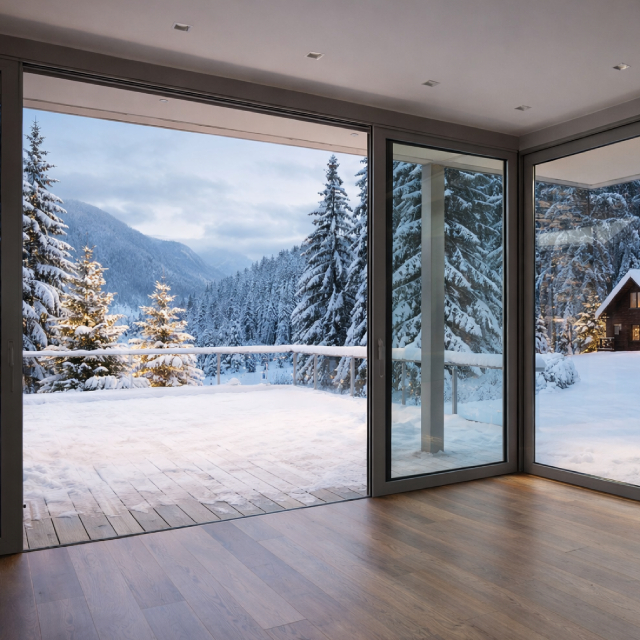
The physics of aluminum present a significant thermal bridging problem. Aluminum is a highly conductive metal. Continuous metal frames transfer exterior temperatures directly indoors. This leads to massive energy loss and interior condensation during cold weather. To solve this, manufacturers engineer thermal break exterior doors. Without this technology, an aluminum frame will sweat in the winter, leading to water damage on interior floors and walls.
Structural polyurethane or polyamide struts are extruded between the interior and exterior aluminum profiles. This physical separation severs the thermal bridge entirely. Heat and cold can no longer travel through the frame. Polyamide is particularly effective because its coefficient of thermal expansion closely matches that of aluminum, preventing the frame from shearing or losing structural integrity under extreme temperature fluctuations. When evaluating these systems, review the U-Factor and Solar Heat Gain Coefficient (SHGC) ratings. Always look for the National Fenestration Rating Council (NFRC) label to verify energy efficiency compliance.
High-altitude environments and hurricane zones demand rigorous structural deflection limits. Design Pressure (DP) ratings dictate how much wind force a door can withstand before failing. Specifying high-DP weather resistant aluminum doors ensures the structural integrity of the building envelope during severe storms. A higher DP rating indicates a thicker extrusion wall, reinforced meeting stiles, and upgraded locking hardware designed to resist negative pressure that attempts to pull the door out of its frame.
Water penetration resistance is equally critical. Integrated weep systems channel water away from the interior, utilizing baffled drainage paths that prevent wind from blowing water back inside. Sill pan flashing and high-grade EPDM weatherstripping prevent water ingress under heavy driving rain. In harsh environments, standard aluminum is not enough. You must specify marine-grade alloys, such as 6063-T5, paired with advanced protective coatings to prevent corrosion near saltwater. The T5 temper provides the necessary tensile strength while maintaining enough ductility to absorb impact loads.
Aluminum performs exceptionally well in high-heat situations. These doors act as protective fire barriers, preventing the rapid spread of flames. For commercial or high-risk residential applications, specify fire-rated aluminum door assemblies that comply with NFPA 252 or UL 10C standards. These assemblies utilize specialized intumescent seals that expand when exposed to heat, sealing the gaps around the door perimeter, and fire-rated glass that maintains its integrity during a blaze.
Security relies heavily on hardware integration. Tall aluminum doors require three- or five-point locking mechanisms. These multi-point systems prevent forced entry and ensure a tight weather seal against the frame from top to bottom. Structural requirements for carrying heavy, glass-filled aluminum panels dictate hardware choices. Heavy-duty ball-bearing hinges or offset pivots are mandatory to prevent sagging over time. Offset pivots transfer the weight of the door directly to the floor rather than the jamb, allowing for significantly heavier panels.
| Hardware Type | Weight Capacity | Application | Maintenance Requirement |
|---|---|---|---|
| Standard Butt Hinges | Low to Medium | Standard entry doors, utility doors | Periodic lubrication |
| Heavy-Duty Ball Bearing Hinges | Medium to High | High-traffic commercial, heavy glass panels | Low maintenance, highly durable |
| Offset Pivots | Very High | Oversized architectural doors, massive glass | Requires precise floor alignment |
Anodizing is an electrochemical process that integrates color directly into the metal surface. This creates extreme durability and resistance to scratching. The anodic oxide structure originates from the aluminum substrate and is composed entirely of aluminum oxide. This means it cannot chip or peel like traditional paint. However, the anodized color palette is generally limited to silvers, bronzes, and blacks. It is highly effective for high-traffic commercial entryways where physical impact is common.
Powder coating involves applying dry powder that is cured under intense heat. This provides a vast array of color options, allowing for precise architectural matching. For exterior applications, specifying AAMA 2604 or AAMA 2605 ratings is crucial. The AAMA 2605 standard ensures maximum UV resistance and prevents fading or chalking over decades of sun exposure. This high-performance coating utilizes fluoropolymer resins that resist chemical degradation and maintain gloss retention far better than standard polyester powders.
Aluminum's inherent rigidity allows for ultra-narrow stiles and rails. This maximizes natural light and creates the expansive glass-to-frame ratios expected in modern exterior doors. The design malleability of aluminum extrusions supports unique architectural geometries. Curved frames, massive pivot configurations, and oversized custom shapes are structurally feasible with aluminum. The extrusion process allows engineers to design internal webbing within the frame profiles, adding immense torsional rigidity without increasing the external sightlines.
To maintain the door's overall thermal envelope, thermally broken frames must be paired with high-performance Insulated Glass Units (IGUs). Specify double or triple-pane Low-E glass with argon gas fills. Warm-edge spacers further reduce thermal transfer at the edge of the glass, preventing perimeter condensation. The spacer material separates the glass panes and accommodates the expansion and contraction of the glass while maintaining a hermetic seal to keep the insulating gas inside.
Understanding the value hierarchy helps align project requirements with expected investments. Entry-level utility patio doors offer basic functionality with standard extrusions. In contrast, premium, thermally broken, custom architectural systems deliver superior energy performance and bespoke aesthetics. The engineering required to create a thermally broken profile with multi-point locking integration inherently increases the manufacturing complexity.
The upfront investment in thermally broken aluminum is offset by exceptional lifecycle value. These systems require zero rot-repair, demand minimal maintenance, and offer extreme operational longevity compared to vinyl or wood. Customization significantly influences timelines. Specific RAL color matching, custom extrusions, and oversized dimensions can extend lead times from weeks to several months. Planning procurement schedules around these lead times is critical for maintaining project momentum.
Hardware and glazing selections also drive overall value. High-end architectural hardware, panic devices, and specialized glass elevate the system's performance. Impact-rated glazing for hurricane zones or dynamic tinting glass adds significant functional value to the architectural package. Upgrading to laminated glass improves acoustic insulation, reducing exterior noise transmission, which is highly valuable in urban environments.
Galvanic corrosion is a severe risk when dissimilar metals interact. Using standard steel screws in an aluminum frame will cause rapid deterioration due to the electrochemical reaction between the two metals in the presence of moisture. You must mandate the use of stainless steel or specially coated fasteners during all phases of installation. Isolating the aluminum frame from structural steel using bituminous coatings or neoprene shims is also required to prevent galvanic action.
Aluminum frames do not forgive out-of-plumb rough openings. Installation tolerances are incredibly tight. Laser-leveled installation and proper shimming are absolute requirements to prevent the door panels from binding or dragging. Poor installation will void warranties and compromise weather seals. The rough opening must be properly flashed and waterproofed before the frame is set, utilizing self-adhering membranes and compatible sealants to create a continuous drainage plane.
Thermal bowing can occur when dark-painted aluminum doors face intense, direct sunlight. The exterior face expands faster than the interior face, causing a temporary warp that can make the door difficult to operate. Mitigate this risk through proper alloy selection, dual-color profiles (lighter exterior), and advanced thermal break designs that absorb differential expansion. Some modern polyamide struts are designed to slide slightly within the extrusion, allowing the exterior profile to expand without bowing the entire door panel.
An exterior aluminum door remains the optimal choice for modern, high-end applications requiring large glass integrations. Proper evaluation ensures the system withstands local climate demands while delivering architectural elegance. By focusing on thermal management, structural hardware, and high-performance finishes, you secure a durable and efficient entryway.
A: Aluminum does not rust because it contains no iron. However, it can corrode or pit if not properly anodized or coated, especially in harsh coastal areas with high salt exposure. Specifying marine-grade alloys and AAMA 2605 finishes prevents this degradation.
A: They are highly energy efficient only if manufactured with a polyamide thermal break. This structural insulator stops heat transfer. The thermally broken frame must also be paired with Low-E insulated glass to achieve optimal energy performance.
A: While aluminum is naturally non-combustible, standard aluminum doors are not fire-rated. To achieve a fire rating, the door must be specifically engineered and certified as a fire-rated assembly using specialized intumescent materials and fire-rated glazing.
A: Costs vary widely based on specifications. Simple entry-level options provide basic functionality, while advanced thermal breaks, custom sizes, and high-performance glass require a larger investment. Hardware and finish upgrades also impact the final investment.
A: Steel offers higher weight and ultimate impact security but is susceptible to rust and requires traditional aesthetics. Aluminum provides superior corrosion resistance, lighter weight, immense design flexibility, and the ability to support modern, ultra-narrow sightlines.
A: Field-painting aluminum is highly difficult and generally not recommended. Paint struggles to adhere properly to the smooth metal surface. Factory-applied powder coating or anodizing is strictly recommended for exterior longevity and weather resistance.
A: A thermal break is a structural insulator, usually made of polyamide or polyurethane. It is placed between the inner and outer aluminum profiles of the door frame to completely stop the transfer of heat and cold.


