
Views: 0 Author: Site Editor Publish Time: 2026-07-09 Origin: Site


Selecting replacement windows or outfitting a new construction project carries significant architectural stakes. Your choice dictates structural longevity, daily comfort, and long-term energy performance. You must balance strict budget constraints with demanding building codes. Navigating the technical trade-offs between material durability, thermal efficiency, and lifestyle requirements becomes critical when evaluating metal-framed windows for residential applications. Homeowners often struggle to weigh upfront material choices against long-term value. You need a window that withstands high wind loads without sacrificing modern aesthetics. A systematic framework helps you evaluate an aluminum single hung window based on your specific climate. You must assess material composition, structural integrity, and thermal performance to ensure a solid return on your investment. This guide breaks down the exact specifications, installation requirements, and performance metrics you need to make an informed decision.
The anatomy of a single hung unit relies on a fixed top sash and a vertically operating lower sash. This design minimizes moving parts. Fewer moving components directly reduce mechanical failure rates over a standard 30-year lifespan. The balance system carries the weight of only one sash. This simplicity ensures smoother operation and less hardware degradation over decades of daily use. Installers frequently encounter older double-hung units where the upper sash balances have failed due to lack of use. A single hung design eliminates this specific failure point entirely.
Extruded aluminum boasts an exceptional weight-to-strength ratio. It vastly outperforms standard vinyl or wood profiles. This inherent strength allows manufacturers to engineer larger glass expanses. You get minimal frame profiles and wider unobstructed views. The rigid metal resists warping, twisting, and thermal expansion under extreme sun exposure. When framing large rough openings, vinyl often requires steel reinforcement channels to prevent bowing. Aluminum handles these spans naturally, maintaining structural integrity even under heavy wind loads.
You must distinguish between solid extruded aluminum frames and aluminum-clad wood windows. Solid aluminum offers unmatched structural rigidity and weather resistance throughout the entire frame depth. Aluminum-clad wood features an engineered wood core protected by an exterior metal shield. Clad units provide interior warmth and traditional aesthetics, while solid aluminum delivers pure industrial strength and modern, narrow sightlines. In wet climates, solid aluminum removes the risk of wood rot entirely, providing a distinct advantage for long-term durability.
Ventilation dynamics differ significantly between these two styles. Double hung units allow both sashes to open. This creates dual-sash circulation, purging hot air near ceilings while drawing cooler air through the bottom. Single hung units only vent from the bottom. They provide straightforward, reliable airflow but lack the thermal purging capability of their dual-operating counterparts. For most standard ceiling heights, bottom ventilation provides adequate fresh air exchange.
Air Leakage (AL) ratings heavily favor the single hung design. The fixed upper sash is permanently sealed at the factory. This structural integration naturally provides superior long-term weather sealing. It yields lower infiltration rates compared to double hung windows, which rely on interlocking weatherstripping at the meeting rail to stop drafts. Over time, weatherstripping compresses and degrades. Having half the operable perimeter means half the potential for draft development.
Maintenance and cleaning accessibility present a realistic trade-off. Double hung units often feature tilt-in sashes. This allows you to clean upper-story exterior glass from inside the room. Single hung units require exterior access to clean the outside of the fixed top sash. You must weigh this cleaning convenience against the structural benefits of a fixed upper pane. For ground-floor installations, this difference is negligible.
Manufacturing and engineering requirements make single hung units more economical. They require half the balance hardware, fewer locking mechanisms, and less complex extrusion profiles. These reduced manufacturing costs translate to lower upfront purchase prices. You achieve high-end metal aesthetics without the premium associated with complex dual-operating hardware.
| Feature | Single Hung Aluminum | Double Hung Aluminum |
|---|---|---|
| Moving Parts | Lower sash only | Both upper and lower sashes |
| Air Infiltration | Lower (Factory-sealed top sash) | Higher (Relies on meeting rail seals) |
| Cleaning Access | Requires exterior access for top sash | Often features tilt-in sashes for easy indoor cleaning |
| Mechanical Complexity | Low (Fewer balancers and locks) | High (Dual balancers, complex weatherstripping) |
| Structural Rigidity | High (Fixed top pane acts as structural brace) | Moderate (Both sashes float within the frame) |
Aluminum is a highly conductive material. It transfers heat and cold rapidly through the frame. This physical property causes thermal bridging. Heat escapes your home in winter and invades during summer. You must specify thermal breaks in mixed or cold climates. Manufacturers insert polyurethane or polyamide struts inside the extrusion. This physical barrier stops thermal energy from traveling through the metal profile. Without a thermal break, an aluminum frame will sweat profusely in cold weather, leading to interior water damage.
Evaluating National Fenestration Rating Council (NFRC) labels is mandatory. You must set baseline targets for U-Factor and Solar Heat Gain Coefficient (SHGC). Regional climate zones dictate these targets. Cold climates demand low U-Factors (typically 0.30 or lower) to retain furnace heat. Hot climates require low SHGC ratings (often below 0.25) to block solar radiation. Thermally broken aluminum frames can meet strict energy codes when paired with the right glass. Always verify the NFRC sticker on the actual unit upon delivery, as performance varies wildly based on the specific glass package ordered.
The glass package drives the overall energy efficiency of the unit. You must assess the return on investment between double-pane and triple-pane configurations. Double-pane glass is the standard for residential applications. Triple-pane units offer superior insulation and acoustic dampening. However, the heavy weight of triple glazing requires robust balance systems within the aluminum frame. For most moderate climates, a high-quality double-pane setup provides the best balance of cost and performance.
Low-E (low-emissivity) coatings are non-negotiable. These microscopic metallic layers reflect radiant heat while allowing visible light to pass. They offset the natural thermal conductivity of the metal frame. Argon or Krypton gas fills replace standard air between the panes. These dense, inert gases slow thermal transfer. Combining Low-E glass with gas fills maximizes the performance of single hung aluminum windows. You should also consider tinted or reflective glass options if the window faces harsh western sun exposure.
Ordering custom hung windows allows you to fit non-standard rough openings perfectly. You must verify sizing limitations and structural wind load ratings. High-rise applications or coastal zones require specific engineering parameters. Aluminum frames excel here, supporting massive glass weights without bowing. You can achieve floor-to-ceiling configurations that vinyl simply cannot support. Custom sizing ensures you do not have to alter your home's framing to accommodate off-the-shelf dimensions.
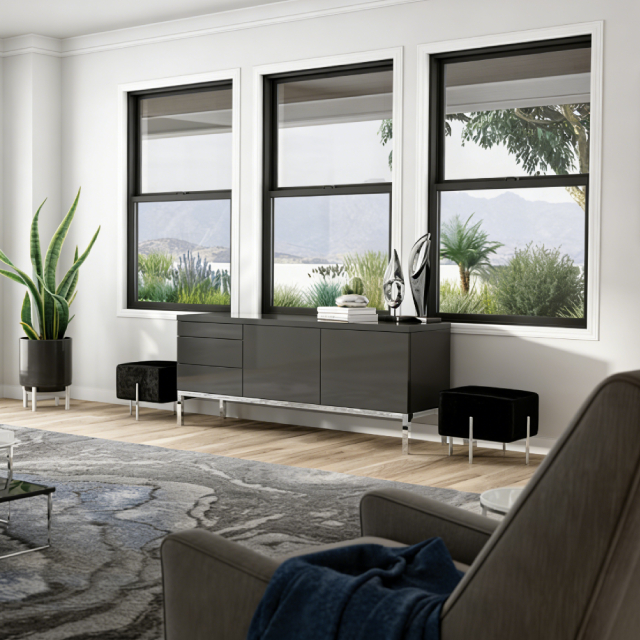
Aesthetic integration is a primary reason architects choose metal frames. Aluminum provides incredibly narrow sightlines. This coordinates flawlessly with modern, industrial, or historic architectural styles. The crisp, clean lines of extruded metal frame the view rather than obstructing it. You achieve a minimalist profile that maximizes daylight opening. Dark bronze and black anodized finishes are particularly popular for achieving a contemporary industrial look.
Finish durability determines long-term curb appeal. You must compare anodized finishes against baked-on powder-coated aluminum. Anodizing is an electrochemical process that integrates the color into the metal surface. It offers extreme corrosion resistance. Powder coating provides a wider color palette and excellent UV stability. Both methods prevent chalking, peeling, and fading far better than painted wood or standard vinyl. Coastal environments demand marine-grade powder coatings to withstand continuous salt spray exposure.
Bedroom installations must meet local building code egress requirements. Emergency escape and rescue codes dictate minimum clear opening widths and heights. Single hung units only open halfway. You must ensure the lower sash provides enough clearance for a fully equipped firefighter to enter. Always verify egress calculations before ordering custom sizes for sleeping areas.
Security mechanisms require careful evaluation. Standard sweep locks pull the sashes tightly together at the meeting rail. Upgraded auto-locking hardware engages automatically when you close the sash. Vent limiters allow you to open the window a few inches for airflow while preventing forced entry. The rigid nature of aluminum makes it highly resistant to prying and physical attacks. Adding laminated glass further enhances security by preventing intruders from shattering the pane to gain entry.
The market divides sharply between retail contractor-grade units and architectural custom windows. Off-the-shelf units feature standard sizes and thinner extrusion walls. They work well for basic outbuildings or budget-restricted flips. High-performance custom units utilize thicker aluminum walls, advanced thermal breaks, and heavy-duty hardware designed for decades of flawless operation. The difference in extrusion thickness directly impacts the window's ability to resist denting and structural deflection over time.
You must analyze warranty coverage and structural ratings across these price tiers. Premium manufacturers offer extensive warranties covering finish degradation, glass seal failure, and hardware defects. Cheaper units often cut corners on weatherstripping quality and balance springs. Investing in heavier extrusions yields significantly better longevity and operational smoothness. A robust warranty serves as a reliable indicator of the manufacturer's confidence in their thermal break technology and glass seals.
Interior condensation on metal frames is a simple matter of physics. Warm, moist indoor air hits a cold metal surface. If the frame temperature drops below the dew point, water droplets form. In high-humidity, low-temperature environments, this moisture can pool on sills and damage interior drywall. Over time, persistent condensation leads to mold growth and deterioration of the surrounding window trim.
Mitigation strategies are essential. You must specify thermally broken frames to keep interior surface temperatures above the dew point. Proper HVAC integration and interior humidity control also play vital roles. Run exhaust fans during cooking and bathing. Keep indoor relative humidity below 40% during freezing weather to prevent frame sweating. Upgrading to warm-edge spacers between the glass panes further reduces condensation risks at the edge of the glass.
Flashing requirements for metal windows are strict. You face a critical risk of galvanic corrosion. Direct contact between aluminum and dissimilar metals (like copper flashing) or copper-treated lumber causes rapid deterioration. Installers must use compatible flashing tapes and isolation barriers. Proper sill panning ensures water drains outward, protecting the rough opening. Using the wrong fasteners can also trigger galvanic reactions, so stainless steel or specifically coated screws are mandatory.
You must evaluate new construction versus retrofit installation methods. New construction units feature an integral nailing fin. This fin integrates directly into the exterior weather barrier. Retrofit or block frame installations fit inside the existing window frame. This saves interior trim but reduces the overall glass area. Choose the method that best suits your exterior cladding and waterproofing strategy. Proper shimming is critical; aluminum frames are rigid, and forcing them into an out-of-square opening will cause the operable sash to bind.
High-grade aluminum frames typically last 30 to 40 years. They do not rot like wood or become brittle like vinyl. Their structural stability ensures that the sashes remain square and operable long after other materials warp or sag. To achieve this lifespan, you must adhere to a strict but simple maintenance schedule.
Routine maintenance requirements are minimal but necessary. You must clear debris from the bottom track to ensure proper drainage. Inspect weep holes annually to prevent water backup. Replace worn weatherstripping every decade to maintain air infiltration ratings. Lubricate the balance system and tracks with a dry silicone spray to keep sash operation smooth and effortless. Never use oil-based lubricants, as they attract dirt and grit, which will eventually grind down the aluminum tracks.
Aluminum single hung units provide optimal solutions for modern aesthetics and high wind load requirements. They prioritize structural durability and sleek profiles. While they require careful thermal management in cold climates, their mechanical simplicity and strength make them a highly reliable fenestration choice. Buyers should prioritize thermally broken frames in any climate experiencing freezing temperatures. Choose solid extruded units for maximum durability against harsh weather. Focus heavily on upgrading the glass package with Low-E coatings and gas fills to compensate for the natural conductivity of the metal frame.
A: They can be highly energy efficient if properly specified. You must choose thermally broken aluminum frames to stop heat transfer. Pairing these frames with Low-E coated, argon-filled double or triple-pane glass ensures they meet strict modern energy codes and reduce utility bills.
A: High-quality extruded aluminum windows typically last 30 to 40 years. The metal resists warping, rotting, and UV degradation. The lifespan of the unit usually depends on the longevity of the insulated glass seal and the moving balance hardware, rather than the frame itself.
A: Yes. Manufacturers can produce custom sizes and apply specific grid patterns to mimic historic designs. The narrow sightlines of aluminum often replicate the thin profiles of old steel or wood windows perfectly, though approval from local historic preservation boards may be required.
A: Standard aluminum frames can cause condensation in cold climates because the metal transfers cold temperatures indoors. Specifying thermally broken frames prevents this by creating a barrier that keeps the interior metal surface warmer, staying above the room's dew point.
A: Because the top sash is fixed and does not tilt inward, you must clean the exterior glass from the outside. This typically requires using a ladder, an extension pole with a squeegee, or hiring professional window cleaning services for upper-story installations.
A: Solid extruded aluminum is metal throughout, offering maximum structural strength, narrow profiles, and industrial aesthetics. Aluminum-clad wood features a solid wood core for interior warmth and insulation, covered by a thin layer of protective aluminum on the exterior to prevent rot.
A: A thermally broken window features a frame split into two separate interior and exterior pieces. A structural insulating material, usually a polyamide or polyurethane strut, connects them. This break stops thermal energy from traveling through the highly conductive metal, drastically improving insulation.


