
Views: 0 Author: Site Editor Publish Time: 2026-07-19 Origin: Site


The architectural shift toward indoor-outdoor living spaces drives heavy demand for high-visibility, contemporary home exteriors. Homeowners and builders frequently select visually striking doors without evaluating the structural, thermal, and security trade-offs inherent to large-scale glass and metal installations. You might see a beautiful showroom model and assume it performs perfectly in your specific climate or daily routine. That assumption leads to compromised energy efficiency, premature hardware failure, and security vulnerabilities. A successful investment requires looking past the showroom aesthetic. You must evaluate frame extrusion thickness, glazing specifications, thermal breaks, and climate compatibility before finalizing your order. Understanding these technical specifications ensures your new aluminum glass garage door functions as a durable, secure, and weather-resistant architectural element rather than just a decorative facade.
Integrating a full view garage door requires a strict street-view audit. You need to match the clean lines of the door with contemporary, mid-century modern, or transitional home designs. Stand at the curb and assess your home's exterior colors, window frame profiles, and trim. The mullions on the garage door should align with the sightlines of your existing windows. If your house features heavy, ornate trim, a minimalist metal frame might clash. We always recommend matching the powder-coated frame finish directly to your primary window cladding to ensure cohesive aesthetic integration.
This modern garage door style extends far beyond the traditional garage bay. Builders frequently spec these units for patio-to-living-room transitions, indoor pool houses, and commercial restaurant-style dining openings. When you open a massive glass wall, you instantly merge indoor comfort with outdoor ambiance. We install these in custom home gyms and art studios where natural light is a strict requirement. The track systems can follow vaulted ceilings, keeping the mechanical components hidden from the primary living space.
Aluminum provides natural corrosion resistance. This stands in stark contrast to the rust susceptibility of steel and the constant rot and maintenance burden of wood. When you install an aluminum frame in a coastal environment, you do not worry about salt spray destroying the structural integrity within five years. Wood requires sanding and resealing. Steel requires rust mitigation. Aluminum simply needs occasional washing to maintain its factory finish.
Aluminum delivers exceptional structural rigidity for large glass expanses while remaining relatively lightweight. This optimal weight-to-strength ratio reduces long-term wear on lifting hardware, cables, and torsion springs. Heavy wood doors tear up nylon rollers and strain opener motors. Aluminum frames hold heavy glass payloads without adding unnecessary dead weight to the moving assembly.
The industry standard for high-quality frames dictates a minimum 2-inch thickness. You cannot compromise on this specification. Furthermore, the internal wall thickness of the aluminum extrusion must be at least 0.125 inches at the hinge attachment points. Thin, residential-grade extrusions will strip out the hinge screws after a few thousand cycles. Commercial-grade aluminum extrusions provide the necessary bite for heavy-duty fasteners, preventing hardware tear-out and sagging panels.
Panel layouts dictate both structural load distribution and the visual profile. Wide, single-panel columns offer the cleanest aesthetic but require heavier single glass spans. Multi-panel grid designs enhance structural stability by breaking up the glass weight, though they present a busier aesthetic.
| Grid Style | Structural Stability | Visual Aesthetic | Best Application |
|---|---|---|---|
| Wide Single-Panel | Moderate (Requires thicker glass) | Minimalist, Clean | Modern residential facades |
| Multi-Panel Grid | High (Distributes weight evenly) | Traditional, Busy | Wide openings, high wind zones |
| Asymmetrical Grid | Moderate to High | Custom, Unique | Architectural statement pieces |
Anodizing creates a highly scratch-resistant, metallic finish through an electrochemical bonding process. It penetrates the metal, making it impossible to peel. Powder coating offers vast color options and applies a thick, durable layer over the metal, though it can chip under heavy blunt impact. If you live in a coastal area with heavy salt spray, anodized finishes generally perform better. If you need to match a specific architectural color palette, powder coating is your only viable route.
Compliance with local building codes is mandatory. Coastal or high-wind regions governed by entities like the Florida Building Code or the Texas Department of Insurance require certified wind-load ratings. Manufacturers achieve these ratings by adding heavy-duty reinforcement struts across the back of the door sections. These struts impact the interior aesthetic. You must plan for these structural additions early in the design phase to ensure safety without compromising your interior design intent.
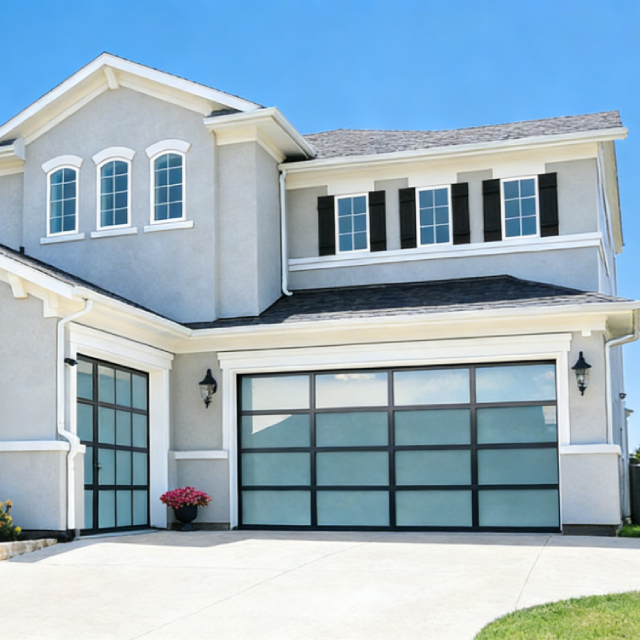
The thermal and acoustic differences between 1/8-inch single-pane glass and 1/2-inch or 5/8-inch insulated double-pane units are massive. Single-pane glass offers zero insulation. It rattles in the wind and lets street noise pour into the space. Insulated double-pane glass improves energy efficiency and deadens sound. However, this upgrade significantly increases the total door weight. You will need heavy-duty springs, reinforced tracks, and commercial-grade openers to lift the extra mass.
Different glass treatments yield varying functional outcomes for glass garage door panels. You must evaluate how the space will be used day and night.
Building codes strictly require tempered safety glass in all moving doors. Tempered glass shatters into small, blunt cubes rather than dangerous, jagged shards. For enhanced security against break-ins and superior sound dampening, specify laminated glass. Laminated units feature a plastic interlayer that holds the glass together even when smashed. In environments where glass breakage is a constant high risk, you can use polycarbonate or acrylic panels. Note that these plastics scratch easily and suffer from UV yellowing over time.
The primary flaw of aluminum is its high thermal conductivity. It transfers heat and cold rapidly. In cold climates, a standard aluminum frame will sweat, drip condensation, and freeze shut. A thermal break is non-negotiable. This polyurethane or polyamide barrier separates the interior and exterior metal extrusions, stopping the transfer of cold air. For the glass, specify argon gas fills and Low-E (low-emissivity) coatings to block UV rays and reduce solar heat gain in hot climates.
A rigid aluminum frame requires aggressive weatherstripping to seal properly against uneven concrete and wood framing. You need heavy-duty, U-shaped bottom astragals made of EPDM rubber to conform to the floor. Install flexible vinyl perimeter seals along the top and sides to prevent air and water infiltration. We always check the floor level before installation; if the concrete is heavily sloped, even the best bottom seal will leave gaps.
The dead weight of insulated glass panels requires precise torsion spring engineering. Standard builder-grade springs last about 10,000 cycles. When you hang heavy glass, you must upgrade to high-cycle springs rated for 25,000 to 50,000 cycles. This prevents premature system failure from heavy daily use. The installer must weigh the door on-site and calibrate the springs perfectly so the door balances in the middle of the track without drifting up or down.
Adding double-pane insulated glass makes the door exceptionally heavy. A standard ceiling-mounted drawbar opener will struggle and eventually strip its gears. We recommend evaluating direct-drive jackshaft openers. These units mount directly on the wall next to the torsion bar. They preserve the clean, modern ceiling aesthetic by eliminating the overhead rail, and they handle heavy loads efficiently with smooth, quiet DC motors.
Track selection impacts both aesthetics and functionality. Standard radius tracks push the door straight back into the room. High-lift tracks complement the modern aesthetic by running the door tight against the wall and closer to the ceiling, keeping the open door out of your primary sight lines. Vertical lift tracks go straight up, ideal for tall commercial spaces. Regardless of the track style, mandate commercial-grade nylon rollers with sealed steel ball bearings for smooth, quiet operation.
Aluminum glass doors sit at the premium end of the market. You will face a higher initial purchase and installation price compared to standard stamped steel doors. However, you must contrast this upfront investment with the low ongoing maintenance requirements. You never have to pay a crew to scrape, patch, and repaint rotting wood. The return on investment manifests in elevated home equity and massive curb appeal for contemporary residences.
You must instruct your builder to provide the exact warranty documentation before signing off. Look for separate coverage terms. The aluminum frame should carry a lifetime or 10-year warranty against structural defects. The glass seal failure warranty typically covers 3 to 5 years. Finish warranties vary wildly depending on whether you chose an anodized or powder-coated surface. Read the fine print regarding coastal installation exclusions.
An aluminum glass garage door serves as a premium architectural feature that requires balancing aesthetic desires with strict thermal and structural realities. Do not buy based on looks alone.
A: Standard models are not energy efficient due to aluminum's high thermal conductivity and single-pane glass. However, models upgraded with thermal breaks, polyurethane-filled rails, and Low-E insulated glass can achieve acceptable R-values for climate-controlled spaces.
A: Expect to pay a premium compared to standard steel doors. The final investment depends heavily on the door size, grid configuration styles, glass thickness, frame extrusion quality, and custom powder coating requirements.
A: Yes, due to the nighttime reversal effect. Clear, tinted, and reflective glass become completely transparent from the outside when interior garage lights are turned on. We recommend frosted or satin-etched glass for true nighttime privacy.
A: Aluminum naturally resists rust and corrosion, making it vastly superior to steel for coastal or high-humidity environments. However, the finish can pit over time if not cleaned regularly to remove accumulated salt and environmental debris.
A: Yes. Manufacturers utilize heavy-duty tempered or laminated safety glass to prevent shattering. When combined with robust electronic locking mechanisms on modern direct-drive openers, they effectively deter break-ins and meet stringent building safety codes.
A: Wash the aluminum frame with non-abrasive soap and water. Use standard glass cleaner and a squeegee for the panels. Apply a high-quality silicone spray lubricant annually to the hinges, roller bearings, and torsion springs to maintain smooth operation.


