
Views: 0 Author: Site Editor Publish Time: 2026-08-10 Origin: Site


When architects, builders, and discerning homeowners embark on unique residential or commercial building projects, the choice of fenestration becomes a critical defining factor for both the exterior aesthetics and the interior performance of the structure. Finding the perfect balance between structural integrity, advanced energy efficiency, and uncompromising visual appeal often leads decision-makers to evaluate their architectural options with extreme care. In these highly demanding design scenarios, specifying a custom aluminum window frequently emerges as the superior and most reliable choice over standard, off-the-shelf alternatives. The ability to tailor dimensions, performance features, and aesthetic details ensures that the final installation aligns perfectly with the specific architectural vision and environmental requirements of the project, elevating the entire building's design language.
Standardized building materials have their place in mass-market construction, where uniformity and rapid deployment are the primary objectives. However, when a project demands distinct character, specific structural tolerances, or specialized environmental adaptations, standard sizes and configurations often fall short. This is where the transition from mass-produced units to tailored architectural solutions becomes necessary. By opting for custom aluminum windows, project managers and designers can bypass the inherent limitations of standard inventory, ensuring that every opening is maximized for natural light, ventilation, and structural harmony. The following comprehensive analysis explores the distinct advantages of customized fenestration, focusing specifically on the advanced engineering and verified performance metrics of DAW Casement Windows.
The architectural landscape has evolved significantly over the past few decades, with a growing emphasis on seamless indoor-outdoor transitions, expansive glass surfaces, and minimalist framing. Achieving these design objectives requires materials that offer exceptional strength-to-weight ratios, allowing for narrower sightlines without compromising the structural integrity of the frame. Aluminum has long been recognized as a premier material for these applications, but the true potential of the material is unlocked only when it is engineered to exact project specifications. A custom aluminum window provides the precise dimensions required to fill unique structural openings, eliminating the need for unsightly filler panels or architectural compromises that often accompany standard unit installations.
Furthermore, the demands placed on building envelopes have never been higher. Modern energy codes, acoustic requirements, and weather resistance standards necessitate fenestration systems that are engineered for specific climates and environmental exposures. Standard units are typically manufactured to meet average baseline requirements, which may be insufficient for projects located in extreme weather zones, high-traffic urban areas, or coastal environments. By specifying tailored solutions, architects can select the exact glazing packages, thermal breaks, and sealing mechanisms required to achieve superior performance metrics, ensuring long-term durability and occupant comfort.
To fully appreciate the value of specialized fenestration, it is essential to understand the fundamental differences between standard production units and bespoke architectural systems. Standard units are manufactured in high volumes based on common rough opening dimensions. While this approach offers economies of scale, it forces the architectural design to conform to the available inventory. If a design calls for an unusually tall opening, an asymmetrical configuration, or a specific functional requirement, standard units simply cannot accommodate the vision without significant structural modifications to the building itself.
When builders are forced to use standard sizes in non-standard openings, the results are often suboptimal. The installation may require excessive shimming, expanded trim work, or the use of heavy mullions to join multiple smaller units together. This not only disrupts the intended visual aesthetic by introducing unnecessary vertical and horizontal lines but also creates additional points of potential air and water infiltration. Furthermore, standard units typically offer limited hardware options, restricted color palettes, and basic glazing packages that may not align with the specific thermal or acoustic goals of a high-end project. The lack of flexibility inherent in standard production lines makes them ill-suited for bespoke architectural endeavors.
Conversely, taking a specialized approach allows for complete control over the fenestration system. Every aspect of the unit, from the frame profile to the operational hardware, can be specified to meet the exact needs of the space. This level of control is particularly beneficial when integrating a made to order window into complex architectural geometries. Whether the project requires expansive floor-to-ceiling glass, unique geometric shapes, or specialized operational mechanics to accommodate tight interior spaces, bespoke engineering provides the necessary solutions. The resulting installation is not only visually superior but also structurally integrated into the building envelope with precision, maximizing both performance and longevity.
When evaluating premium fenestration systems for unique projects, DAW Casement Windows represent a pinnacle of engineering and design flexibility. These units are specifically engineered to provide exceptional ventilation, unobstructed views, and robust weather resistance, making them an ideal choice for a wide range of architectural applications. The fundamental design of a casement system—where the sash is hinged on one side and opens outward—offers distinct advantages over sliding or double-hung alternatives, particularly in terms of airflow and sealing capabilities.
One of the defining characteristics of the DAW Casement Window is its fully opening sash. Unlike sliding systems where only half of the window area can be opened at any given time, a casement sash opens entirely, directing fresh air into the home for maximum ventilation. This feature is particularly valuable in spaces that require rapid air exchange or in climates where passive cooling strategies are utilized to reduce reliance on artificial air conditioning. The ability to capture passing breezes and funnel them into the interior environment significantly enhances occupant comfort and indoor air quality.
In addition to superior ventilation, the design of these units prioritizes visual clarity. The lack of a center meeting rail provides a clear, expansive view of the exterior landscape. In standard double-hung or sliding systems, the meeting rail inevitably obstructs the line of sight, breaking up the visual connection between the interior and exterior spaces. By eliminating this central obstruction, DAW Casement Windows offer a clean, uninterrupted pane of glass that perfectly complements contemporary design sensibilities. This minimalist approach ensures that the fenestration serves as a transparent boundary, framing the outside world without imposing heavy structural elements into the visual field.
The integration of these units into a broader architectural plan often involves coordinating with other fenestration styles to achieve a cohesive look. For instance, pairing fixed picture windows with strategically placed casements can optimize both light transmittance and ventilation. When specifying a modern aluminum window package, the consistency of the frame profiles and the quality of the finishes across different operational types are crucial for maintaining a unified exterior elevation and interior aesthetic.
The foundation of any high-performance fenestration system lies in the quality of its framing material. DAW Casement Windows are constructed using 6063-T5 Thermal Break Aluminum Alloy. The 6063 alloy is widely recognized in the architectural industry for its excellent extrudability, allowing for the creation of complex, precise frame profiles with crisp edges and smooth surfaces. The T5 temper designation indicates that the aluminum has been thermally treated and artificially aged to achieve optimal structural strength, ensuring that the frames can support heavy glazing packages and withstand significant wind loads without warping or deflecting over time.
However, traditional aluminum is a highly conductive material, which historically posed challenges for energy efficiency. To overcome this, these frames incorporate advanced thermal break technology. A thermal break is a continuous barrier of low-conductivity material positioned between the interior and exterior aluminum extrusions. This barrier effectively interrupts the conductive path, preventing the transfer of heat or cold through the frame. In cold climates, the thermal break prevents interior heat from escaping and eliminates condensation on the interior frame surfaces. In hot climates, it blocks exterior heat from penetrating the building envelope. This sophisticated material engineering ensures that the structural benefits of aluminum are fully realized without compromising the thermal performance of the building.
The operational mechanics of a casement system inherently contribute to superior weather resistance. When the wind blows against a closed outswing casement sash, the pressure actually forces the sash tighter against the frame, enhancing the seal. DAW Casement Windows capitalize on this mechanical advantage by incorporating a compression seal that creates an airtight and weather-resistant barrier. This compression mechanism ensures that the sash engages uniformly with the frame along its entire perimeter, eliminating drafts and preventing water infiltration even during severe weather events.
To further fortify the weatherproofing capabilities, these units utilize triple-seal EPDM gaskets. EPDM (Ethylene Propylene Diene Monomer) is a highly durable synthetic rubber renowned for its exceptional resistance to environmental degradation, including prolonged exposure to ultraviolet radiation, extreme temperature fluctuations, and atmospheric ozone. The implementation of a triple-seal configuration provides redundant layers of protection against air and water penetration. If extreme wind-driven rain manages to bypass the primary exterior seal, the secondary and tertiary seals ensure that the interior environment remains completely dry and protected.
The glazing package is a critical component of the overall window performance. DAW Casement Windows offer a comprehensive range of glass options to meet specific project requirements. These include double and triple glazing configurations, which utilize multiple panes of glass separated by insulating spacer bars. To maximize thermal efficiency, the airspace between the panes can be argon-filled. Argon is a dense, inert gas that significantly reduces convective heat transfer compared to standard air, thereby lowering the U-factor of the window unit.
Additionally, the glass can be treated with Low-E (low-emissivity) coatings. These microscopically thin, transparent metallic layers reflect long-wave infrared thermal energy. In the winter, Low-E coatings reflect radiant heat back into the room, while in the summer, they reflect solar heat away from the building, drastically improving overall energy efficiency. For safety and durability, tempered glass options are also available, providing increased resistance to impact and thermal stress.
Beyond thermal performance, acoustic insulation is a vital consideration for projects located in noisy urban environments or near busy transportation corridors. The combination of heavy-duty aluminum framing, precision compression seals, and advanced glazing allows these windows to achieve an impressive sound insulation STC (Sound Transmission Class) rating of up to 40-45 dB. This level of acoustic attenuation significantly reduces the transmission of exterior noise, ensuring a quiet, peaceful interior environment regardless of outside disturbances.
The functionality and security of a fenestration system are heavily dependent on the quality of its hardware. DAW Casement Windows are equipped with multi-point security locking systems. Unlike basic single-point locks that secure the sash at only one location, a multi-point system engages the sash at several distinct points along the frame simultaneously with the single turn of a handle. This not only pulls the sash tightly against the weather stripping for an optimal compression seal but also provides exceptional resistance against forced entry, ensuring the safety and security of the building's occupants.
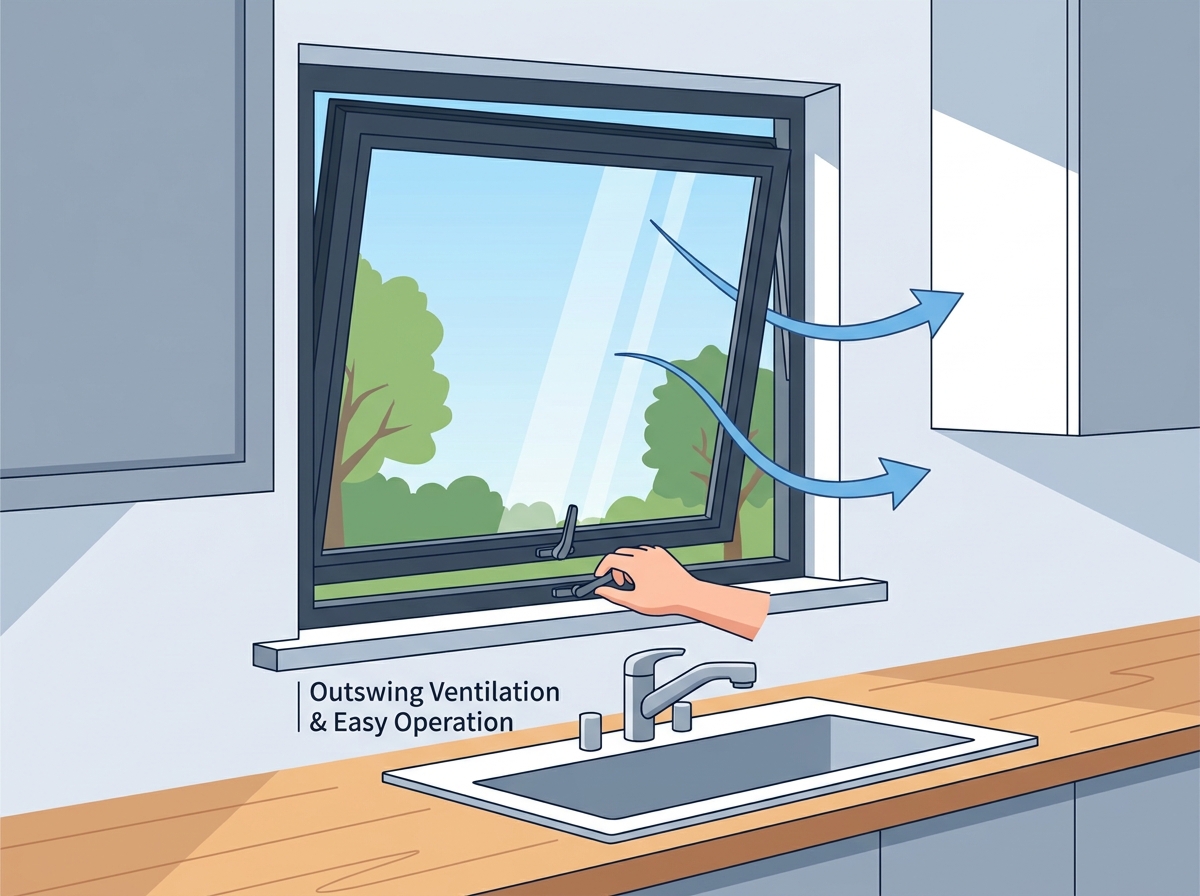
Operational convenience is also a key design priority. These units feature high-quality crank handles that allow for easy opening and closing. The use of a crank mechanism is particularly advantageous in tight spaces or in locations where it might be difficult to physically push or pull a sash, such as reaching over a deep counter. The gearing within the crank hardware provides mechanical advantage, allowing even large, heavy sashes to be operated smoothly and effortlessly with minimal physical exertion.
The standard outswing design of these casements—where the sash opens outward from the building—maximizes interior space. Because the sash does not intrude into the room, interior areas immediately adjacent to the window remain fully usable, and window treatments such as blinds or curtains are not obstructed during operation. The outswing configuration also improves weatherproofing, as previously noted, by utilizing wind pressure to reinforce the seal. The opening type can be specified as either left or right side hinged, providing flexibility to direct airflow or accommodate exterior architectural features. It is important to note that while outswing is the standard and most efficient configuration, inswing options are available upon request for specific project requirements where exterior space is limited.
To accommodate various architectural styles and functional needs, the system is available in multiple window types. These include the standard Single Casement, the Double or French Casement (which features two sashes that open outward from the center without a central mullion for an exceptionally wide, unobstructed opening), and the Push-Out Casement for a more traditional operational feel.
The visual integration of fenestration into the overall building design is paramount. DAW Casement Windows offer an extensive array of aesthetic customization options to ensure perfect alignment with the architect's vision. The aluminum frames can be finished in a variety of standard color options, including Matte Black for a stark, contemporary look, Anthracite Grey for a sophisticated modern industrial aesthetic, and Classic White for timeless appeal. For projects requiring specific color matching, custom RAL colors are available, allowing the frames to blend seamlessly with or provide a striking contrast to the exterior cladding.
Furthermore, for designs that seek the warmth and traditional appearance of timber without the associated maintenance and durability issues, Wood Grain Finishes are offered. These advanced finishing techniques replicate the visual texture and color variations of natural wood while retaining the structural superiority and weather resistance of the thermal break aluminum alloy.
Architectural detailing can be further refined through the use of decorative grilles. Depending on the desired aesthetic, grilles can be specified as internal (positioned between the panes of glass for easy cleaning) or external (applied to the surface of the glass for a more authentic divided-light appearance). Available patterns include traditional Colonial, regional Prairie styles, or entirely custom geometric patterns to suit unique architectural motifs.
To maintain indoor comfort while the windows are open, robust screen options are provided. Clients can choose between an integrated fiberglass mesh, which offers excellent visibility and insect protection, or a heavy-duty stainless steel security mesh, which provides an additional layer of protection against tearing and unauthorized access while still allowing for optimal airflow.
The versatile design and superior operational characteristics of DAW Casement Windows make them highly suitable for a variety of specific applications within a building. They are exceptionally well-suited for kitchens and bathrooms, where rapid and efficient ventilation of moisture and odors is critical. The crank handle operation makes them the perfect choice for installation above sinks or countertops, where the user must reach across an obstacle to operate the window.
In living rooms and bedrooms, the expansive, unobstructed views provided by the lack of a center meeting rail enhance the sense of space and connection to the outdoors. The high STC acoustic ratings ensure that bedrooms remain quiet sanctuaries, while the multi-point security locking systems provide peace of mind in ground-floor living areas. The combination of high-performance thermal breaks and advanced glazing ensures that these primary living spaces remain comfortable year-round, regardless of exterior weather conditions.
When specifying materials for high-end or commercial projects, verifiable performance and adherence to international quality standards are non-negotiable. DAW Casement Windows are manufactured under strict quality control protocols and hold several prestigious industry certifications. They are certified to AS2047, ensuring compliance with rigorous Australian standards for windows in buildings, which test for structural deflection, operating force, air infiltration, and water penetration resistance.
Additionally, the products carry the CE mark, indicating conformity with health, safety, and environmental protection standards for products sold within the European Economic Area. Performance metrics are further validated by the NFRC (National Fenestration Rating Council), providing objective, reliable energy performance ratings. Finally, the manufacturing facilities operate under ISO9001 certification, guaranteeing a consistent, high-quality production process from raw material extrusion to final assembly and inspection.
DAW Casement Windows deliver an exceptional combination of structural durability, advanced thermal and acoustic insulation, and versatile aesthetic customization, making them an ideal fenestration solution for demanding architectural projects. By utilizing 6063-T5 Thermal Break Aluminum Alloy, multi-point security locking, and sophisticated triple-seal EPDM weatherproofing, these units ensure long-lasting performance, maximum ventilation, and expansive, unobstructed views for kitchens, living spaces, and bespoke building designs.


