
Views: 0 Author: Site Editor Publish Time: 2026-07-31 Origin: Site


The architectural shift towards expansive glass, passive solar design, and minimalist sightlines demands fenestration materials that do not compromise structural integrity for aesthetics. Architects, builders, and property owners must balance the physical weight of multi-pane, high-performance glazing with stringent energy codes, while avoiding the warping, degradation, or bulky profiles associated with legacy framing materials. Modern aluminum extrusion technology, combined with advanced thermal management systems, has repositioned the aluminum window frame from a commercial-only commodity to the baseline standard for high-performance, contemporary residential and commercial window systems. By integrating advanced thermal barriers and precision engineering, these systems deliver the load-bearing capacity required for heavy architectural glass without sacrificing the sleek, narrow sightlines that define modern building facades. The result is a highly durable, weather-resistant envelope component that meets both the aesthetic vision of the designer and the rigorous performance metrics demanded by current building standards.
Modern architecture relies heavily on larger glass-to-frame ratios to maximize natural light and create seamless visual transitions between interior and exterior environments. This design preference places immense physical stress on the window framing system. Expansive glass panels, especially those utilizing double or triple glazing for energy efficiency, carry significant dead loads. Wood and vinyl frames face severe physical limitations when tasked with supporting these oversized or heavy acoustic insulating glass units (IGUs). Vinyl, a thermoplastic material, lacks the inherent rigidity to span large openings without heavy steel reinforcement, which increases the profile bulk and defeats the purpose of a minimalist design. Under sustained heavy loads and high temperatures, unreinforced vinyl tends to warp, leading to operational failures and compromised weather seals. Wood, while structurally sound, requires exceptionally bulky profiles to achieve the necessary load-bearing capacity for massive glass expanses, obstructing sightlines and requiring continuous exterior maintenance to prevent rot and degradation.
Optimizing the frame-to-glass ratio through superior structural frame strength directly maximizes daylighting. By reducing the opaque framing elements, more natural light penetrates the building interior. This optimization lowers electrical energy consumption by reducing the reliance on artificial lighting during daylight hours. Furthermore, increased access to natural light and unobstructed views significantly enhances occupant well-being, a primary metric in modern building standards like the WELL Building Standard. Slimmer frames allow for maximum light penetration without sacrificing the safety or structural integrity of the building envelope.
Meeting local U-value and Solar Heat Gain Coefficient (SHGC) requirements is a mandatory baseline for any new construction or major retrofit project. Building codes across various jurisdictions demand high thermal efficiency to reduce HVAC loads and minimize the overall carbon footprint of the structure. Window frames act as a critical thermal bridge in the building envelope; therefore, their performance directly impacts the entire wall assembly's energy rating. Beyond thermal metrics, the framing material must resist moisture infiltration, UV degradation, and extreme temperature fluctuations without losing structural integrity over decades of continuous exposure.
Legacy materials often degrade under these environmental pressures, requiring frequent maintenance, repainting, or complete replacement. Wood absorbs moisture, leading to expansion, contraction, and eventual decay if the protective finish fails. Vinyl becomes brittle under prolonged UV exposure and can crack in freezing temperatures. Modern fenestration systems establish a baseline need for resilient materials that maintain their performance metrics across diverse climate zones. The framing system must remain dimensionally stable, ensuring that weatherstripping and gaskets maintain a tight seal against air and water infiltration year after year, regardless of the exterior environmental conditions.
Extruded aluminum possesses exceptional mechanical properties, specifically a high strength-to-weight ratio. This characteristic allows it to bear the immense weight of heavy, multi-pane glass units without sagging, bowing, or twisting over time. This rigidity is an absolute requirement for large-format glazing, curtain walls, and expansive sliding door systems. When architects specify floor-to-ceiling glass, the framing material must transfer the wind loads and the dead weight of the glass directly to the building structure without deflecting beyond acceptable tolerances. Aluminum window frames excel in this application, providing the necessary structural backbone for ambitious architectural designs.
The structural capacity to carry heavy, multi-layered acoustic glass makes aluminum highly effective for superior soundproofing. Urban environments, situated near highways, airports, or heavy rail lines, demand advanced acoustic isolation. Achieving high Sound Transmission Class (STC) and Outdoor-Indoor Transmission Class (OITC) ratings often requires asymmetrical triple-pane IGUs, where glass panes of varying thicknesses are used to disrupt different sound wave frequencies. These specialized glass units are exceptionally heavy. Aluminum frames securely hold these thick, heavy glass units, preventing seal stress and maintaining long-term acoustic performance. The rigidity of the frame ensures that the heavy glass does not compress the setting blocks unevenly, which could lead to glass breakage or premature failure of the IGU edge seal.
All building materials expand and contract at different rates when exposed to temperature changes, a property measured by the coefficient of linear thermal expansion. Aluminum exhibits superior dimensional stability compared to vinyl and wood in fenestration applications. Vinyl expands and contracts significantly with temperature variations. In high heat, vinyl can warp, causing sashes to bind and weatherstripping to lose contact. In extreme cold, it contracts and becomes brittle. Wood swells with moisture absorption and shrinks in dry conditions, leading to sticking windows and drafts.
Aluminum maintains its mechanical properties and dimensional integrity in both freezing and high-heat environments. This stability prevents seal failure, sash binding, and air leaks. Consistent frame dimensions ensure that the operational clearances remain exact and that weatherstripping remains effective year-round. This predictable behavior under thermal stress allows engineers to design precise expansion joints and perimeter sealant joints that will not fail due to excessive movement of the framing material.
| Material | Dimensional Stability | Load-Bearing Capacity | Weather Resistance | Maintenance Requirement |
|---|---|---|---|---|
| Aluminum | Excellent (Minimal expansion) | High (Supports heavy IGUs) | Extreme (Corrosion resistant) | Low (Periodic cleaning) |
| Vinyl | Poor (High expansion/contraction) | Low to Medium (Requires steel reinforcement) | Moderate (UV degradation over time) | Low (Wipe down) |
| Wood | Moderate (Moisture sensitive) | Medium (Requires bulky profiles) | Low (Susceptible to rot) | High (Painting/Sealing) |
| Fiberglass | Excellent | Medium to High | High | Low |
The inherent rigidity of aluminum allows manufacturers to significantly reduce the visible frame thickness. Slimmer profiles are a hallmark of modern architectural design, providing clean lines and unobstructed views that connect the interior space with the outdoors. However, reducing the frame profile increases the risk of deflection under wind load. Deflection is a major concern for thin frames; excessive bending can cause the glass to pop out of the glazing pocket, break the IGU seal, or allow significant air and water infiltration during storm events.
Aluminum resists wind pressure effectively, preventing glass breakage and maintaining the integrity of the building envelope. Engineers calculate the required moment of inertia for the frame profile based on the local wind load requirements and the size of the opening. Aluminum extrusions can be designed with internal webs and chambers that maximize stiffness while keeping the exterior sightline minimal. These minimalist sightlines offer functional benefits by increasing the visible glass area, thereby maximizing daylighting and solar heat gain in passive solar designs.
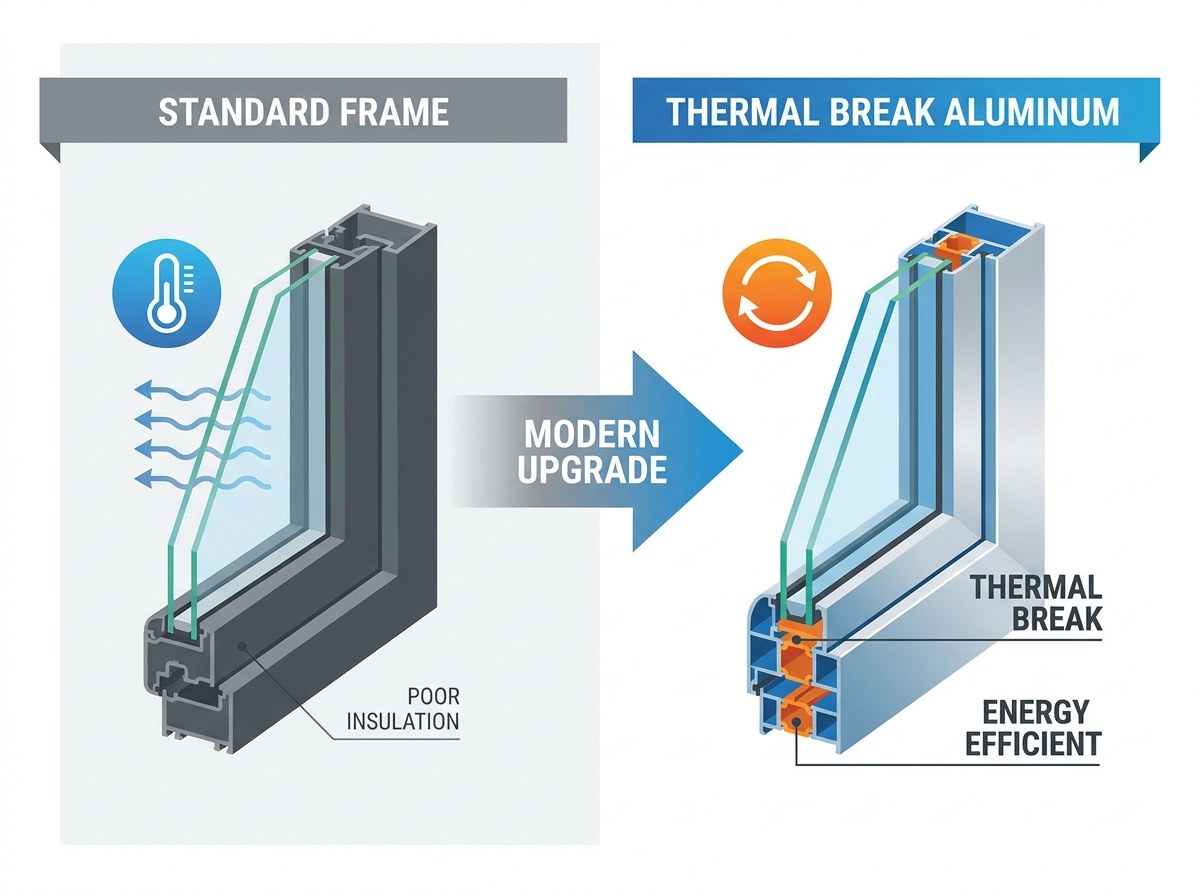
High thermal conductivity is the primary historical objection to aluminum framing. Raw aluminum transfers heat and cold rapidly, making older, non-thermally broken aluminum windows highly inefficient. In cold climates, the interior frame surface would become freezing cold, drawing heat out of the room. In hot climates, the frame would conduct solar heat directly into the air-conditioned space. Engineering advancements have completely solved this issue through the development of thermal break frames.
The engineering behind this solution involves separating the interior and exterior aluminum extrusions with a structural, low-conductivity material. Reinforced polyamide struts are mechanically crimped between the inner and outer aluminum profiles. This physical separation blocks the transfer of heat and cold. The non-conductive polyamide strut acts as a barrier, interrupting the thermal bridge. This technology transforms a highly conductive metal into an energy-efficient fenestration solution that meets the most stringent modern energy codes.
Modern thermally broken frames do not rely on the polyamide strut alone to achieve high performance. They pair the thermal break with warm-edge spacers within the IGU, multi-chambered profile designs, and advanced co-extruded gasket systems. Warm-edge spacers reduce conductivity at the edge of the glass, a common weak point in window thermal performance. Multi-chambered profiles create dead air spaces within the frame, further insulating the assembly.
Co-extruded gasket systems, often utilizing EPDM or silicone, provide multiple points of contact between the sash and the frame. These components work together to achieve passive-house level air-tightness and exceptionally low heat transfer coefficients (U-values). The integration of these technologies prevents energy loss around the glass perimeter and through the frame itself. Tight seals block drafts, eliminate whistling during high winds, and significantly improve overall indoor comfort. Energy efficiency ratings for advanced aluminum systems now rival or exceed those of premium wood and fiberglass systems.
Mitigating the temperature differential between the interior frame surface and the ambient room air prevents surface condensation. When a cold frame surface meets warm, humid interior air, the moisture in the air condenses into liquid water on the frame. This "sweating" is a common problem with older aluminum windows. This moisture runs down the frame and damages adjacent drywall, pools in framing cavities, and ruins interior wood finishes. Over time, this leads to mold growth and structural water damage.
Thermal breaks keep the interior aluminum profile near room temperature, raising the Condensation Resistance Factor (CRF) of the window assembly. This condensation resistance is vital in high-moisture environments like bathrooms, kitchens, and indoor pool enclosures. By preventing condensation, thermally broken aluminum frames protect the surrounding building structure, reduce maintenance costs, and maintain healthy indoor air quality by eliminating the conditions necessary for mold proliferation.
The aluminum extrusion process allows the metal to be formed into highly specific, intricate shapes. Heated aluminum billets are forced through custom steel dies to create precise cross-sections. This manufacturing capability enables the creation of custom window profiles tailored to unique architectural requirements. Standard shapes are easily produced, but the true advantage lies in the ability to design proprietary profiles for specific project needs.
Architects have limitless flexibility to design complex fenestration systems that integrate seamlessly with the building facade, knowing that the aluminum can be extruded to meet their exact geometric specifications.
Aluminum frames offer exceptional finish durability, protecting the metal from oxidation and providing long-lasting aesthetic appeal. The two primary finishing methods are anodizing and high-performance powder coating, each offering distinct advantages.
Anodized finishes use an electrochemical process to thicken the natural oxide layer on the surface of the aluminum. This process integrates the color directly into the metal, resulting in a finish that cannot peel, blister, or flake. Anodizing provides extreme scratch resistance and a distinct metallic appearance. However, color options are generally limited to silvers, bronzes, and blacks.
Baked-on powder coatings offer a vast spectrum of colors, including custom color matching. Dry powder is electrostatically applied to the frame and then cured under heat to form a tough, durable skin. Industry standards, such as AAMA 2604 and AAMA 2605, dictate the performance levels for chalking, fading, and corrosion resistance. AAMA 2605 certified coatings utilize fluoropolymer resins (like PVDF) to withstand harsh UV exposure, industrial pollutants, and coastal salt spray, ensuring the finish retains its color and gloss for decades.
Because thermally broken frames consist of independent interior and exterior extrusions joined by the polyamide strut, they offer dual-color frame capabilities. The exterior aluminum profile can be finished in one color, while the interior profile is finished in another. This allows the window system to align with both the exterior façade requirements and the interior design palette.
This flexibility eliminates the need to compromise on aesthetics. Architects can specify dark, weather-resistant exterior frames for striking curb appeal, while keeping the interior frames white or light-colored to brighten living spaces and match interior trim. Custom color matching services ensure precise alignment with existing architectural elements, corporate branding colors, or historical preservation guidelines.
Initial procurement costs for aluminum framing systems are generally higher than standard residential vinyl windows. The precision engineering, thermal break technology, and advanced finishing processes contribute to a higher initial capital outlay. However, fiberglass and premium wood frames often cost more than standard aluminum, placing aluminum in the mid-to-high tier of initial material costs. The true financial metric for commercial and high-end residential projects is the long-term return on investment (ROI), which depends heavily on replacement cycles and ongoing maintenance requirements.
Vinyl windows, particularly in harsh climates or under heavy structural loads, may require replacement within fifteen to twenty years due to warping, seal failure, or UV degradation. Aluminum frames routinely last over forty years without structural degradation. Property valuation increases when high-performance, durable materials are installed, as future buyers recognize the reduced liability of window replacement. The extended lifespan, combined with superior energy performance that lowers monthly utility bills, significantly improves the overall financial return of the building project over its operational life.
Aluminum window frames represent a low-maintenance reality for facility managers and homeowners. Unlike wood, they require no painting, sealing, or treating over their lifespan to maintain their structural integrity or weather resistance. The material inherently resists pests, rot, rust, and moisture damage. Termites and carpenter ants cannot consume aluminum, eliminating a major structural risk present in wood-framed buildings.
The structural density of aluminum securely holds mechanical components. Window hardware, such as balance springs, multi-point locking mechanisms, hinges, and friction stays, are fastened directly into the metal. The threads do not strip out over time, as they often do in vinyl or wood. This facilitates simple, long-term hardware replacement. Maintenance personnel can service, adjust, or replace the hardware without stripping the frame material, ensuring the operational longevity of the window sash for decades.
Aluminum offers significant environmental benefits, making it a preferred material for sustainable architecture. It can be recycled indefinitely without losing its structural properties or material quality. Recycling aluminum uses only five percent of the energy required to produce primary aluminum from bauxite ore. This exceptionally low embodied energy for recycled aluminum supports sustainable building practices and circular economy principles.
Utilizing recycled aluminum framing contributes directly to LEED (Leadership in Energy and Environmental Design) certification goals, specifically in the Materials and Resources categories. At the end of the building's life, or during a major renovation, the aluminum frames are fully salvageable and hold significant scrap value. This closed-loop lifecycle minimizes landfill waste and reduces the overall carbon footprint of construction projects, aligning with global sustainability targets.
Galvanic corrosion is a significant risk when aluminum comes into direct contact with dissimilar metals in the presence of an electrolyte, such as moisture or coastal salt spray. Carbon steel, copper, and brass are common culprits in construction assemblies. When these metals touch aluminum, an electrochemical reaction occurs that degrades the aluminum frame rapidly, leading to pitting, structural weakening, and eventual failure of the connection point.
Mitigation requires strict physical separation of the dissimilar metals. Installers and detailers must use isolation tapes, neoprene shims, or dielectric coatings between the aluminum frame and steel structural supports. Specifying stainless steel fasteners (typically 300 series) prevents localized corrosion at connection points, as stainless steel is closer to aluminum on the anodic index. Proper detailing during the design phase and rigorous inspection during installation eliminates this risk entirely.
The performance of the highest-rated thermal break frame is entirely dependent on the quality of the installation. Precise rough opening preparation is critical. The opening must be plumb, level, and square. Flashing and shimming must follow strict manufacturer guidelines and industry standards (such as AAMA 2400 or ASTM E2112). Poor installation compromises the air and water barrier, leading to immediate performance failures.
Uneven shimming places twisting stress on the aluminum frame and the glass unit. This stress leads to premature IGU seal failure, allowing argon gas leakage and internal condensation. Water infiltration at the rough opening, due to improper sill panning or flashing integration, destroys adjacent building materials and framing cavities. Utilizing certified installers who understand the specific expansion and contraction tolerances of aluminum ensures the fenestration system performs as engineered.
Buyers and specifiers must verify performance claims through independent, third-party certifications. National Fenestration Rating Council (NFRC) labels provide accurate, standardized U-value, Solar Heat Gain Coefficient, and Visible Transmittance metrics. Relying solely on manufacturer marketing materials without NFRC verification can lead to failing energy code inspections.
Manufacturer warranties should be scrutinized. Look for specific coverage regarding finish longevity (e.g., 10 or 20 years for AAMA 2605 finishes) and IGU seal integrity. Read the warranty details carefully regarding exclusions for coastal environments, extreme altitudes, or improper maintenance. Ensure the thermal break technology is certified for the specific climate zone of the project. Proper documentation protects the investment and guarantees building code compliance.
A: Raw aluminum is highly conductive, but modern frames use polyamide thermal breaks to separate the interior and exterior profiles. This technology blocks heat transfer, allowing the frames to achieve high energy efficiency and meet strict building codes.
A: They have an expected lifespan of 40 to 50 years or more. Aluminum is highly resistant to warping, rotting, rust, and UV degradation, making it one of the most durable framing materials available for commercial and residential construction.
A: Yes. Aluminum's high strength-to-weight ratio makes it ideal for supporting heavy, multi-pane insulating glass units without requiring bulky frames or suffering from structural deflection over time.
A: Older, non-thermally broken frames often caused condensation. Modern thermal break frames prevent the temperature transfer that causes interior surfaces to cool, effectively eliminating condensation issues in standard environments.
A: Thermally broken frames feature a structural separation using a non-conductive material, typically polyamide, between the interior and exterior metal profiles. Standard frames lack this barrier and transfer heat and cold freely.
A: Maintenance is minimal. Perform periodic cleaning with mild soap and water. Avoid abrasive cleaners or harsh chemicals. Regularly check and lubricate mechanical components like hinges and balance springs to ensure smooth operation.
A: Yes. Their high structural capacity allows them to support thick, laminated, or heavy triple-pane acoustic glass. When paired with high-performance co-extruded gaskets, they are highly effective for acoustic dampening.


