
Views: 0 Author: Site Editor Publish Time: 2026-07-28 Origin: Site


Modern architecture demands expansive glass panels. This creates a distinct engineering challenge on the job site. Builders must support immense glass weight without obstructing sightlines. Traditional framing materials often fail to meet these structural demands. Wood warps and requires constant upkeep. Vinyl flexes under heavy loads and degrades in sunlight. Structural steel handles the weight but introduces massive logistical hurdles and installation difficulty. The modern aluminum frame door serves as the optimal engineering compromise. It offers high strength-to-weight performance and design flexibility. When properly configured, it provides advanced thermal isolation for demanding climates. You get the structural rigidity needed for heavy glass units without the bulk of steel.
Heavy insulated glass units place massive stress on headers and footers. Steel frames handle this load but require heavy machinery to maneuver. Lightweight aluminum door profiles reduce the structural dead load on surrounding framing. You can support heavy double-glazed and triple-glazed units without worrying about structural sagging over time. The material maintains its shape under high wind loads and building settlement. When engineering large openings, the dead load of the glazing dictates the required header strength. Aluminum extrusions provide the necessary moment of inertia to resist deflection while keeping the overall assembly weight manageable for standard construction crews. This balance allows architects to push the boundaries of opening sizes without requiring specialized structural steel reinforcement around the rough opening.
Deflection limits are a primary concern when specifying large glass doors. If the frame bends under wind load or dead weight, the glass can crack, or the operable panels will bind in their tracks. Aluminum alloys, specifically 6063-T5 and 6063-T6 commonly used in architectural applications, offer excellent yield strength. Manufacturers engineer the internal webbing of the extrusions to maximize stiffness where it matters most. This targeted structural design means the visible face of the frame remains narrow, while the hidden depth provides the backbone needed to keep the glass perfectly plumb and square over decades of operation.
Heavy conventional frames slow down construction schedules. Solid wood and steel require larger crews and specialized lifting equipment. Aluminum changes the logistics on site. The lightweight nature of the material lowers shipping weight and simplifies handling. Installers move faster, work safer, and complete the rough opening integration in less time. Field adjustments become straightforward when the crew isn't fighting the sheer mass of the frame.
Clients want glass, not bulky frames. Aluminum maximizes the glass-to-frame ratio. The structural rigidity allows for taller and wider openings without intermediate supports. You achieve clean, modern sightlines that traditional materials cannot match. The narrow stiles and rails disappear into the architecture while holding hundreds of pounds of glass securely. This minimalist approach does not compromise security or weatherability. The internal cavities of the slim profiles house complex multi-point locking mechanisms and heavy-duty weatherstripping, proving that aesthetic appeal does not require sacrificing performance.
Aluminum is self-passivating. When exposed to air, it forms a microscopic oxide layer that stops further degradation. It does not rust like steel. This makes it highly effective in challenging microclimates. Exterior doors survive coastal salt spray environments without structural decay. Interior applications excel in high-moisture areas. Kitchens, bathrooms, and specialized cabinet doors benefit from this inherent moisture resistance. Unlike wood, which acts like a sponge in humid conditions, aluminum maintains its exact dimensions regardless of the ambient moisture content. This stability prevents the frustrating seasonal sticking and binding common with traditional timber doors.
In coastal applications, standard aluminum requires specific surface treatments to withstand continuous salt exposure. Marine-grade finishes provide an impenetrable barrier against chloride attacks. Builders working in these zones must specify the correct finish thickness to ensure the warranty remains valid and the door performs as expected. The inherent resistance of the base metal, combined with advanced coatings, results in an assembly that outlasts nearly every other exterior building product.
Wood requires sanding, painting, and sealing to survive the elements. Vinyl suffers from UV degradation and cracking over time. Aluminum eliminates these recurring maintenance cycles. It offers long-term dimensional stability. The material resists expansion and contraction during extreme temperature swings. Doors operate smoothly year after year without binding in the frame. Facility managers and homeowners alike appreciate the "install and forget" nature of these systems. Routine maintenance drops to simple track cleaning and occasional hardware lubrication.
Surface treatments enhance wear resistance and aesthetic appeal. You can choose between anodizing and powder coating based on project needs. Each method offers distinct advantages depending on the installation environment and the desired visual outcome.
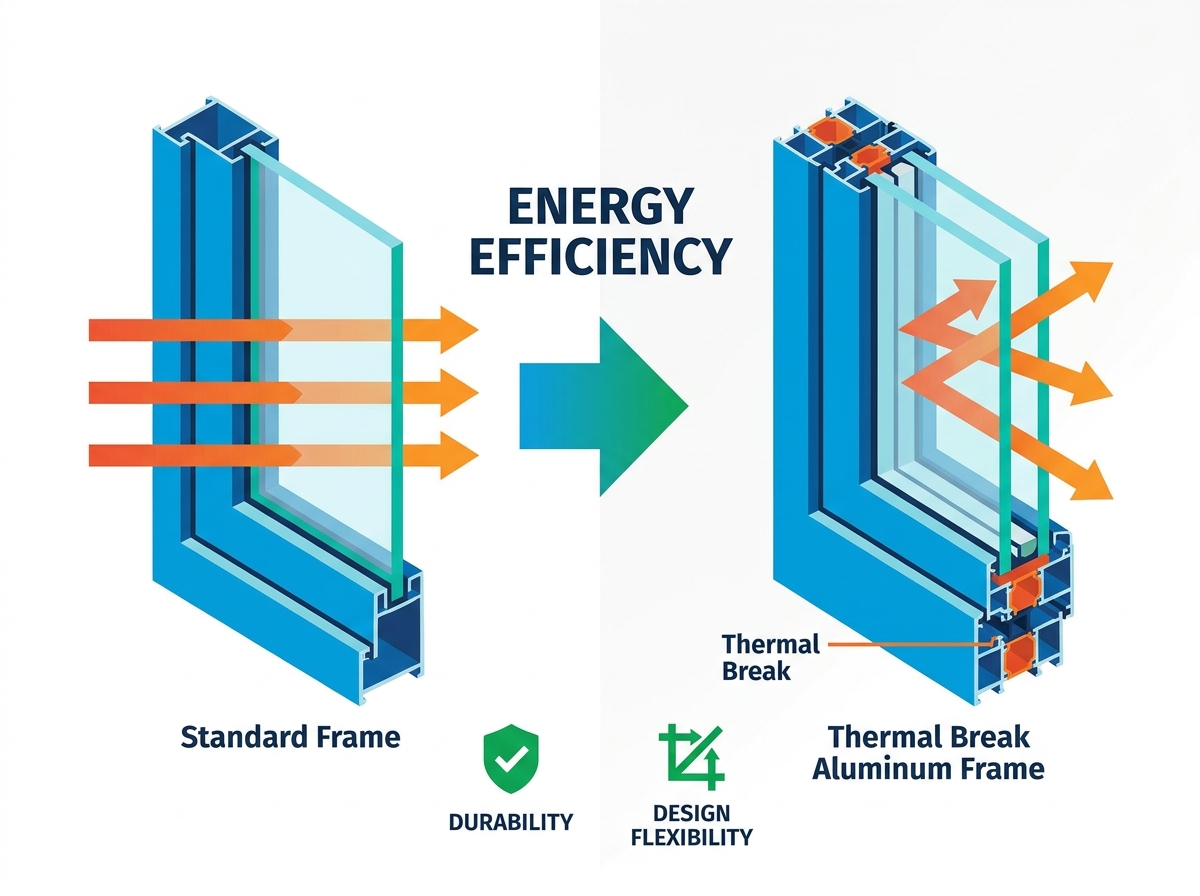
Standard aluminum conducts heat rapidly. Historically, this caused severe energy loss and interior condensation during winter months. Cold outside temperatures transferred directly through the solid metal frame. This ruined interior finishes and drove up heating loads. Modern engineering completely solved this dilemma. Before the widespread adoption of thermal isolation techniques, aluminum was relegated to mild climates or unconditioned commercial spaces. The building industry recognized the structural benefits but could not accept the energy penalties. This drove the development of advanced extrusion separation methods.
Manufacturers now split the interior and exterior aluminum extrusions. They join them using structural polyamide or polyurethane insulating strips. These thermal break door frames stop the transfer of heat and cold. The non-conductive barrier eliminates thermal bridging. Interior surfaces stay warm to the touch. This prevents condensation and protects surrounding drywall and wood flooring from moisture damage. The manufacturing process involves knurling the aluminum cavity, inserting the rigid polyamide strut, and mechanically rolling the metal to lock the strut in place. This composite assembly acts as a single structural unit while maintaining complete thermal separation.
The width of the polyamide strut directly correlates to the thermal performance of the frame. Wider struts provide better insulation but require deeper overall frame dimensions. Engineers balance the strut width with the required structural depth to optimize both U-factor and wind load resistance. Additionally, manufacturers often insert closed-cell foam into the hollow cavities of the extrusion to further disrupt convective heat transfer within the frame itself.
Thermally broken systems help buildings meet strict energy codes. They improve the overall U-factor and Solar Heat Gain Coefficient of the opening. This directly impacts HVAC loads during peak summer and winter cycles. You can specify large glass openings without failing local energy compliance tests. Building inspectors look closely at fenestration performance data. Providing certified NFRC ratings for the complete door assembly ensures smooth permitting and inspection processes.
| Frame Material | Structural Strength | Thermal Performance (Standard) | Maintenance Requirement |
|---|---|---|---|
| Solid Aluminum | High | Poor | Low |
| Thermally Broken Aluminum | High | Excellent | Low |
| Solid Wood | Medium | Good | High |
| Vinyl (uPVC) | Low | Excellent | Medium |
Retail and office entrances face brutal daily wear. High-traffic environments require maximum durability. Aluminum integrates perfectly with heavy-duty commercial hardware. You can easily mount panic devices, surface closers, and heavy-duty pivots. The frames withstand constant slamming and abuse while maintaining security. The rigid stiles do not flex when the door is pulled open forcefully, ensuring the locking mechanisms remain aligned. Continuous geared hinges pair exceptionally well with these frames, distributing the door's weight evenly from top to bottom and preventing the sagging common with standard butt hinges.
Homeowners want panoramic views connecting indoor and outdoor living spaces. Aluminum sliding systems deliver massive glass panels that operate effortlessly. High-performance stainless steel rollers carry the weight smoothly along the track. The rigid frames prevent the panels from racking or binding during operation. Multi-slide and pocketing configurations allow entire walls to disappear, blending the interior with the exterior patio. The structural integrity of the aluminum prevents the bottom rail from bowing under the immense weight of the insulated glass, ensuring the weatherstripping maintains a tight seal against the sill.
Modern office layouts rely on glass partitions to share natural light. Slim glass door frames provide acoustic separation without visual bulk. This translates well to residential interiors. Sleek kitchen cabinet integrations use narrow aluminum profiles to hold frosted or textured glass securely. These interior applications do not require thermal breaks, allowing for even thinner profile designs. The precision of aluminum extrusion ensures that sliding room dividers and pivot doors operate with tight tolerances, providing a premium feel and flawless functionality.
Premium aluminum systems require a higher upfront investment than basic vinyl or wood options. You must weigh this initial capital expenditure against the extended lifespan. Aluminum requires minimal maintenance over decades of use. You avoid replacement cycles, repainting labor, and hardware failures. The long-term durability easily justifies the initial material costs. When evaluating the project budget, factor in the reduced call-backs and warranty claims associated with dimensionally stable frames. A cheaper door that warps in the first year costs far more in labor and reputation than specifying the correct aluminum system from the start.
Urban environments demand high acoustic isolation. Frame rigidity plays a crucial role in sound damping. When combined with acoustic laminated glass interlayers, aluminum frames block exterior noise effectively. The tight weatherstripping seals out airborne sound waves. You can achieve high STC ratings for projects near highways or airports. Sound travels through the path of least resistance. A flimsy frame that flexes under wind pressure will break its weather seal, allowing noise to flank the glass. Aluminum's stiffness ensures the EPDM gaskets remain compressed against the strike jamb, maintaining the acoustic integrity of the entire opening.
Narrow stiles require specific hardware solutions. You cannot always use standard residential locksets. Specify mortise locks, concealed hinges, and automation components designed for narrow-stile profiles. Ensure all hardware matches the structural capacity of the door panel. Multi-point locking systems are highly recommended for tall doors. They secure the panel at the top, middle, and bottom, pulling the weatherstripping tight against the frame and preventing the stile from bowing under extreme wind loads. Always verify the backset dimensions of the chosen hardware to ensure it fits within the internal cavity of the aluminum extrusion.
A: No. Aluminum does not rust because it contains no iron. It naturally forms a protective oxide layer when exposed to air. This makes it highly resistant to corrosion, even in wet or coastal environments.
A: A thermal break is a non-conductive material, usually polyamide, placed between the interior and exterior aluminum profiles. It stops heat and cold from transferring through the metal, preventing condensation and improving energy efficiency.
A: Yes. Aluminum possesses a very high strength-to-weight ratio. It easily supports the heavy weight of double and triple-pane insulated glass units without sagging or warping over time.
A: Maintenance is minimal. Simply clean the tracks to remove debris, wipe down the frames with mild soap and water, and occasionally lubricate the rollers and hinges. You never need to sand or paint the frames.
A: Yes. When paired with laminated acoustic glass and high-quality weatherstripping, tight-sealing aluminum frames provide excellent sound insulation and achieve high STC ratings for noisy environments.


