
Views: 0 Author: Site Editor Publish Time: 2026-07-21 Origin: Site


High-traffic entryways in commercial facilities face compounding daily stress from continuous operational cycles, environmental exposure, physical impact, and evolving security threats. Failing to specify the correct door material and framing system leads to escalating maintenance demands, severe HVAC energy leaks, hardware failure, and potential ADA compliance liabilities. Facility managers and architects need a reliable framing solution that withstands constant pedestrian flow without compromising building aesthetics or structural integrity.
Exploring how a commercial aluminum door balances structural integrity, operational efficiency, design flexibility, and architectural aesthetics solves the specific demands of heavy-use facilities. By understanding the mechanical advantages of aluminum framing, you can optimize your building envelope, evaluate hardware compatibility, assess structural wear, and select the right specifications for long-term performance in demanding environments.
Daily door operations dictate material selection. A retail storefront experiences vastly different cycle counts than a corporate office or a healthcare facility. High-frequency usage accelerates mechanical wear on hinges, pivots, and closers. Establishing baseline metrics for daily cycles helps determine the necessary structural reinforcement. Aluminum offers a distinct advantage here. Its lighter weight reduces the kinetic energy transferred to the hardware during each cycle. This directly extends the operational lifespan of the entire entryway system. When you calculate the thousands of openings and closings a main entrance endures monthly, reducing the dead weight of the door leaf becomes a primary engineering objective.
Entryways constantly face physical impacts. Carts, luggage, heavy equipment, and high-volume pedestrian traffic strike the doors daily. The framing material must absorb and distribute these forces without denting or warping. Structural wear often manifests at the corner joints and hardware mounting points. Specifying reinforced stiles and heavy-duty bottom rails mitigates this damage. You must evaluate the specific traffic patterns of your facility to choose the appropriate extrusion thickness. Facilities moving heavy pallets or hospital beds require different impact ratings than standard office buildings.
Exterior doors form a critical part of the building envelope. They must resist wind loads, structural deflection, extreme temperatures, and moisture. Poorly specified doors degrade quickly under harsh weather conditions. They also create thermal bridges, forcing HVAC systems to work harder. Evaluating local climate demands ensures you select the right weatherstripping and thermal breaks. This prevents moisture intrusion and maintains indoor climate stability. Proper thermal management at the entryway prevents condensation buildup on the interior glass during winter months.
Modern facilities require robust access control. The door framing must house electronic strikes, magnetic locks, card readers, and concealed wiring. It must do this without compromising structural integrity. Retrofitting access control into inadequate frames often leads to security vulnerabilities. Pre-planning these requirements ensures the extrusions are factory-prepped. This guarantees seamless integration and reliable security performance. Field modifications for wiring often void warranties and weaken the aluminum profile, making factory preparation a strict requirement.
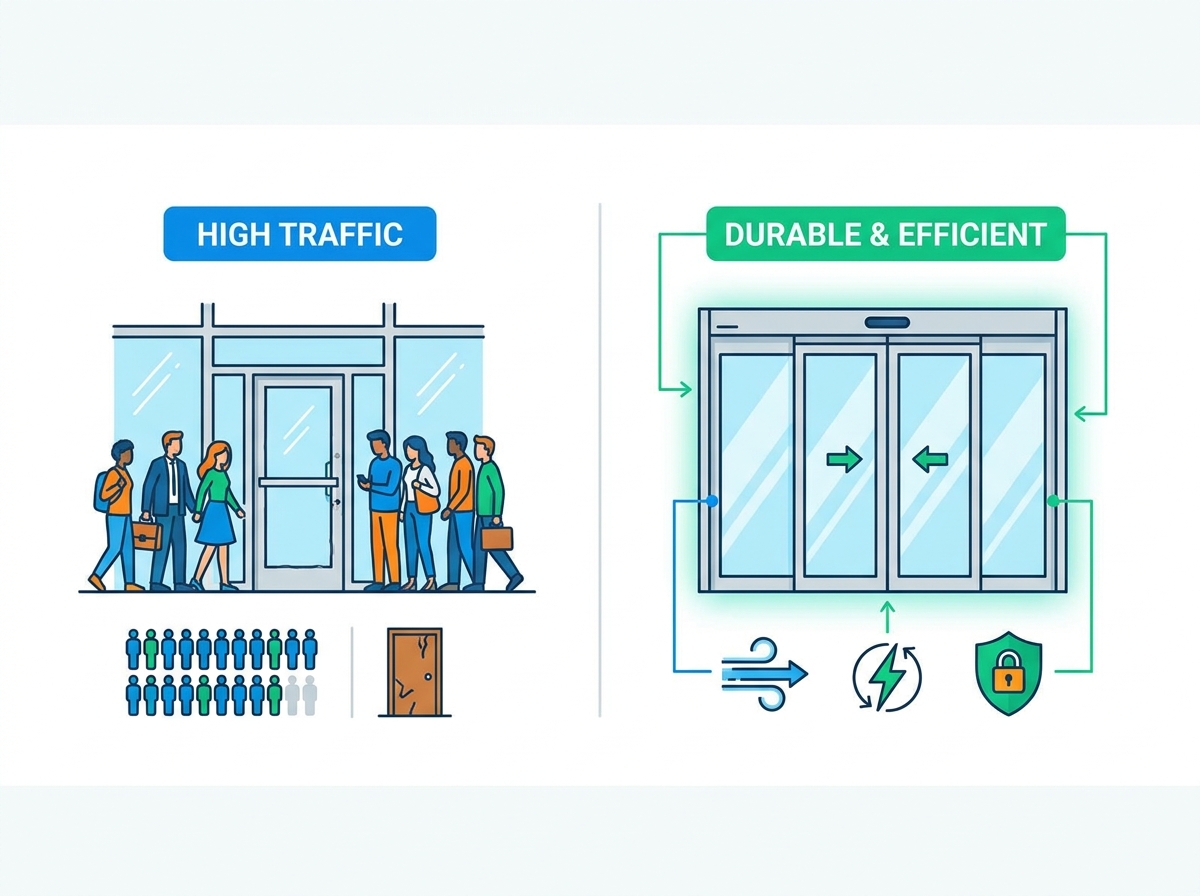
Aluminum naturally forms a protective oxide layer. This prevents rust, rot, and degradation. It performs exceptionally well in coastal, high-humidity, or chemical-exposure environments. Unlike steel, which requires constant touch-ups to prevent oxidation, aluminum maintains its structural integrity. This inherent corrosion resistance makes it ideal for exterior applications where weather exposure is constant. Facility maintenance teams spend significantly less time managing rust mitigation on aluminum frames compared to hollow metal alternatives.
The physics of door weight directly impact hardware longevity. Heavy doors exert massive shear forces on hinges and closers. Lighter aluminum doors reduce this mechanical strain. They extend the lifespan of expensive commercial hardware, including panic bars, continuous hinges, and overhead closers. This weight advantage also makes the doors easier to operate, aiding in ADA compliance. A lighter door requires less opening force, ensuring accessibility standards are met without relying on oversized, heavy-duty automated operators.
Modern aluminum framing incorporates advanced thermal management. Polyurethane thermal breaks separate the interior and exterior metal profiles. This prevents thermal bridging. When combined with insulated glass units (IGUs) and heavy-duty weatherstripping, the system significantly reduces building HVAC loads. These energy-efficient designs keep interior climates stable and comfortable. Upgrading to thermally broken frames is a standard practice for meeting stringent local energy codes in new commercial construction.
First impressions matter for any facility. The design flexibility of aluminum enhances business curb appeal. You can choose from various anodized finishes and durable powder coatings. Profiles range from ultra-narrow to wide stiles, matching any corporate branding. This versatility allows architects to achieve sleek, modern aesthetics without sacrificing structural performance. Custom color matching through powder coating ensures the entryway aligns perfectly with the exterior facade design.
Integrating sleek aluminum frames with large commercial glass doors offers psychological and practical advantages. It floods the indoor environment with natural light. This improves occupant comfort and attracts foot traffic. High visibility also enhances security by providing clear sightlines into and out of the building. Retail environments specifically rely on this high light transmittance to showcase interior merchandise to passing pedestrians.
Material choice dictates ongoing maintenance. Aluminum provides a low-maintenance reality. It generally requires only a simple wash and wipe. Steel, conversely, is highly susceptible to rust. It demands regular sanding, priming, and painting to prevent degradation. Fiberglass resists rust but suffers from UV degradation. It often fades and chalks over time under direct sunlight, requiring periodic refinishing. Facility managers must factor these maintenance hours into their operational planning when selecting entryway materials.
Hollow metal steel and fiberglass doors severely limit natural light. They typically accommodate only small vision lites. This restricts visibility and creates closed-off entryways. Aluminum storefront assemblies prioritize glass. They maximize light transmittance and create welcoming, open environments. If visibility and natural light are priorities, aluminum is the superior choice. The structural rigidity of aluminum allows for massive glass panes that other materials simply cannot support without bowing.
Aluminum is highly versatile, but it is not universally applicable. Heavy industrial loading docks require maximum brute force impact resistance. Detention facilities demand extreme security measures. In these specific scenarios, heavy-duty hollow metal steel remains superior. Steel withstands severe, intentional impacts better than standard aluminum extrusions. Evaluate the threat level and industrial usage before specifying the material to ensure the entryway can handle the specific environmental abuse.
| Feature | Aluminum | Hollow Metal Steel | Fiberglass |
|---|---|---|---|
| Corrosion Resistance | Excellent (Natural oxide layer) | Poor (Requires constant painting) | Excellent (Impervious to rust) |
| Weight | Lightweight (Reduces hardware wear) | Heavy (Strains hinges and closers) | Medium |
| Light Transmittance | Maximum (Supports large glass panels) | Minimal (Small vision lites only) | Minimal (Small vision lites only) |
| Maintenance | Low (Wash and wipe) | High (Sanding, painting, rust removal) | Medium (Prone to UV fading) |
Durability starts with the extrusion. The wall thickness of the aluminum profile dictates its structural limits. For heavy use, specify thicker walls. Corner construction is equally critical. Tie-rod construction uses hidden rods to pull the stiles and rails together. Heavy-duty welded corner joints offer superior high-impact durability. Welded corners prevent sagging and maintain frame squareness under constant stress. When inspecting door samples, always verify the corner joinery method, as this is the most common point of failure in high-cycle environments.
Choosing the right stile width is a critical decision framework. Narrow stiles maximize the glass area for a sleek aesthetic. They are best for light-to-medium traffic. Medium stiles offer a standard commercial balanced design. Wide stiles provide maximum resilience. They offer ample mounting space for heavy-duty hardware. For true high traffic aluminum doors, wide stiles are highly recommended. The wider profile provides the necessary surface area to securely anchor continuous gear hinges and heavy-duty rim panic devices.
Glass selection impacts energy compliance and security. Single-pane glass offers minimal insulation. Double-pane insulated glass units (IGUs) with low-E coatings drastically improve thermal performance. For security, specify tempered or laminated impact-resistant glass. Laminated glass holds together when shattered. This provides vital forced-entry protection and prevents dangerous glass shards from falling into pedestrian paths. Building codes often dictate the specific safety glazing requirements based on the door's location and size.
The framing must support robust hardware. Ensure the aluminum profile is factory-prepped. It must accommodate continuous gear hinges, rim panic devices, and multi-point locks. Automatic ADA operators require specific mounting reinforcements. Factory prepping guarantees precise alignment. It eliminates field modifications that can compromise the structural integrity of the door. Providing the manufacturer with a complete hardware schedule prior to fabrication ensures all internal reinforcements are welded in the correct locations.
Commercial entryways must meet strict accessibility standards. Threshold height limits prevent tripping hazards and allow wheelchair access. Minimum clear width requirements ensure safe passage. You must carefully calibrate closing speed settings and opening force regulations. Aluminum storefronts easily accommodate ADA-compliant hardware, but precise installation is mandatory to pass inspection. Inspectors will test the opening force with a pressure gauge; if the door binds due to poor installation, it will fail regardless of the hardware used.
Glass-heavy doors present perceived security vulnerabilities. You can mitigate these risks effectively. Detail reinforced deadbolts and hookbolts for robust locking. Install cylinder guards to prevent tampering. Apply security glazing films to standard glass, or specify laminated security glass. Interlocking astragals on double doors prevent prying tools from accessing the latch. Combining these physical security measures with electronic access control creates a highly secure yet visually open entryway.
Installation dictates the entire lifespan of the door. The rough opening must be precise. Frame squareness is non-negotiable. Plumb and level installation ensures even weight distribution. Poor installation causes the door to bind, accelerating hardware failure. Mitigate structural settling risks by using proper shimming techniques and heavy-duty anchoring systems. Even the highest quality aluminum door will fail prematurely if the frame is twisted during the anchoring process.
Supplier warranties reveal product confidence. Scrutinize the terms regarding finish degradation. Look for guarantees against thermal break failure and structural joint failure. A reliable warranty covers the extrusions and the factory-applied finishes. Ensure the service level agreement provides clear timelines for addressing defects or hardware failures. A strong warranty indicates the manufacturer uses high-quality alloys and proven fabrication techniques.
Project timelines depend on supplier efficiency. Evaluate their ability to deliver custom anodized finishes. Verify their capacity for precise factory hardware prep. A complete storefront framing package must arrive ready for installation. Delays in custom fabrication or hardware sourcing can derail entire construction schedules. Choose a supplier with proven logistical capabilities and a track record of on-time deliveries for commercial projects.
Long-term performance requires ongoing support. Choose a commercial door supplier capable of providing matching replacement components. They must offer rapid hardware sourcing for emergency repairs. Reliable technical support ensures facility managers can troubleshoot operational issues quickly. This lifecycle support is critical for maintaining building security and accessibility over the decades the door will be in service.
A: With proper specification and routine maintenance, these doors easily last 15 to 20 years. Lifespan depends heavily on cycle frequency, hardware quality, and environmental exposure. Continuous gear hinges and wide stiles significantly extend operational life.
A: Yes, modern systems are highly efficient. They utilize polyurethane thermal breaks within the aluminum extrusions to stop thermal bridging. Pairing these frames with double-pane, low-E insulated glass units (IGUs) drastically reduces HVAC energy loss.
A: Narrow stiles maximize glass area for aesthetics but handle lighter traffic. Medium stiles offer a standard balance of glass and metal. Wide stiles feature thick vertical framing, providing maximum durability and ample space for heavy-duty panic hardware.
A: Yes, but it requires precision. Electric strikes, magnetic locks, and card readers can be integrated. However, concealing wiring and modifying the frame in the field can be challenging. Factory-prepped frames are always recommended for new installations.
A: Maintenance is minimal. Wash frames periodically with mild soap and water to remove debris. Inspect and adjust door closers seasonally. Lubricate hinges and lock cylinders annually. Check weatherstripping for tears to maintain energy efficiency.


