
Views: 0 Author: Site Editor Publish Time: 2026-07-12 Origin: Site


The architectural shift toward integrating indoor and outdoor environments has made natural light a primary driver in modern building design. Traditional solid garage doors create dark, unusable spaces, require constant artificial lighting, and often fail to align with the aesthetic demands of contemporary residential and commercial properties. Upgrading to aluminum and glass garage doors solves daylighting deficits while introducing specific structural, thermal, and security variables. This guide breaks down the technical specifications and trade-offs required to make an informed purchasing decision.
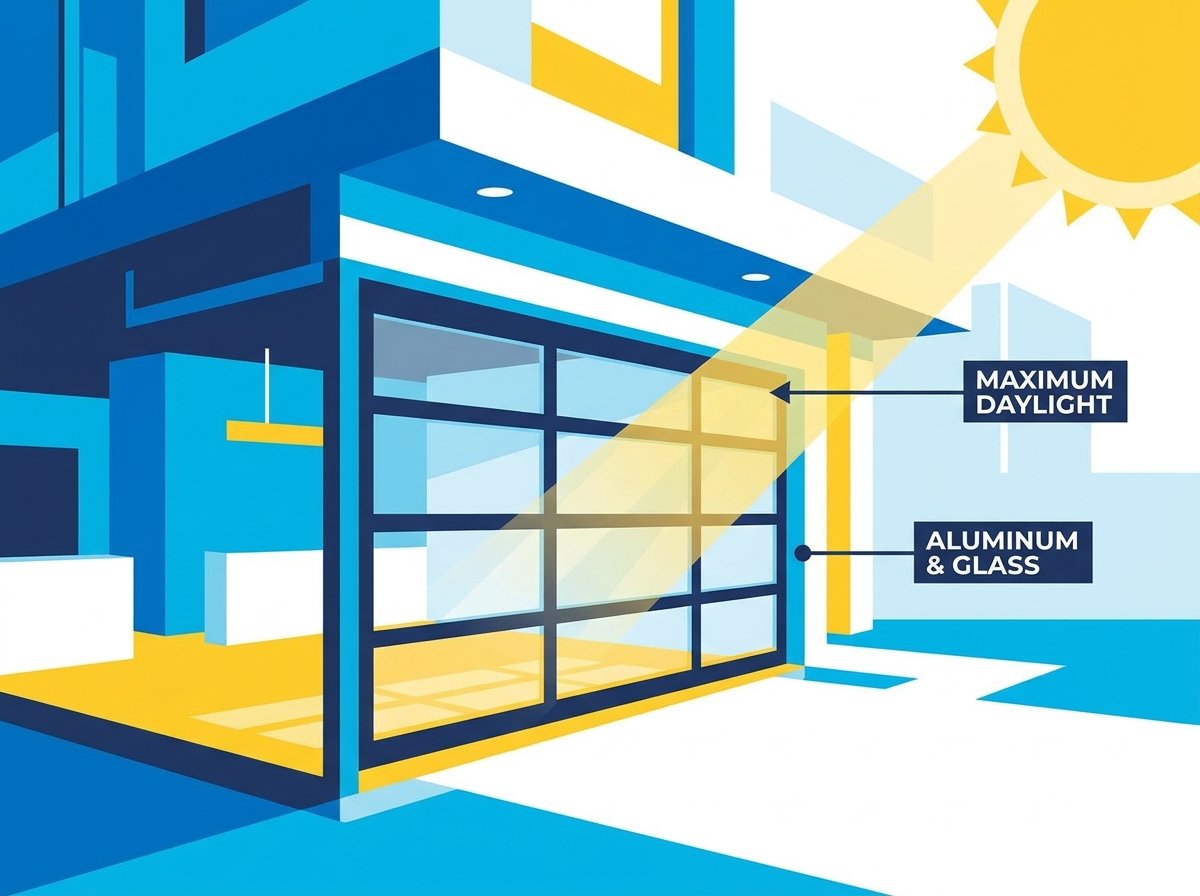
Transforming the garage from a dark storage area into a multi-use space requires adequate illumination. Workspaces like home gyms, art studios, and commercial showrooms benefit immensely from natural daylight. Relying less on artificial lighting during daytime hours lowers baseline electricity usage. Improved occupant comfort and visibility in functional workspaces directly correlate with the amount of natural light entering the area. When you introduce expansive glazing into a structural opening, the interior environment changes immediately. Shadows diminish, and the usable footprint of the building expands because occupants no longer feel confined in a windowless box. Contractors frequently see homeowners converting standard garages into active living areas, and the primary hurdle is always lighting. Standard overhead lighting casts harsh shadows, whereas natural daylight provides an even, diffuse wash across the floor plan.
Operational efficiency improves when you cut the electrical load. Facilities running daytime operations, such as automotive detailing shops or boutique retail spaces, can leave overhead lights off for eight to ten hours a day. This reduction in energy consumption adds up over the lifespan of the building. Furthermore, the psychological benefits of working in a naturally lit environment are well-documented. Mechanics, artists, and fitness enthusiasts all report higher satisfaction and lower fatigue when their primary light source is the sun rather than fluorescent tubes.
Integrating modern garage door styles helps match contemporary exterior facades. These doors act as reflective surfaces by day, mirroring landscaping and the sky. At night, they transform into glowing architectural lanterns from within. Premium full view garage doors influence curb appeal, aesthetic sophistication, and residential or commercial property appraisals. Architects specify these units to break up heavy masonry or wood-clad exteriors. The visual weight of a building lightens significantly when a massive solid door is replaced with a grid of glass and narrow aluminum stiles.
Real estate appraisers note that homes featuring high-end exterior finishes command higher market valuations. The garage door represents a massive percentage of the front elevation on most suburban homes. Upgrading this single component alters the entire street presence of the property. Buyers perceive the home as updated, custom, and architecturally significant. The day-to-night transition is particularly striking. During daylight hours, tinted or reflective glass provides a sleek, monolithic appearance. After sunset, interior lighting casts a warm glow through the panels, highlighting the structural grid of the door and providing ambient exterior lighting for the driveway.
You can utilize these doors as operable partition walls for restaurants, patios, and modern indoor living areas. They create inviting storefronts and automotive bays that allow customers to view interiors while maintaining security. The seamless transition between indoor and outdoor spaces enhances the overall usability of the property. In restaurant applications, a glass overhead door allows the dining room to merge with the sidewalk or patio during mild weather. When the weather turns poor, the door drops, sealing the envelope while still allowing patrons to watch the rain or snow.
Residential applications have expanded beyond the garage. Custom home builders install these doors in living rooms, pool houses, and kitchen bump-outs. The ability to open an entire wall to the backyard changes how a family interacts with their property. In commercial settings, fire stations, breweries, and tech offices use them to foster an open, industrial aesthetic. The hardware can be modified with high-lift or vertical-lift tracks to keep the open door tight against the ceiling, maximizing overhead clearance for vehicle lifts or tall equipment.
Lightweight construction reduces mechanical strain on springs, cables, and garage door openers, extending hardware lifespan. Aluminum offers inherent resistance to rust and corrosion, making it ideal for coastal, humid, or harsh weather environments. Evaluating anodized versus powder-coated finishes ensures long-term resistance to fading, chalking, and scratching. Steel doors, while strong, are susceptible to oxidation if the paint is scratched. Aluminum forms a natural oxide layer that prevents further degradation, meaning a scratch won't lead to a spreading rust patch.
The extrusion process allows manufacturers to create complex profiles with internal reinforcing webs. This means the stiles and rails can remain narrow—maximizing the glass area—without sacrificing structural integrity. When specifying the finish, anodizing provides a metallic look that penetrates the surface of the aluminum, offering extreme durability. Powder coating involves baking a dry powder onto the surface, providing an unlimited color palette. For high-UV environments, a high-performance AAMA 2605 powder coat prevents the color from chalking or fading over a twenty-year lifespan.
Comparing clear, frosted, tinted, and acid-etched glass options helps harvest soft natural lighting while managing glare and eliminating direct interior transparency. Tempered or laminated safety glass is necessary to comply with building codes and prevent shattering. Polycarbonate or acrylic panels serve as high-impact alternatives instead of traditional glass for commercial or high-risk environments. The choice of glazing dictates the performance of the door.
| Glazing Type | Light Transmission | Privacy Level | Best Application |
|---|---|---|---|
| Clear Tempered | High (80-90%) | Low | Showrooms, scenic residential garages |
| Frosted / Acid-Etched | Medium (50-70%) | High | Home gyms, street-facing studios |
| Tinted (Bronze/Gray) | Medium (40-60%) | Medium | High-glare environments, modern facades |
| Polycarbonate | Variable | Variable | Industrial facilities, high-impact zones |
Tempered glass is non-negotiable for overhead applications. If broken, it shatters into small, blunt cubes rather than dangerous, jagged shards. Laminated glass takes safety a step further by sandwiching a plastic interlayer between two sheets of glass; if broken, the glass adheres to the interlayer, remaining in the frame. This is highly recommended for areas prone to severe weather or where security is a primary concern.
Understanding U-factor and Solar Heat Gain Coefficient (SHGC) is critical when dealing with large glass panels. Standard single-pane glass garage doors have baseline thermal inefficiency in extreme climates. Temperature differentials between indoor and outdoor environments affect uninsulated glass and frames, increasing condensation risks. Glass is a poor insulator. A single pane of 1/8-inch glass offers almost no resistance to heat transfer. In a cold climate, the interior surface of the glass will drop to near-freezing temperatures, causing ambient interior humidity to condense and run down the panels, potentially pooling on the floor and freezing.
The aluminum frame itself is highly conductive. Without a thermal break, the cold outside temperature travels directly through the metal to the inside. This thermal bridging defeats the purpose of heating the garage. In summer, the reverse happens. Direct sunlight hits the clear glass, and the SHGC dictates how much of that solar radiation passes through to bake the interior. Without proper specification, a glass door can turn a garage into an oven in July and an icebox in January.
Specifying double-pane Insulated Glass Units (IGUs) with argon gas fills and Low-E coatings improves thermal performance. Polyurethane-insulated aluminum rails and stiles reduce thermal bridging. Heavy-duty bottom astragals, perimeter weatherstripping, and thermal breaks help meet local energy compliance codes. An IGU traps a layer of inert gas between two panes of glass, drastically slowing heat transfer. Low-E (low-emissivity) coatings are microscopically thin metallic layers applied to the glass that reflect interior heat back inside during winter and bounce exterior solar radiation away during summer.
Thermally broken frames use a structural polyurethane or polyamide isolator that separates the exterior aluminum extrusion from the interior extrusion. This physical barrier stops the conduction of heat and cold. When combined with high-quality EPDM rubber perimeter seals and a thick bottom astragal that conforms to the concrete floor, the door assembly can achieve respectable U-factors that satisfy strict energy codes. Installers must ensure the track is adjusted perfectly so the door compresses against the weatherstripping without binding.
Utilizing double-pane laminated glass and insulated frames reduces street-level and exterior noise pollution. This is particularly beneficial in urban or commercial zones where noise control is a priority. Sound transmission class (STC) ratings measure how well a barrier blocks airborne sound. Standard single-pane glass has a low STC rating, allowing traffic noise, sirens, and neighborhood activity to easily penetrate the space.
Laminated glass is highly effective at dampening sound waves because the plastic interlayer disrupts the vibration of the glass. When you combine laminated glass with an insulated frame and tight perimeter seals, the acoustic performance of the garage improves dramatically. This is a critical consideration for homeowners converting their garage into a home office, recording studio, or bedroom, where a quiet environment is mandatory.
Analyzing the premium nature of glass garage doors against standard steel, vinyl, or wood models is essential. Factoring in property valuation increases, potential daytime energy savings, and reduced hardware replacement costs due to the lightweight frame helps calculate ROI. Manufacturer warranties regarding glass seal failure, structural integrity, and frame finish degradation should be evaluated carefully. You are paying for precision engineering. The extrusions must be perfectly square, the glass must be sealed flawlessly, and the hardware must support a rigid, non-flexing panel.
The long-term value reveals itself in durability. Wood doors rot, warp, and require constant painting. Steel doors dent easily and rust at the bottom section where they meet wet concrete. Aluminum and glass doors bypass these common failure points. The primary wear items become the rollers, springs, and weather seals, all of which are easily replaceable. When reviewing warranties, pay close attention to the IGU seal warranty. A failed seal allows moisture between the panes, causing permanent fogging that ruins the aesthetic and requires panel replacement.
Exterior and interior glass cleaning is necessary to maintain daylight benefits, water-spot resistance, and overall visual appeal. Routine checks for track alignment and roller wear are required given the rigid nature of aluminum frames. Monitoring perimeter seals and IGU integrity prevents moisture ingress and fogging over time. You cannot neglect a glass door and expect it to look good. Road salt, dust, and hard water from sprinklers will spot the lower panels quickly.
Because the aluminum frame is rigid, it does not flex like a thin steel door. If the tracks fall out of alignment, the door will bind and put immense strain on the opener motor. Keeping the tracks perfectly plumb and the rollers free of debris ensures smooth, quiet operation.
Assessing existing track, spring, and motor compatibility is crucial; highly insulated glass doors may require heavy-duty hardware upgrades. Verifying headroom, backroom, and side-room dimensions for standard versus high-lift track configurations ensures proper installation. Ensuring the chosen door meets local structural codes for wind resistance is vital, particularly in hurricane-prone regions. You cannot simply hang a heavy double-pane glass door on tracks designed for a cheap builder-grade steel door. The track radius, gauge of the steel, and spring wire diameter must all be calculated for the specific weight of the new door.
Wind load is a massive factor. In coastal areas like Florida or the Carolinas, the door must withstand negative and positive wind pressures during a storm. Manufacturers achieve wind load compliance by adding internal steel struts to the aluminum extrusions and upgrading the track brackets. This adds significant weight, requiring heavy-duty torsion springs and a commercial-grade opener. Always verify the rough opening is perfectly level and plumb; a glass door will highlight any framing irregularities immediately.
Mitigating the risk of exposing valuable assets through transparent panels requires careful glass selection. Integrating reinforced framing, shatter-resistant laminated glass, tamper-resistant hinges, and smart locks offsets the perceived vulnerability of glass panels. If you store expensive tools, classic cars, or inventory in the garage, clear glass advertises those assets to the street. Frosted or heavily tinted glass provides the necessary daylight without the security risk.
Physical security upgrades include slide locks that engage directly into the track, preventing the door from being forced upward. Smart openers with automatic deadbolts offer peace of mind, locking the door mechanically every time it closes. Laminated glass prevents a thief from simply smashing a pane and reaching in to pull the emergency release cord. By combining the right glass opacity with robust hardware, you achieve the architectural look without compromising the safety of the building.
Select frame finishes based on local climate severity to ensure longevity. Choose glass opacity based on street-level visibility and glare preferences to maintain privacy. Specify insulation packages based on whether the garage is a conditioned or unconditioned space. Measure existing rough openings and consult with a certified local installer for a structural site audit. Request itemized quotes that specify glass thickness, frame insulation, and hardware requirements.
A: They can be highly efficient if specified correctly. You must choose double-pane insulated glass, Low-E coatings, and thermally broken aluminum frames. Standard single-pane versions offer poor insulation and will transfer heat and cold easily.
A: Yes, if the interior is lit and clear glass is used, the inside is completely visible. To maintain privacy at night while still allowing daylight in during the day, select frosted, tinted, or acid-etched glass options.
A: They are secure when equipped with the right materials. Using laminated safety glass prevents shattering, and reinforced aluminum frames resist forced entry. Pairing the door with an automatic deadbolt lock on the opener maximizes security.
A: The best type depends on your specific application. Frosted glass is ideal for privacy in home gyms or studios. Clear glass maximizes natural light for showrooms. Tempered glass is the minimum standard for safety in all overhead doors.
A: Aluminum is naturally resistant to rust and corrosion. Unlike steel, it forms a protective oxide layer. This makes aluminum frames highly durable and the preferred choice for coastal, humid, or harsh weather environments.


