
Views: 0 Author: Site Editor Publish Time: 2026-07-26 Origin: Site


Modern home architecture demands building materials that deliver structural strength without sacrificing visual appeal. You need solutions that handle heavy glass loads, resist harsh weather, and keep indoor climates comfortable. Traditional timber and vinyl often fall short when pushed to the structural limits required by contemporary designs. Architects and builders increasingly specify advanced metal frames for new builds and extensive renovations to meet these exact demands.
The shift toward minimalist, high-performance design relies heavily on materials that disappear into the background while performing complex structural tasks. Homeowners want massive glass walls and unobstructed views. They also expect their homes to remain highly energy-efficient. Achieving this balance requires precise engineering and robust materials.
We will explore the structural, aesthetic, and ecological advantages of upgrading your property. You will learn how slim frame profiles maximize natural light, how advanced thermal barriers stop heat transfer, and why these systems outlast traditional alternatives. We break down the exact specifications you need to look for to ensure your home remains secure, efficient, and visually stunning for decades.
Contemporary architecture thrives on clean lines and abundant natural light. Achieving this look requires framing materials capable of supporting immense weight without adding visual bulk. Metal frames excel here due to their exceptional strength-to-weight ratio. This structural advantage allows fabricators to create ultra-slim sightlines that traditional materials simply cannot match. When you reduce the frame thickness, you maximize the visible glass area. This floods interior spaces with daylight and creates a seamless visual transition to your surroundings.
Supporting large-format glass is a strict engineering requirement on modern job sites. Expansive panoramic windows and heavy sliding glass walls exert tremendous stress on their frames. Aluminum handles these loads effortlessly. It does not sag or warp under the weight of heavy triple-glazed units. This rigid support ensures that massive sliding doors operate smoothly on their tracks, year after year, without structural degradation. We often see vinyl frames warp under similar loads, leading to operational failures and costly callbacks.
Design versatility extends far beyond structural capacity. You have extensive options for surface finishes that protect the metal and enhance your home's aesthetic. Powder coating bakes color directly onto the metal surface, creating a tough, scratch-resistant layer. Anodizing alters the surface chemistry of the metal, integrating the color into the material itself for ultimate weather resistance. Both methods provide long-lasting color that will not peel or flake.
Many homeowners utilize dual-color options to solve complex design challenges. You can specify a dark, bold color for the exterior to match a modern facade design, while choosing a soft white or neutral tone for the interior to complement your indoor decor. This flexibility allows you to integrate the frames perfectly into any architectural vision without compromise. Installers appreciate the rigidity of these frames during handling, as they maintain their squareness much better than flexible alternatives.
| Finish Type | Application Process | Durability | Best Use Case |
|---|---|---|---|
| Powder Coating | Electrostatically applied dry powder, cured under heat. | High scratch and fade resistance. | Standard residential and custom color matching. |
| Anodizing | Electrochemical process converting metal surface to anodic oxide. | Extreme weather and corrosion resistance. | Coastal environments and high-traffic areas. |
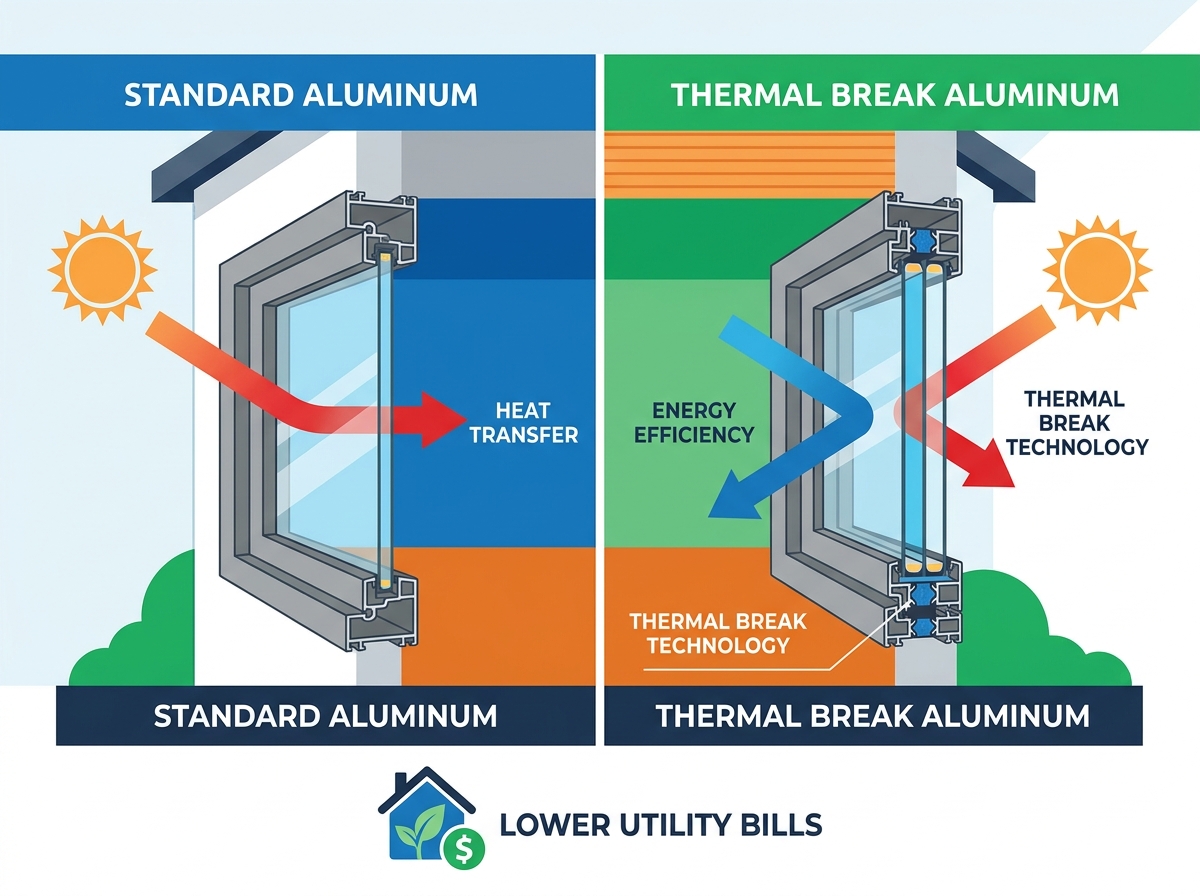
A common misconception is that metal frames inherently cause energy loss. While raw aluminum is a highly conductive material, modern engineering has completely solved this issue. The science of thermal efficiency in metal framing revolves around interrupting the conductive path between the outside environment and your home's interior. Without this interruption, the metal would transfer cold air directly into your living room during winter.
This interruption is achieved through thermal break windows. Manufacturers split the frame into separate interior and exterior extrusions. They then join these two halves using a structural polyamide insulating barrier. This non-conductive core effectively eliminates thermal bridging. Heat from the summer sun cannot travel inside, and your winter heating cannot escape outside. On job sites, we verify the integrity of these thermal breaks before installation to ensure maximum performance.
The impact on your utility bills is substantial. By stabilizing the internal temperature of the frame, you drastically reduce the heating and cooling loads on your HVAC system. Your home reaches the desired temperature faster and maintains it with far less energy expenditure. Over the lifespan of the property, this translates to significant reductions in long-term energy consumption.
Understanding performance metrics is necessary when selecting your glazing package. You need to evaluate several specific ratings:
When you invest in building materials, longevity is a primary concern. High-quality aluminum windows and doors offer unmatched climate resilience. They stand up to extreme weather conditions without degrading. Unlike timber, they will not swell or rot when exposed to heavy rain. Unlike vinyl, they will not crack, warp, or become brittle under intense ultraviolet radiation.
This structural stability ensures that the weather seals remain tight and the hardware functions perfectly regardless of the season. We frequently replace failed vinyl units that have warped out of square after just a decade of sun exposure. Metal frames do not suffer from this thermal expansion and contraction issue to the same degree, maintaining their precise factory tolerances.
| Feature | Aluminum | Vinyl (PVC) | Timber |
|---|---|---|---|
| Lifespan | 40+ Years | 15 - 20 Years | 25+ Years (with heavy maintenance) |
| Structural Strength | Exceptionally High | Low to Moderate | Moderate to High |
| Maintenance Required | Minimal (Basic cleaning) | Minimal | High (Sanding, painting, sealing) |
| Weather Resistance | Excellent (No warping or rotting) | Prone to warping in extreme heat | Prone to swelling and rot if unsealed |
Ownership is virtually maintenance-free. You completely eliminate the need for periodic sanding, painting, or varnishing. The factory-applied finishes protect the metal indefinitely. Preserving the aesthetic and functional integrity of the frames requires only simple cleaning protocols. Wiping down the frames with mild soapy water and keeping the sliding tracks clear of debris is generally all that is required to keep them operating smoothly.
Home security starts with the physical perimeter. The inherent material strength of metal provides a formidable barrier against forced entry. It offers natural resistance to physical force, tampering, and impact. Intruders cannot easily pry or break these rigid frames, making them a highly secure choice for residential properties.
Modern aluminum window and door systems integrate advanced security features directly into the extrusions. Fabricators design the internal chambers to house heavy-duty, multi-point locking mechanisms. When you turn the handle, steel hooks and bolts engage at multiple points along the frame simultaneously. Combined with robust, concealed hinges and laminated security glass, these systems offer exceptional protection for your family.
Beyond physical security, these heavy-duty frames provide excellent acoustic insulation. Noise pollution is a major concern in urban and suburban environments. The combination of dense metal profiles, specialized rubber gaskets, and thick insulated glass units creates a powerful sound barrier. Sealed properly, they block out traffic noise, sirens, and neighborhood disturbances, ensuring a quiet and peaceful indoor environment. We always recommend checking the STC (Sound Transmission Class) ratings if noise reduction is a priority for your build.
Building a modern home requires a commitment to sustainable practices. Aluminum stands out as one of the most eco-friendly building materials available due to its infinite recyclability. It can be melted down and repurposed repeatedly without any loss of structural quality. Using recycled metal requires only a fraction of the energy needed to produce primary aluminum, significantly lowering the carbon footprint of your build.
This sustainable lifecycle contributes directly to green building certifications. If you are pursuing LEED or BREEAM ratings for your property, specifying highly recyclable, energy-efficient metal framing will help you earn points toward certification. The material's longevity means fewer replacements and less waste ending up in landfills over the building's lifespan.
The long-term return on investment is highly favorable. You benefit from lower monthly energy consumption due to superior thermal performance. You also eliminate ongoing maintenance and replacement costs over a lifespan that easily exceeds 30 years. Furthermore, the sleek aesthetic and high-performance metrics significantly enhance curb appeal, directly increasing the resale value of the property.
Selecting the correct configuration for your layout dictates how you will interact with your home daily. Different system types serve distinct architectural purposes. You must match the hardware and opening style to the specific room requirements.
Your glazing options are just as important as the frame. Double glazing is the standard for most climates, providing a solid baseline for thermal and acoustic performance. Triple glazing adds a third pane of glass and an additional gas-filled cavity. You should specify triple glazing if you live in an extreme climate or require maximum soundproofing near busy roads.
Evaluating manufacturers requires careful attention to technical specifications. Review the warranty terms carefully to ensure they cover both the mechanical hardware and the surface finish. Check the wind-load ratings to confirm the frames can handle local storm conditions. Verify that the products carry independent weather-tightness certifications, proving they will not leak under heavy wind and rain.
Upgrading your property with high-performance metal framing transforms how your home looks, feels, and operates. You gain the aesthetic advantage of ultra-slim sightlines and massive glass expanses. You secure your home with rigid, impact-resistant materials. You also future-proof your property against rising energy costs through advanced thermal break technology and superior weather sealing.
To move forward with your project, take the following steps:
A: Older, non-thermally broken frames did cause condensation. Modern systems use a polyamide thermal break that separates the cold exterior metal from the warm interior metal. This insulation prevents the interior frame from getting cold enough to draw moisture out of the indoor air, effectively eliminating condensation issues.
A: Maintenance is very simple. Wash the frames twice a year using a soft sponge and a mild, non-abrasive soap mixed with warm water. Rinse thoroughly with clean water. Avoid harsh chemicals, solvents, or abrasive scrubbing pads, as these can permanently damage the factory finish.
A: Yes, they are highly recommended for coastal areas. However, you must specify a marine-grade powder coating or a high-micron anodized finish. These specialized finishes provide enhanced protection against salt spray and prevent the galvanic corrosion common in harsh coastal climates.
A: Absolutely. Retrofitting is a common practice. A qualified installer will remove the old timber frames, assess the rough opening for water damage or rot, and install the new metal systems. Custom sizing ensures the new frames fit perfectly into your existing architectural openings.
A: Double glazing uses two panes of glass separated by one insulating gas cavity. Triple glazing uses three panes of glass and two gas cavities. Triple glazing is heavier and more expensive, but it provides superior thermal insulation and significantly better sound reduction for extreme climates or noisy environments.


