
Views: 0 Author: Site Editor Publish Time: 2026-08-05 Origin: Site


The architectural shift toward minimalist, large-pane glazing in modern residential design has fundamentally changed window specification requirements. Architects, builders, and homeowners must balance the aesthetic demand for ultra-slim sightlines and unobstructed views with increasingly strict energy codes, structural load requirements, and long-term durability. Traditional materials like wood and vinyl struggle to support massive glass expanses without bulky framing that disrupts the visual flow of a space. Modern thermally broken aluminum profiles offer a highly engineered solution to this exact problem. This guide evaluates the technical realities, performance metrics, and implementation risks of specifying aluminum windows for residential buildings. We will examine structural capacities, thermal break technologies, and the specific installation tolerances required to ensure these systems perform flawlessly in the field over decades of exposure to the elements.
Modern residential architecture relies heavily on natural light and seamless indoor-outdoor transitions. Establishing the requirement for narrow frame profiles maximizes daylight opening and achieves a minimalist, contemporary aesthetic. Bulky frames disrupt visual flow and limit the amount of glass that can be placed in a given rough opening. Aluminum extrusions provide the necessary rigidity to keep sightlines incredibly thin, often reducing the visible frame to just a couple of inches even on massive sliding doors. This structural capacity allows designers to push the boundaries of glass sizing without compromising the building envelope's integrity.
Leveraging heavy-duty commercial structural standards accommodates monumental glass sizes in luxury residential projects. Commercial-grade engineering crosses over into residential applications to prevent structural deflection under heavy wind loads. Heavy, large-format double or triple-pane glass units exert immense dead loads on window frames. A standard 6-foot by 10-foot triple-pane insulated glass unit can weigh upwards of 400 pounds. The framing material must support these loads without sagging, bowing, or warping over time. Aluminum maintains its structural integrity under extreme weight, ensuring operational sashes function smoothly for decades without the hardware binding or the weather seals failing.
Local building codes dictate strict energy performance metrics that cannot be ignored. Framing systems must meet stringent criteria for U-factor, Solar Heat Gain Coefficient (SHGC), and air infiltration rates. Compliance with standards like Title 24 in California or Passive House requirements in colder climates requires advanced engineering at the extrusion level. Specifiers must select framing materials capable of integrating high-performance glazing while maintaining structural stability. Aluminum frames equipped with modern thermal barriers meet these rigorous climate and energy codes effectively, bridging the gap between structural necessity and thermal performance.
When evaluating the structural limits of fenestration, you have to look at the moment of inertia in the extrusion profile. Thicker aluminum walls in the extrusion process yield higher wind load resistance. For coastal properties or high-altitude builds, the design pressure (DP) ratings must exceed standard residential requirements. Aluminum systems can be engineered to hit DP50 or even DP70 ratings, meaning they can withstand hurricane-force winds and driving rain without structural failure or water ingress. This level of performance is simply unattainable with standard vinyl profiles without inserting heavy steel reinforcements that complicate manufacturing and thermal performance.
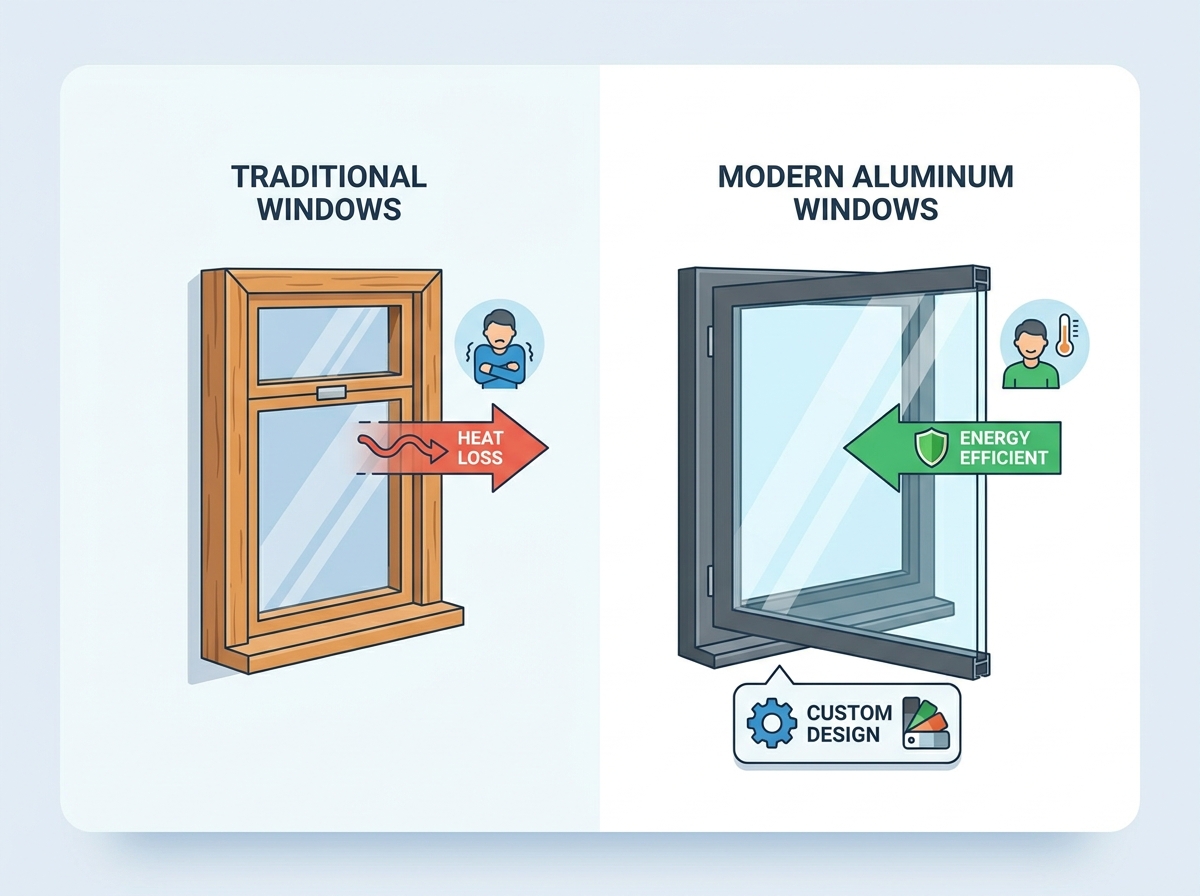
Outdated myths regarding aluminum's thermal conductivity no longer apply to modern systems. Advanced thermal break technology utilizes polyamide and polyurethane barriers to separate the interior and exterior metal profiles. This separation disrupts the conductive pathway. Heat transfer drops significantly. These engineered profiles function as highly energy efficient windows suitable for extreme climates. The polyamide struts are mechanically crimped into the aluminum extrusions, creating a composite profile that retains the structural strength of metal while offering the thermal resistance of a non-conductive material.
Precision tolerances in manufacturing reduce unwanted airflow. High-quality compression seals, often made of EPDM rubber, eliminate drafts and minimize active HVAC loads. The overall window unit's efficiency relies heavily on the glazing package. Low-E coatings reflect radiant heat back to its source. Argon or krypton gas fills reduce convective heat transfer within the insulated glass unit. Warm-edge spacers prevent thermal bridging at the glass perimeter, which is traditionally the weakest thermal point of any window. Together, these components maximize thermal resistance and prevent interior surface temperatures from dropping below the dew point.
To understand the impact of thermal breaks, consider the depth of the polyamide strut. A standard thermal break might be 15mm deep, suitable for moderate climates. High-performance systems designed for northern winters might utilize thermal breaks up to 40mm deep, often incorporating multi-chambered struts filled with insulating foam. This level of engineering ensures the interior aluminum surface remains close to room temperature, regardless of exterior freezing conditions.
Aluminum exhibits exceptional resistance to environmental degradation. It does not rust, rot, or absorb moisture like wood. UV degradation, which causes vinyl to become brittle and yellow over time, does not affect aluminum. The material withstands extreme thermal expansion and contraction cycles without warping. Frame joints remain tight, preserving the weather seal over the window's lifespan. This dimensional stability is critical for large operable units, where even a millimeter of warping can cause the locking mechanisms to fail.
Performance under high wind-load pressures and driving rain is critical for building longevity. Engineered drainage systems within the aluminum extrusions channel water away from the insulated glass unit and weep it to the exterior. Robust weatherstripping ensures high water penetration resistance. Architectural finishes protect the raw metal from oxidation. AAMA 2604 and 2605 powder coatings provide superior color retention and chalk resistance, utilizing fluoropolymer resins that bond chemically to the metal. Class I anodized finishes offer unmatched durability for coastal or high-exposure environments, resisting salt spray and industrial pollutants by creating an incredibly hard aluminum oxide layer on the surface.
The inherent rigidity of residential aluminum windows prevents forced entry. The strong metal profiles resist physical impacts and prying attempts far better than hollow vinyl or soft wood. These frames easily integrate with multi-point locking hardware that secures the sash to the frame at three or more points simultaneously. Heavy-duty concealed hinges support massive sash weights while maintaining a clean interior aesthetic. Security upgrades do not compromise the slim sightlines that architects demand.
Acoustic insulation is vital for urban noise mitigation and overall occupant comfort. Heavy aluminum frame profiles combined with multi-layer laminated glazing achieve high Sound Transmission Class (STC) and Outdoor-Indoor Transmission Class (OITC) ratings. The dense framing material and specialized glass dampen sound waves across different frequencies. Using asymmetrical glass thicknesses in a double-pane unit (e.g., one 1/4-inch pane and one 1/8-inch pane) disrupts sound wave resonance, creating a quiet interior environment regardless of exterior noise pollution from traffic or aircraft.
Specifying standard operational types ensures proper ventilation, egress compliance, and maximum airtightness. Casement and awning windows utilize compression seals. When locked, the sash pulls tightly against the weatherstripping around the entire perimeter. This mechanism provides superior air and water resistance compared to sliding seals found in single-hung or gliding windows. Fixed windows offer the highest performance, as they lack operable seams entirely, making them ideal for massive picture windows where ventilation is handled elsewhere in the room.
When detailing casement windows, the hardware selection is just as important as the extrusion. Stainless steel friction hinges allow large sashes to open smoothly and stay in place during breezy conditions. The structural integrity of the aluminum prevents the sash from dropping out of square over time, a common failure point in heavy wood or vinyl casements. For awning windows placed high on a wall for thermal venting, motorized actuators can be concealed within the aluminum frame, providing automated climate control without visible bulky hardware.
Multi-panel custom aluminum windows and doors blur indoor-outdoor boundaries. Large-format sliding doors and bi-fold systems require robust track integration. Flush threshold designs create seamless transitions but require engineered sill drainage to prevent water ingress during heavy storms. Pivot windows offer a unique architectural statement, rotating on a central axis to provide massive ventilation openings. These pivot systems rely on heavy-duty floor and head closers that must be perfectly aligned during installation.
Proper installation of large-format sliding systems involves several critical steps to ensure long-term functionality:
Architects demand extensive customization to match specific design visions. Dual-color extrusions allow different interior and exterior colors. This flexibility matches diverse interior design palettes while adhering to strict exterior architectural guidelines or HOA rules. Manufacturers produce custom geometric shapes, raked heads for vaulted ceilings, and ultra-slim profiles. Historically-inspired divided lites replicate traditional aesthetics using simulated divided lites (SDL) applied to the glass surface, maintaining the thermal performance of a single large insulated glass unit without compromising the structural integrity of modern aluminum extrusions.
Evaluating window materials requires analyzing lifecycle longevity and structural capabilities. Thermally broken aluminum offers a 40-to-50-year expected lifespan when properly maintained. Reduced replacement frequency makes it a highly durable choice for permanent residential structures. Unlike materials that degrade rapidly under UV exposure or moisture, aluminum maintains its structural and aesthetic properties for decades.
| Material Type | Structural Strength | Sightline Profile | Maintenance Needs | Expected Lifespan | Thermal Expansion Rate |
|---|---|---|---|---|---|
| Thermally Broken Aluminum | Extremely High | Ultra-Slim (2" - 3") | Minimal (Routine Cleaning) | 40 - 50+ Years | Low |
| Vinyl (uPVC) | Low to Moderate | Thick / Bulky (4" - 5") | Low | 15 - 25 Years | High |
| Wood (Clad or Unclad) | Moderate | Moderate to Thick | High (Painting/Sealing) | 30 - 40 Years | Low |
| Fiberglass Composites | High | Moderate to Slim | Low | 30 - 40+ Years | Very Low |
Comparing aluminum to vinyl reveals significant structural differences. Aluminum provides superior strength, significantly thinner sightlines, and better resistance to warping under extreme solar heat. Vinyl frames often require steel reinforcement for larger openings, which complicates the manufacturing process and can introduce thermal bridging. Against wood, aluminum presents zero rot risk and lower maintenance. It delivers a more modern aesthetic without the need for regular repainting or varnishing. Compared to fiberglass, aluminum offers more precise extrusion profiles, larger maximum sash sizes, and broader architectural finish options, including metallic anodized coatings that fiberglass cannot replicate.
Specifying the correct thermal break depth for the specific climate zone is critical. Inadequate thermal breaks lead to interior frame sweating when outside temperatures plummet. Condensation damages interior drywall, ruins hardwood floors, and promotes mold growth around the window perimeter. A continuous thermal barrier must align perfectly with the insulated glass unit's warm-edge spacer. This alignment, known as the isothermal line, prevents thermal bridging and ensures the entire window assembly performs as intended. If the glass sits too far forward or backward in the frame, the thermal break is bypassed, rendering it useless.
Oversized units require careful engineering and structural calculations. Calculating wind loads and specifying appropriate mullion reinforcements prevents glass stress. Excessive structural deflection leads to insulated glass unit seal failure, allowing argon gas to escape and moisture to enter, causing permanent fogging between the panes. Heavy-duty aluminum mullions handle these wind loads, keeping the glass secure and the weather seals intact during severe storms. In some cases, steel reinforcing bars are inserted into the hollow chambers of the aluminum mullions to meet extreme deflection limits (e.g., L/175) required by local building codes.
Precision installation is non-negotiable for rigid aluminum frames. The rough opening must be perfectly plumb, level, and square. Forcing a rigid metal frame into an uneven opening causes binding, hardware failure, and compression seal gaps. Evaluating warranty terms for finish degradation and insulated glass unit seal failure ensures long-term reliability. Select manufacturers with proven track records in large-format residential installations. The best window in the world will fail if the flashing integration and perimeter sealant joints are executed poorly by an inexperienced framing crew.
A: Yes. Modern aluminum frames feature advanced polyamide thermal breaks that stop heat transfer through the metal. When paired with triple-pane glass, argon gas fills, and low-E coatings, they easily meet stringent cold-climate energy codes and Passive House standards.
A: Not if specified and installed correctly. High-quality thermal breaks prevent the interior frame surface from reaching the dew point. Proper installation, alignment of the isothermal line, and adequate indoor humidity control eliminate condensation risks entirely.
A: High-grade architectural finishes like AAMA 2605 powder coatings or Class I anodizing easily last 40 to 50 years. They resist fading, chalking, and corrosion, maintaining their aesthetic integrity even in harsh coastal or high-UV environments.
A: Absolutely. Aluminum possesses an exceptional strength-to-weight ratio. It easily supports heavy triple-pane insulated glass units without sagging, warping, or requiring excessively bulky frame profiles, ensuring long-term operational smoothness.
A: A thermal break is a continuous barrier of low-conductivity material, usually a reinforced polyamide strut, mechanically crimped between the interior and exterior aluminum extrusions. It physically separates the metal, preventing thermal energy from traveling through the frame.
A: Yes. The dense, rigid nature of aluminum frames, combined with tight EPDM compression seals and laminated acoustic glass, provides excellent sound insulation. They achieve high STC and OITC ratings, effectively blocking traffic and urban noise.


