
Views: 0 Author: Site Editor Publish Time: 2026-08-06 Origin: Site


The architectural shift toward expansive, unobstructed views has made large-format fenestration a defining feature of contemporary residential design. Homeowners and architects constantly struggle to balance the desire for minimalist, ultra-slim sightlines with the strict structural and thermal performance requirements of modern building codes. Traditional materials often fail in these demanding applications. Wood frames warp under heavy glass loads, while standard vinyl lacks the necessary rigidity for oversized openings. High-performance aluminum glass doors have emerged as the standard for bridging this gap. By combining advanced metallurgy with modern thermal break technology, these systems offer a verifiable solution for achieving both architectural intent and rigorous energy standards. You get the sleek aesthetic you want without sacrificing the durability and climate control your home needs.
Modern residential doors must meet a rigorous set of baseline requirements. They need to maximize natural light and ensure the smooth operation of heavy multi-slide or bifold systems. Maintaining strict climate control is also non-negotiable. When you design a home with massive wall-to-wall glass, the framing material carries immense responsibility. The structural demands placed on the frame increase exponentially as panel sizes grow.
Traditional materials present distinct limitations when dealing with large expanses of glass. Vinyl is prone to significant expansion and contraction during temperature shifts. This movement often leads to frame sagging, binding rollers, and compromised weather seals. Wood presents a different set of maintenance burdens. It remains highly susceptible to moisture, rot, and requires frequent refinishing to maintain its structural integrity and appearance. Wood frames also require massive profiles to support heavy insulated glass units, defeating the purpose of a minimalist design.
Utilizing commercial-grade architectural aluminum brings commercial-level structural ratings to residential settings. You gain exceptional wind-load resistance and long-term durability. Architectural-grade aluminum stands as the optimal material for supporting the heavy dead loads of double- or triple-pane glazing. It does this without compromising the minimalist aesthetic that defines contemporary architecture. The extrusion process allows manufacturers to create complex profiles with internal webbing that maximizes stiffness while keeping the exterior face incredibly narrow.
Aluminum supports massive structural loads without adding excessive weight. This superior strength-to-weight ratio enables the smooth, effortless operation of oversized sliding or pivoting modern glass doors. You can move panels weighing hundreds of pounds with a single hand because the rigid frame prevents the rollers from binding. The 6063-T5 aluminum alloy commonly used in these extrusions provides a yield strength that far surpasses residential wood or vinyl.
The inherent rigidity of aluminum allows for incredibly narrow sightlines. Frame profiles often measure less than two inches across, and some specialized systems achieve sightlines as narrow as 3/4 of an inch. This maximizes the glass-to-frame ratio and effectively blurs the line between indoor and outdoor spaces. You get more glass and less visible frame. This structural capacity also allows for taller panels, often reaching up to 12 feet in height, creating dramatic architectural statements.
Factory-applied finishes provide excellent design flexibility and durability. Anodized aluminum offers a chemically bonded finish that resists scratching and fading. It integrates with the metal itself, meaning it cannot peel or blister. AAMA 2605 powder-coated finishes provide an even wider range of color options with exceptional resistance to UV degradation and chalking. These high-performance coatings ensure the frames look brand new decades after installation.
| Finish Type | Application Process | Durability Rating | Best Use Case |
|---|---|---|---|
| Class I Anodized | Electrochemical bath | Extremely High | High-traffic areas, modern industrial aesthetics |
| AAMA 2605 Powder Coat | Electrostatic spray & bake | Extremely High | Coastal environments, custom color matching |
| AAMA 2604 Powder Coat | Electrostatic spray & bake | High | Standard residential applications |
| Standard Liquid Paint | Spray application | Moderate | Budget-conscious projects (not recommended for coastal) |
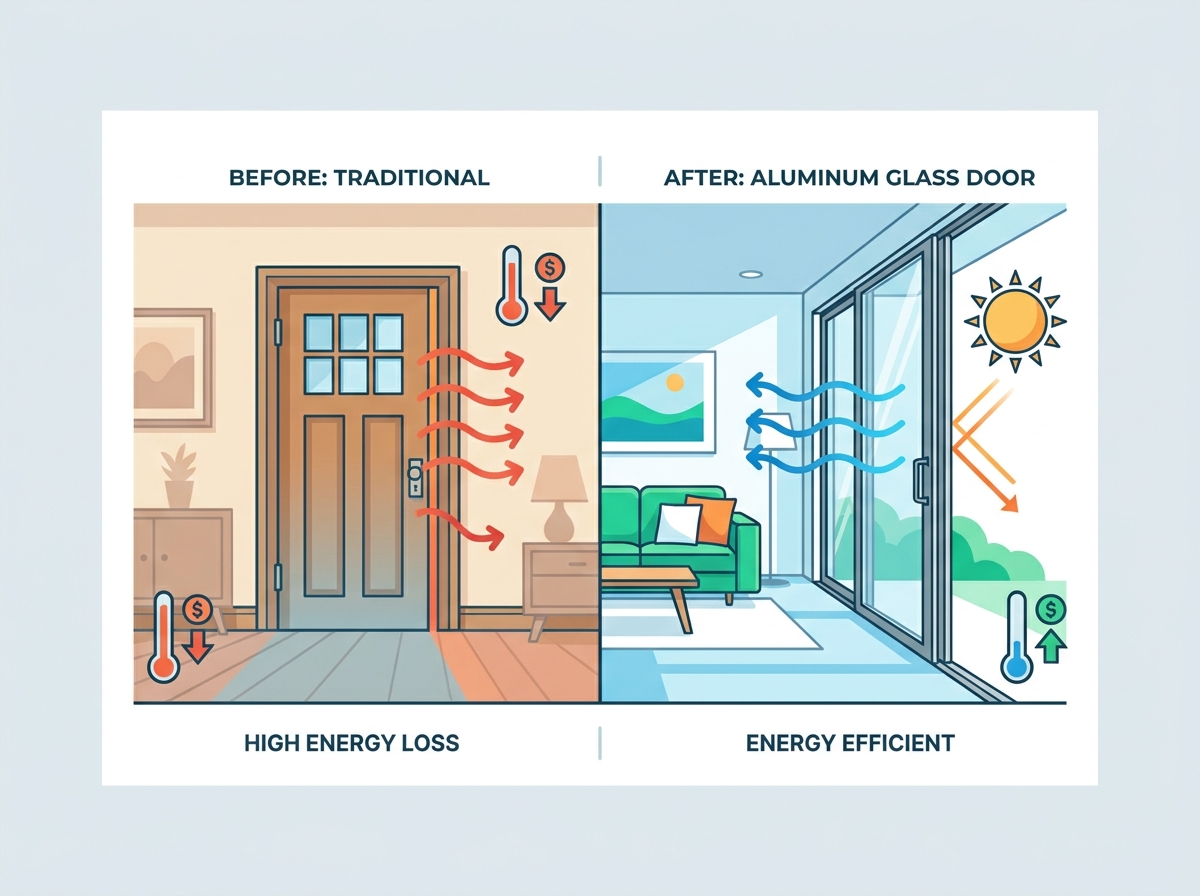
Historical skepticism regarding metal frames and heat transfer is well-founded. Older aluminum frames conducted heat and cold directly into the home. Modern engineering solves this through the physics of thermal breaks. Polyamide struts act as physical barriers, separating the interior and exterior aluminum extrusions. This halts thermal bridging entirely. These struts are often reinforced with glass fibers to maintain the structural integrity of the frame while providing exceptional insulation.
Incorporating high-performance energy efficient glass doors can reduce overall building energy loss by up to 40%. This efficiency directly translates to lower monthly utility costs. The frame no longer acts as a radiator for outside temperatures. When you touch the interior frame on a freezing winter day, it feels neutral, not ice-cold.
Evaluating energy performance requires looking at the U-Factor and Solar Heat Gain Coefficient (SHGC). Thermally broken aluminum frames achieve competitive U-factors when paired with Low-E, argon-filled insulated glass units (IGUs). They meet the strict requirements of modern energy codes. The width of the polyamide strut directly impacts the U-factor; wider struts provide better insulation.
Mitigating heat loss in winter and solar heat gain in summer reduces the operational strain on residential HVAC systems. You experience verifiable long-term utility savings and significantly improved indoor comfort. The glass remains neutral to the touch, and drafts are eliminated. Proper weatherstripping, including multi-point locking mechanisms that compress the sash against the frame, further enhances this airtight seal.
| Frame Type | Glass Specification | Estimated U-Factor | Condensation Resistance |
|---|---|---|---|
| Non-Thermally Broken Aluminum | Clear Dual-Pane | 0.60 - 0.70 | Poor |
| Thermally Broken Aluminum (Standard) | Low-E Dual-Pane + Argon | 0.30 - 0.35 | Good |
| Thermally Broken Aluminum (Wide Strut) | Low-E Triple-Pane + Argon | 0.20 - 0.25 | Excellent |
Aluminum features a natural oxidation process that creates a protective layer against rust. This makes it highly viable in harsh environments. It performs exceptionally well in high-UV desert climates where vinyl would warp and degrade. When specified with marine-grade finishes, it easily withstands the corrosive salt air of coastal zones. You do not have to worry about the structural core of the frame deteriorating over time.
The material boasts extreme environmental resilience. It withstands severe temperature swings without losing structural integrity. It also resists industrial chemical exposure, acid rain, and airborne pollutants. The frame will not degrade under these harsh conditions. This resilience makes it the preferred choice for urban high-rises and beachfront properties alike.
Dimensional stability is a critical advantage. Aluminum strongly resists the warping, swelling, and shrinking that plague wood and vinyl. This stability is essential for maintaining weatherstripping seals. It ensures the operational glide of large door systems remains smooth over decades of use. If a frame warps even a few millimeters, a massive sliding panel will drag on the track and become impossible to open.
The reality of maintenance is minimal. You only need routine track cleaning, occasional hinge or roller lubrication, and basic frame washing. Compare this to the sanding, staining, or painting required by alternative materials. The time and effort saved over the lifespan of the doors are substantial. We recommend vacuuming the bottom track monthly to remove debris that could damage the stainless steel rollers.
Thermally broken aluminum systems command a premium upfront investment. You justify this cost through longevity, increased property valuation, and drastically reduced replacement cycles. You install these doors once, and they last for the lifetime of the structure. When you factor in the eliminated maintenance costs associated with wood, the financial equation heavily favors aluminum over a 20-year period.
When comparing aluminum to steel doors, trade-offs emerge. Steel offers even slimmer profiles and higher strength. However, aluminum provides a more cost-effective, lighter, and naturally corrosion-resistant alternative. It avoids the extreme price premium associated with thermally broken steel systems. Steel doors also require massive structural support due to their immense weight, which drives up framing costs during construction.
You must also balance extreme glass sizes with operability. Larger panels mean fewer vertical sightlines, which enhances the view. However, heavier glass requires more robust, expensive roller hardware and massive structural support above the opening. Jumbo glass sizes also limit the number of available glass manufacturers, which can increase lead times and replacement costs if a pane is broken.
Proper structural engineering is an absolute necessity. Oversized aluminum doors require rigid headers with near-zero deflection tolerances. The industry standard limits header deflection to L/720 or a maximum of 1/8 inch over the entire span. If the header sags even a fraction of an inch, the doors will bind, drag, or fail to lock entirely. You must use steel I-beams, engineered LVL, or glulam beams to support the roof load above these massive openings.
Water management demands careful attention. Integrated sill pans, proper flashing, and engineered weep hole systems prevent water intrusion. This is especially critical in flush-sill applications, which are highly popular in modern design but prone to water ingress if installed incorrectly. The sub-sill must be perfectly level and sealed with high-grade polyurethane or silicone sealants to direct water outward.
High-end aluminum systems are never DIY-friendly. You must utilize manufacturer-certified installers. They ensure warranty compliance and achieve perfect plumb, level, and square alignment. Proper weather sealing depends entirely on the skill of the installation crew. They use laser levels and precise shimming techniques to ensure the frame is perfectly isolated from the rough opening.
Aluminum systems stand as the definitive choice for modern homes requiring large-scale, structurally sound fenestration. They deliver unmatched aesthetic appeal and reliable climate control when specified with thermal breaks.
A: Yes. When specified with polyamide thermal breaks and Low-E insulated glass, modern systems prevent thermal bridging. They can reduce thermal energy loss by up to 40% compared to older, non-broken metal frames.
A: Aluminum requires a higher initial investment than vinyl but is often comparable to high-end clad-wood. The long-term return on investment is superior due to zero rot, high dimensional stability, and minimal maintenance needs.
A: Non-thermally broken aluminum will sweat in cold climates. Modern thermally broken frames eliminate this issue entirely by keeping the interior surface temperature stable and isolated from exterior cold.
A: They typically boast a 30-to-50-year lifespan. This depends on routine hardware maintenance and environmental factors. The aluminum frame itself will not rot, warp, or structurally degrade over time.
A: Yes. Aluminum naturally resists corrosion. For coastal or highly polluted areas, specify marine-grade powder coating or heavy anodized finishes to ensure maximum protection against salt and chemicals.
A: It is a frame where the interior and exterior metal profiles are structurally separated by a non-conductive material, usually polyamide. This barrier prevents the transfer of heat and cold through the metal.
A: Custom multi-slide systems can span 40 feet or more. Individual panels often reach 6 to 8 feet in width, depending entirely on the structural header support and the weight capacity of the roller hardware.


