
Views: 0 Author: Site Editor Publish Time: 2026-07-30 Origin: Site


The architectural demand for expansive, uninterrupted views and floor-to-ceiling glass introduces severe structural and thermal challenges that standard fenestration materials cannot support. As glass surface area increases, so does the dead load, wind load vulnerability, and risk of frame deflection. Specifiers and builders must balance the aesthetic desire for minimal sightlines with strict building codes and energy performance mandates. Without the right material, oversized glazing projects risk seal failures, air infiltration, and structural instability. High-performance aluminum framed windows serve as the engineering baseline for large-span glazing. They provide the necessary structural rigidity to support massive glass units while maintaining the narrow profiles modern architecture demands. This evaluation covers the structural capabilities, thermal mitigation technologies, and long-term project viability of aluminum systems for oversized openings, giving builders the data needed to execute heavy glazing installations correctly.
Designing glass walls or oversized windows presents significant engineering hurdles on the job site. The primary challenge involves managing the dead load, which is the sheer weight of the glass itself. Multi-pane, laminated, or oversized insulated glass units exert massive downward force on the sill and framing members. Wind load dictates the deflection limits of the vertical and horizontal frame components. The system must resist lateral forces without bending, ensuring the glass remains secure and the structural silicone seals stay intact. Thermal expansion also plays a major role. The frame and glass must accommodate temperature fluctuations without compromising weatherproofing or snapping the glass edges against the metal.
Standard framing materials fall short when applied to oversized openings. Vinyl lacks the structural rigidity needed for large spans. It flexes and warps under high heat and heavy weight, leading to immediate seal failures and water intrusion. Wood offers natural insulation but requires significant maintenance and finishing work. Wood requires bulky, thick profiles to achieve the structural integrity necessary for large glass expanses. This defeats the architectural goal of minimal sightlines and adds unnecessary weight to the building envelope.
Building codes strictly regulate frame deflection to protect the integrity of the glazing. The L/175 or L/240 deflection limits dictate how much a frame can bend under wind load relative to its unsupported length. Frame rigidity acts as the primary defense against glass seal failure. If a frame deflects beyond these limits, the stress transfers directly to the glass edge. This leads to insulated glass unit seal rupture, argon gas loss, and eventual glass breakage. Aluminum's inherent stiffness ensures these deflection limits are met even in expansive, multi-story applications.
| Material Type | Structural Rigidity | Deflection Resistance (Large Spans) | Profile Thickness Required |
|---|---|---|---|
| Vinyl (PVC) | Low | Poor (Prone to warping) | Very Thick |
| Wood | Medium | Moderate (Requires reinforcement) | Thick |
| Standard Aluminum | High | Excellent | Thin |
| Thermally Broken Aluminum | Very High | Excellent | Ultra-Thin |
In high-wind zones, coastal regions, and mid-to-high-rise buildings, structural design pressure ratings dictate fenestration choice. The framing system must withstand extreme positive and negative pressures without failing or blowing out. Aluminum systems dominate these high-performance applications because their rigidity allows them to achieve the highest wind load ratings available. This makes them suitable for hurricane zones where impact resistance and structural integrity are mandatory for building code compliance.
The primary advantage of aluminum extrusions is their exceptional load-bearing capacity combined with minimal material volume. This high strength-to-weight ratio allows for the support of larger individual glass panes without the need for heavy, intrusive mullions. The structural integrity of aluminum ensures that the dead load of heavy glass units is safely transferred to the building structure. This maintains stability across massive spans and prevents the sill from sagging over time.
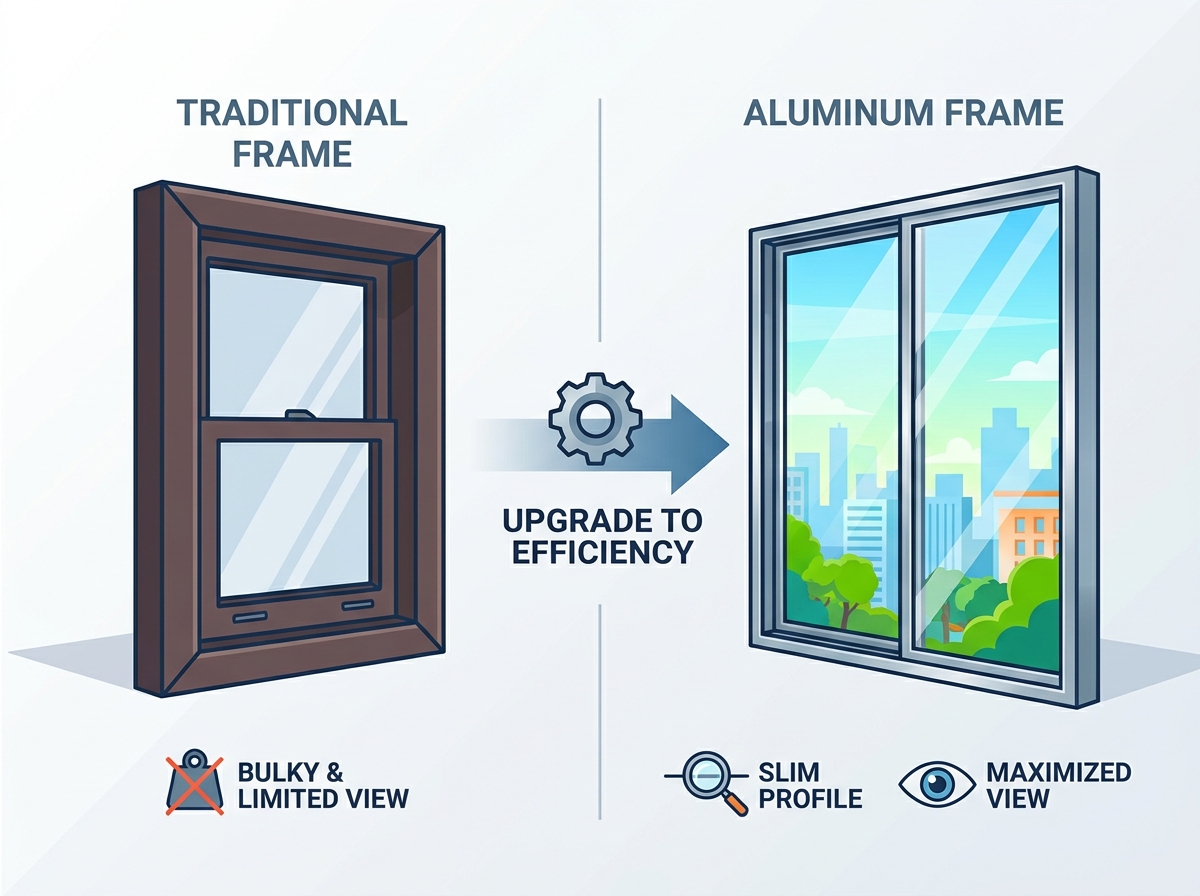
The engineering behind narrow sightlines relies entirely on material strength. Aluminum allows architects to achieve the minimalist aesthetic by reducing the visible frame-to-glass ratio. Specifying slim frame windows maximizes the viewing area and provides uninterrupted sightlines. Because aluminum is highly rigid, these ultra-thin profiles do not compromise the structural integrity or wind load resistance of the window system. The metal holds the glass firmly in place even during severe weather events.
By utilizing ultra-thin profiles, aluminum systems increase the overall glazing area of the rough opening. This maximizes natural daylighting, a critical component of modern architectural design. Increased daylighting reduces reliance on artificial lighting and lowers energy consumption for the building. Abundant natural light enhances occupant well-being and productivity in both residential and commercial spaces. The structural capacity of aluminum makes these large daylighting openings possible without sacrificing safety.
Aluminum is immune to swelling, rotting, and warping, regardless of environmental exposure or moisture levels. This long-term dimensional stability ensures that the frames maintain their exact shape over decades of operation. The weather-tight seals remain intact, preventing air infiltration and moisture penetration. Consistent performance is vital for maintaining the energy efficiency and structural safety of large glass installations. The gaskets and weatherstripping stay compressed exactly as designed.
We must objectively acknowledge aluminum’s primary weakness: high thermal conductivity. Unbroken aluminum transfers heat rapidly from the outside in, or the inside out. In cold climates, this leads to the cold frame effect, where the interior frame surface drops in temperature, causing condensation and energy loss. If specified incorrectly without thermal mitigation, standard aluminum frames will fail to meet modern energy codes and will cause moisture damage to interior drywall and wood finishes.
Modern aluminum frame windows solve the conductivity issue through advanced thermal breaks. Structural polyamide struts separate the interior and exterior aluminum extrusions. This physical barrier halts thermal bridging and prevents heat transfer through the frame. Thermally broken systems drastically improve the U-factor of the window assembly. This engineering makes aluminum viable in strict energy-code jurisdictions and prevents interior condensation buildup.
The frame is only one part of the thermal equation. High-performance aluminum systems are engineered with deep glazing pockets to accommodate heavy double, triple, and Low-E coated glass units. These advanced glass packages are required to meet stringent U-factor and Solar Heat Gain Coefficient requirements. The structural capacity of aluminum ensures it can hold these heavy, thick glass units securely without the glazing bead popping loose under wind pressure.
Non-standard architectural openings require tailored solutions from the manufacturer. Specifying custom aluminum windows allows for the creation of unique shapes, oversized sliding systems, and complex curtain wall integrations. The extrusion process of aluminum makes it highly adaptable. Engineers can design profiles that meet specific structural and aesthetic project requirements, including raked heads, curved tops, and massive multi-panel sliding doors.
Modern architecture frequently demands seamless transitions between indoor and outdoor spaces. Flush-track aluminum sliding and folding door systems achieve this by blending interior spaces with outdoor environments. The structural rigidity of aluminum allows for massive, heavy panels that glide smoothly on stainless steel rollers. They maintain weatherproofing and structural integrity when closed, utilizing multi-point locking hardware that engages directly into the rigid aluminum frame.
Choosing the right finish is critical for environmental durability and long-term appearance. AAMA 2604 and 2605 powder coatings offer exceptional resistance to fading and chalking, making them ideal for high-UV desert climates. Class I anodized finishes penetrate the metal, providing superior scratch and corrosion resistance. Anodized finishes are the preferred choice for coastal environments exposed to salt spray. Proper finish specification ensures the frames maintain their integrity over time.
In urban environments, sound attenuation is a major concern for building occupants. The combination of rigid aluminum frames and heavy laminated or insulated glass units contributes significantly to acoustic performance. High Sound Transmission Class and Outdoor-Indoor Transmission Class ratings are achievable. The stiff frames prevent sound vibrations from bypassing the heavy acoustic glazing, keeping interior spaces quiet even near busy highways or airports.
The upfront costs of thermally broken aluminum are higher compared to vinyl and fiberglass options. The true value lies in lifecycle longevity and reduced replacement cycles. The return on investment is realized through reduced maintenance, exceptional durability, and property value enhancement. Aluminum's resistance to degradation ensures that the windows will not need premature replacement. This offsets the initial investment over the lifespan of the building and reduces disruption to occupants.
When comparing aluminum to steel windows, steel offers even thinner profiles due to its immense raw strength. However, aluminum provides a significantly lighter alternative. The reduced weight simplifies installation, requires less heavy machinery on site, and lowers structural support requirements for the building foundation. Aluminum is naturally corrosion-resistant, whereas steel requires meticulous finishing, galvanizing, and ongoing maintenance to prevent rust and degradation.
Fiberglass offers lower thermal conductivity than aluminum, making it highly energy-efficient out of the box. However, fiberglass cannot match the structural span limits of aluminum extrusions. It lacks the custom engineering flexibility and structural joining capacities required for complex, oversized glass walls. For massive, uninterrupted spans and heavy glass loads, aluminum remains the superior structural choice for commercial and high-end residential builders.
Aluminum offers significant end-of-life value for sustainable construction. It is highly recyclable and can be repurposed repeatedly without any loss of structural properties or metal quality. The use of recycled aluminum drastically reduces the energy required for production compared to mining and smelting primary aluminum. Specifying aluminum window systems contributes to LEED certification points and supports sustainable building practices across the industry.
Installing massive aluminum systems requires strict adherence to installation tolerances on the job site. The rough openings must be perfectly level, plumb, and square before the frame is set. Because aluminum frames are rigid and the glass is heavy, there is no room for forcing the system into an out-of-square opening. Improper installation leads to operational issues, seal failures, and compromised structural integrity. Builders must verify rough opening dimensions meticulously.
While aluminum is dimensionally stable regarding moisture, it expands and contracts with temperature changes. Joints and sealants must be specified to accommodate this physical movement of the building envelope. Using high-quality, flexible silicone sealants and designing appropriate expansion joints ensures that the weatherproofing remains intact as the materials move. Rigid caulking will crack and fail, leading to water intrusion during heavy rain events.
To ensure successful implementation of large-format glazing systems, follow these next steps:
A: Yes, high-performance aluminum frames are engineered with deep glazing pockets and high structural rigidity specifically designed to support the heavy weight and thickness of triple-pane insulated glass units.
A: Older, non-thermally broken aluminum frames cause condensation in cold climates. Modern thermally broken frames use polyamide struts to halt thermal transfer, effectively preventing interior condensation.
A: High-quality finishes, such as AAMA 2605 powder coatings or Class I anodizing, last decades. They are highly resistant to fading, chalking, and corrosion, even in harsh environments.
A: Yes, but the finish is critical. Class I anodized finishes or high-grade fluoropolymer powder coatings must be specified to protect the aluminum from corrosive coastal salt spray.
A: Absolutely. Aluminum extrusion and fabrication processes allow for high flexibility, making it possible to engineer custom shapes, oversized panels, and unique architectural configurations.


