
Views: 0 Author: Site Editor Publish Time: 2026-08-06 Origin: Site


Contemporary residential architecture relies heavily on expansive glass, oversized entryways, and minimalist sightlines. This shift creates a distinct engineering challenge for builders and architects. You need an entry door material capable of supporting massive, heavy glass panels and ultra-slim frames without compromising the structural integrity, security, or thermal envelope of the house. Historically, builders viewed aluminum as a commercial-grade utility material. Today, advanced engineering has transformed it into a premium residential solution. We evaluate its viability by looking at specific criteria related to climate resilience, energy performance, and architectural goals. You must understand how modern manufacturing techniques resolve past insulation issues, how aluminum stacks up against traditional materials, and what specific features to demand when selecting a system for your specific climate and design requirements.
Architects and homeowners demand minimalist, flush, and pivot door designs. These elements must integrate seamlessly with modern facades. Achieving this requires materials that can maintain extremely narrow sightlines. Thick, bulky frames disrupt the visual flow of contemporary architecture. The primary engineering hurdle is the load-bearing requirement. Entryways often feature double- or triple-glazed glass units. Glass is exceptionally heavy, weighing roughly three pounds per square foot per pane. A large pivot door can easily exceed several hundred pounds. The frame material must possess a high weight-to-strength ratio. It must support these massive glass units without sagging, bowing, or deflecting over time. Frame deflection compromises the weather seal and makes operation difficult. Aluminum extrusions provide the necessary rigidity.
Aesthetic customization is another major factor. High-end fenestration systems offer dual-color capabilities. This allows you to specify a dark exterior frame to match the facade, while maintaining a lighter, warmer interior palette. Specialized textures and finishes further align the door with the interior design language. When we install these systems on-site, the precision of the extrusion allows for perfectly mitered corners and seamless joints that other materials simply cannot replicate.
Exterior doors serve as the primary barrier against environmental extremes. Baseline weather resistance requires strict adherence to performance thresholds. Doors must meet specific wind load capacities, especially in hurricane-prone regions. Water penetration resistance is equally critical. The system must prevent water ingress during driving rainstorms. UV exposure tolerance ensures the frame finish does not chalk, fade, or degrade under intense sunlight. Beyond basic weatherproofing, maintaining the thermal envelope is a strict requirement. The door must support interior climate control. It must prevent heat from escaping during winter and block solar heat gain during summer. Meeting stringent local energy codes, such as Title 24 in California or the IECC, is non-negotiable. Builders must select modern exterior doors that offer verifiable thermal performance data to ensure compliance and occupant comfort.
| Performance Metric | Standard Requirement | High-Performance Aluminum Capability |
|---|---|---|
| Design Pressure (DP) | DP 30 - DP 40 | DP 50 - DP 70+ (Hurricane Rated) |
| Water Penetration | 4.5 psf to 6.0 psf | 8.0 psf to 12.0 psf |
| Air Infiltration | 0.30 cfm/sq ft | < 0.10 cfm/sq ft |
| U-Factor | 0.35 or lower | 0.25 to 0.30 (with thermal breaks) |
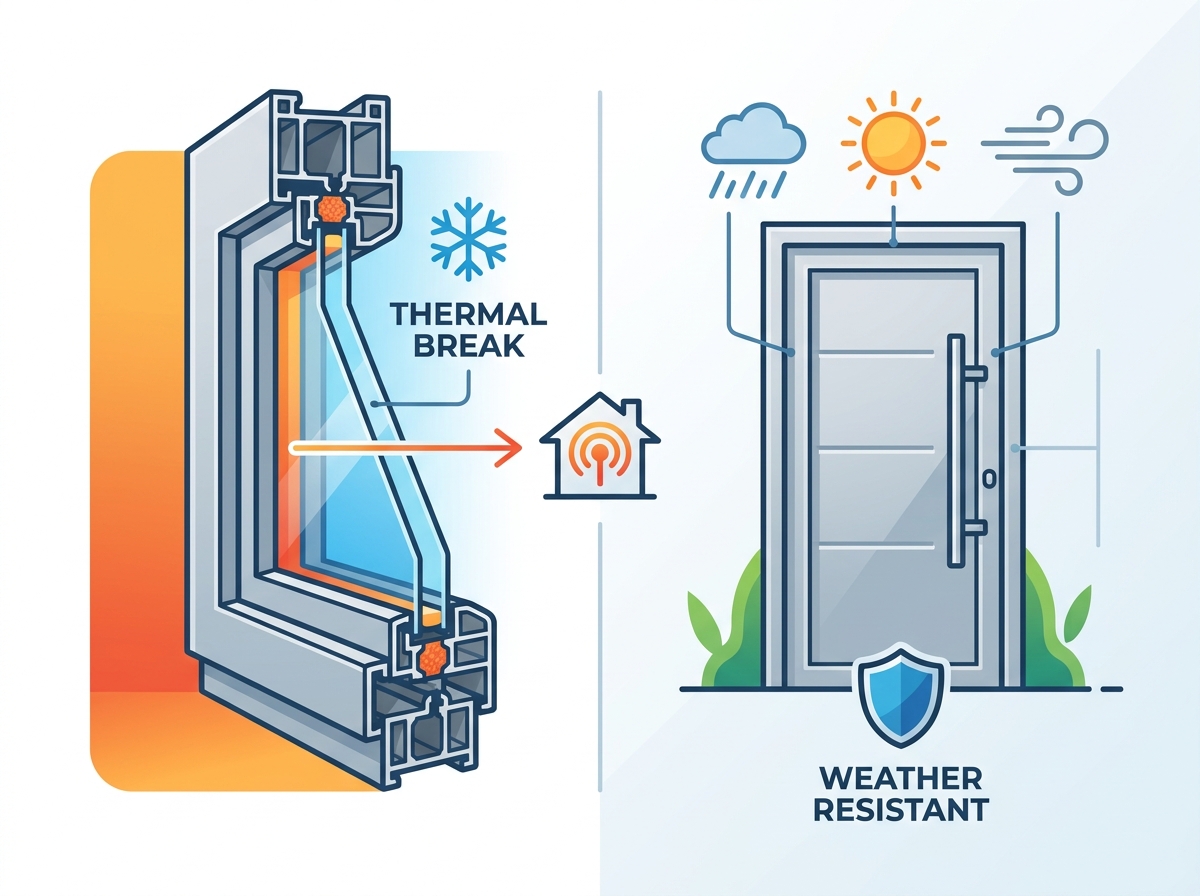
Aluminum offers near-total climate immunity. Unlike organic materials, it resists warping, swelling, rotting, or shrinking. Humidity levels do not affect its cellular structure. Extreme seasonal temperature fluctuations cause minimal, predictable thermal expansion. Severe weather events do not compromise its structural core. This dimensional stability is necessary for long-term performance. Combining high tensile strength with low material weight creates an ergonomic advantage. Oversized doors operate smoothly with minimal physical effort. The low operating mass reduces wear and tear on hinges, pivots, and sliding tracks. This extends the lifespan of the moving components.
Operational consistency is another major benefit. Because the frame remains dimensionally stable, weatherstripping maintains a perfect seal. Multi-point locks engage smoothly without requiring force. Smart-lock hardware and biometric sensors remain perfectly aligned over decades of daily use. A door that shifts or swells will quickly cause mechanical locking failures. We frequently see wood doors require seasonal planing and hinge adjustments. Aluminum systems, once set plumb and square, hold their tolerances indefinitely.
The physics of thermal bridging explain why older metal doors failed in residential settings. Solid metal is a highly efficient conductor of heat and cold. In winter, a solid aluminum frame pulls heat from the interior and radiates it outside. It also pulls freezing exterior temperatures inside, causing condensation or frost on the interior frame. The thermal break solution revolutionized metal fenestration. Modern manufacturers extrude the inner and outer aluminum profiles separately. They then join these profiles using reinforced polyamide glass-fiber struts. This strut acts as an insulator, physically separating the interior and exterior metal. It halts the thermal transfer process.
Using thermal break exterior doors provides measurable utility savings. They drastically reduce the HVAC load required to maintain interior temperatures. When evaluating these systems, you must review specific performance metrics. U-factors measure the rate of heat transfer; lower numbers indicate better insulation. R-values measure thermal resistance. Solar Heat Gain Coefficients (SHGC) measure how much solar radiation passes through the system. Premium thermally broken systems consistently meet or exceed rigorous energy efficiency standards.
Aluminum possesses natural corrosion resistance due to its unique chemical properties. When exposed to air, raw aluminum instantly forms a microscopic oxide layer. This layer seals the metal underneath. If the surface is scratched, the oxide layer immediately reforms, creating a self-repairing shield. This prevents the deep structural degradation and flaking rust commonly seen in steel. Aluminum also provides exceptional atmospheric and chemical shielding. It resists environmental degradation from acid rain, industrial pollution, and vehicle emissions. It withstands harsh chemical cleaning agents without surface damage.
Manufacturers enhance this natural durability with advanced finishes. Anodized finishes use an electrochemical process to thicken the natural oxide layer, creating an extremely hard, scratch-resistant surface. Factory-applied powder coatings offer vast color options and superior UV resistance. Wood-grain sublimation technologies embed ink directly into the powder coat, mimicking timber without the associated vulnerabilities. Maintenance realities heavily favor weather resistant aluminum doors. Routine upkeep requires only simple wipe-downs with mild soap and periodic track inspections. This contrasts sharply with the labor-intensive sanding, staining, and painting required to keep wood doors viable.
Security begins with structural rigidity. The high tensile strength of extruded aluminum frames resists forced entry. The material does not splinter or crack under impact. It effectively resists crowbar attacks and attempts to pry the frame away from the locking mechanism. This inherent rigidity makes it an ideal housing for advanced security hardware. Aluminum frames easily accommodate heavy-duty multi-point locking systems. These systems secure the door at the top, middle, and bottom simultaneously.
The metal can be precisely milled to accept concealed hinges, maintaining a sleek appearance while protecting the hinge pins from tampering. Furthermore, aluminum seamlessly integrates with modern smart home technology. Biometric scanners, motorized locking cylinders, and integrated alarm sensors can be housed within the extrusion profiles without weakening the structural integrity of the door. We route low-voltage wiring directly through the hollow chambers of the extrusion, keeping the installation clean and protected from the elements.
Wood offers traditional warmth and bespoke carving capabilities. It provides a classic aesthetic that many homeowners desire. However, this aesthetic comes with a high maintenance burden. Wood is highly vulnerable to moisture. It absorbs ambient humidity, causing it to swell in the summer and shrink in the winter. This movement breaks weather seals and misaligns hardware. Wood is also susceptible to rot, termite damage, and severe UV degradation. Maintaining a wood door requires frequent sanding, resealing, and painting to prevent structural failure. Aluminum eliminates these maintenance requirements while offering wood-grain sublimation finishes for those who want the timber look without the upkeep.
Steel is exceptionally strong but carries significant drawbacks. Its primary vulnerability is corrosion. If a steel door is scratched through its protective coating, the exposed metal will rust rapidly. This rust spreads beneath the paint, causing flaking and structural decay. Steel is also extremely heavy, which puts immense strain on hinges and makes oversized doors difficult to operate. Aluminum offers natural corrosion resistance and a much lighter operational mass. While steel is strong, it is vulnerable to permanent, localized denting from impacts. Aluminum extrusions are structurally resilient and less prone to the visible denting that plagues flat steel door skins.
Fiberglass is a popular mid-range option, offering decent insulation and resistance to rot. However, it falls short in precision and customization. Fiberglass doors are typically molded in standard sizes. Custom sizing requires expensive new molds or significant modification. The texture patterns on fiberglass often look artificial upon close inspection. Aluminum, by contrast, is precision-extruded. It allows for highly customized profiles, ultra-narrow sightlines, and massive oversized configurations that fiberglass simply cannot support. Aluminum's structural rigidity far exceeds that of fiberglass, making it the only viable choice for expansive, heavy glass applications.
| Material | Structural Strength | Maintenance Level | Corrosion/Rot Resistance | Customization & Sizing |
|---|---|---|---|---|
| Aluminum | Very High | Very Low | Excellent (Natural Oxide Layer) | Unlimited (Precision Extruded) |
| Wood | Moderate | High (Requires frequent sealing) | Poor (Vulnerable to moisture/rot) | High (Bespoke carving available) |
| Steel | High | Moderate (Paint touch-ups needed) | Poor (Rusts when scratched) | Limited (Standard stamped sizes) |
| Fiberglass | Moderate | Low | Excellent (Impervious to moisture) | Limited (Mold-dependent sizing) |
Coastal environments present extreme challenges for exterior building materials. Saltwater spray and high-salinity air are highly corrosive. Standard aluminum finishes can suffer from filiform corrosion in these conditions. This appears as thread-like, blistering oxidation beneath the painted surface. Pitting can also occur on poorly protected metal. Mitigation requires strict specification standards. You must demand marine-grade powder coatings. Look for certifications such as Qualicoat Seaside or AAMA 2605. These standards require rigorous pretreatment and thicker, more resilient powder applications. Additionally, implementing a schedule of regular freshwater rinsing removes salt deposits and preserves the finish integrity over time.
The highest quality door will fail if improperly installed. Improper installation compromises the thermal break, leading to thermal bridging between the frame and the rough opening. This causes air leaks, water intrusion, and operational friction. Rigid metal frames require perfectly plumb, level, and square rough openings. Mitigation requires hiring certified fenestration installers experienced with heavy aluminum systems. Installers must use specialized thermal barrier flashing techniques. They must utilize proper sill pans, liquid-applied flashing, and compatible sealants to ensure the rough opening integrates perfectly with the door frame. Precise rough-opening tolerances are non-negotiable for smooth operation and weatherproofing.
A: Yes, modern aluminum doors are highly energy efficient when equipped with a polyamide thermal break. This internal insulating strut separates the interior and exterior metal profiles, stopping thermal transfer. Combined with low-E, argon-filled double or triple glazing, these doors easily meet stringent local energy codes and reduce HVAC loads.
A: Aluminum does not rust like steel because it lacks iron. It naturally forms a protective oxide layer. However, in harsh coastal areas with high salinity, standard finishes can experience filiform corrosion. To prevent this, you must specify marine-grade powder coatings (AAMA 2605 standard) and perform routine freshwater rinsing.
A: Absolutely. Aluminum's exceptionally high strength-to-weight ratio makes it the premier choice for oversized doors. The rigid extrusion profiles can support massive, heavy glass panels without sagging or deflecting. This allows for massive pivot doors and expansive sliding systems with ultra-narrow sightlines that other materials cannot support.
A: Maintenance is minimal. Simply wipe down the frames periodically with a soft cloth and a mild, non-abrasive soap solution to remove dirt and environmental pollutants. Inspect and vacuum the bottom sliding tracks or pivot points to ensure they remain free of debris. Never use harsh chemicals or abrasive scrubbers.
A: Yes, they offer excellent security. The extruded aluminum frames are inherently rigid and resist impacts, crowbars, and forced entry attempts far better than wood or fiberglass. Furthermore, the strong metal profiles securely house heavy-duty, multi-point locking systems and concealed hinges without compromising the door's structural integrity.
A: A thermal break is a continuous barrier between the inside and outside aluminum frames, typically made of a reinforced polyamide strut. It is necessary because solid aluminum conducts heat and cold rapidly. The thermal break stops this conduction, preventing winter heat loss, summer heat gain, and interior condensation.


