
Views: 0 Author: Site Editor Publish Time: 2026-08-02 Origin: Site


Maintaining exterior windows on multi-story properties introduces significant recurring maintenance burdens and safety hazards. Property owners constantly balance architectural aesthetics and structural durability with the practical realities of long-term upkeep. Hiring professional window cleaning services requires scaffolding, ladders, or specialized lift equipment, increasing liability and operational overhead. Over time, neglected exterior glass accumulates mineral deposits and environmental pollutants, leading to permanent etching and hardware degradation.
The mechanical advantage of dual-operating, tilt-in sashes combined with the structural rigidity of aluminum frames offers a definitive solution for mitigating this maintenance overhead. By allowing full access to both the interior and exterior glass surfaces from inside the building, these window systems eliminate the need for exterior ladders. aluminum double hung windows engineered with robust pivot mechanisms provide a safe, efficient, and highly durable fenestration option that dramatically reduces lifetime maintenance requirements.
Easy maintenance in fenestration is defined by the time spent per window, the required tools, the safety risks involved, and the frequency of hardware failure. Traditional fixed or outward-opening windows demand extensive exterior access, specialized squeegees, and significant physical effort. True maintenance efficiency occurs when a single operator can clean both sides of the glass within minutes using standard household tools, without leaning outside the building envelope. We measure this efficiency by how quickly a maintenance crew can turn over a floor of a building without setting up exterior fall protection.
The core mechanical advantage lies in the pivot system. Tilt latches housed in the top rail of each sash engage with the jamb liner to keep the window vertical during normal operation. When these latches are retracted, the sash releases from the jamb liner and pivots inward on a lower balance shoe. This mechanism allows facility managers or homeowners to clean second- and third-story exterior glass entirely from inside the room. The pivot bar must seat perfectly in the balance shoe cam. If it slips, the sash drops. High-grade aluminum frames keep these tolerances tight.
Cleaning exterior glass from the interior drastically reduces liability. There is no need to deploy exterior scaffolding, harness systems, or extension ladders. By eliminating the reliance on professional window washers, properties avoid ongoing service contracts and the associated safety risks of working at heights. You stop worrying about OSHA fall protection compliance for routine glass washing. The maintenance staff simply unlocks the sash, tilts it in, wipes it down, and locks it back into the frame.
Environmental debris, including dirt, pollen, salt spray, and mineral deposits from rain, accumulates rapidly on exterior glass. If left uncleaned, these elements react with UV light and moisture to cause permanent glass etching and oxidation. The surface becomes porous, making future cleaning progressively more difficult and degrading the optical clarity of the pane. Hard water stains bake into the glass surface during summer months. Once the glass etches, no amount of scrubbing will restore the original factory clarity.
The accessibility of tilt-in sashes encourages regular, routine maintenance. When windows are easy to clean, they are cleaned more frequently. This proactive approach prevents the buildup of corrosive debris, extending the lifespan of the glass and preventing dirt from migrating into the mechanical tracks where it can cause hardware binding and premature failure. Clean tracks mean the balance springs do not have to fight friction every time you open the window.
Modern tilt-in mechanisms facilitate ergonomic operation, allowing users to wipe down the sash tracks effortlessly. Dirt accumulation in the jamb liners and sill tracks creates friction, making windows difficult to open and close over time. By tilting the sashes inward, the entire track system is exposed for vacuuming and wiping. Keeping these tracks clear of debris ensures the block-and-tackle or spiral balances operate smoothly without excessive strain. A quick wipe with a damp cloth removes the grit that otherwise acts like sandpaper against the moving parts.
Extruded aluminum withstands frequent wiping and standard glass cleaners without degrading, peeling, or requiring repainting. Unlike wood, which requires periodic sanding, sealing, and painting to prevent rot from cleaning moisture, aluminum maintains its structural and aesthetic integrity. Vinyl frames, while low maintenance, can warp under thermal stress, causing sashes to stick in the jamb liners. Aluminum's rigid track system remains dimensionally stable across extreme temperature fluctuations, ensuring the tilt mechanisms align perfectly year after year. You do not have to worry about the frame sagging and pinching the sash.
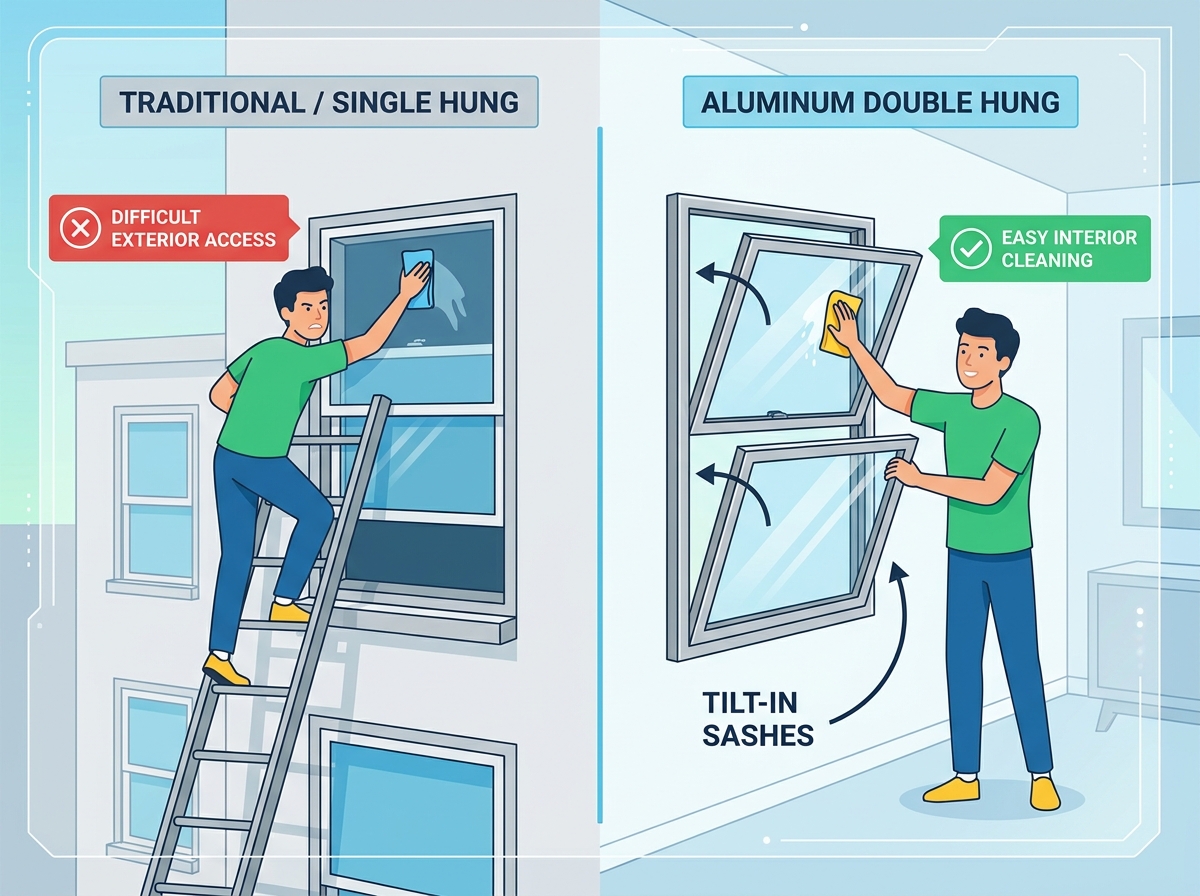
Evaluating primary operable window configurations establishes baseline expectations for maintenance and functionality. Understanding the mechanical differences between window styles dictates how you will manage long-term upkeep. You need to know exactly what you are getting into before framing the rough openings.
The primary limitation of single hung windows is the fixed top sash. Because only the bottom sash moves, cleaning the exterior of the upper pane requires outside access. On upper floors, this necessitates ladders or professional services, negating the interior-cleaning benefits entirely. You can clean the bottom half easily, but the top half remains dirty unless you climb a ladder.
Conversely, double hung aluminum windows solve this limitation through dual operability. The top sash slides down and tilts inward over the bottom sash. This allows immediate, safe access to every square inch of the exterior glass from the interior, making them vastly superior for multi-story applications. You get full access without ever leaving the room.
Horizontal sliders often require lifting heavy sashes entirely out of their tracks to clean the exterior glass. This process is physically demanding and risks dropping the sash. Casement windows crank outward, meaning the user must reach awkwardly around the open sash to clean the exterior surface, which is often impossible on larger units without specialized articulated tools. Double hung units keep the sash securely attached to the frame via the pivot bar during the entire cleaning process, offering superior ergonomics. You never have to support the full weight of the glass.
| Window Style | Exterior Cleaning Access | Ventilation Type | Mechanical Complexity |
|---|---|---|---|
| Double Hung | Full interior access (both sashes tilt in) | Top and bottom convection | High (dual balances, tilt latches) |
| Single Hung | Partial interior access (bottom sash only) | Bottom only | Medium (single balance) |
| Horizontal Slider | Requires sash removal | Side-by-side | Low (rollers on track) |
| Casement | Requires reaching around open sash | Full opening catch | High (crank operator, hinges) |
Airflow dynamics differ significantly between styles. Single hung units only allow bottom-up ventilation. Double hung units allow warm, stale air to escape through the lowered top sash while cool, fresh air enters through the raised bottom sash, creating a natural convection loop. Furthermore, opening only the top sash provides secure ventilation in rooms accessible to children or pets, preventing accidental falls through lower openings. You control exactly where the air enters and exits the room.
Technical specifications dictate the lifespan, efficiency, and structural reliability of any window unit. Assessing these dimensions ensures the chosen fenestration system performs under the specific environmental loads of the property. You must match the window rating to the building code requirements for wind load and water penetration.
Aluminum offers an exceptional strength-to-weight ratio. This structural integrity allows for narrower sightlines and larger glass expanses without compromising the frame under the weight of dual operable sashes. Heavy double-pane or triple-pane insulated glass units require rigid framing to prevent sagging. Aluminum maintains precise right angles, ensuring the weatherstripping seals tightly and the tilt latches engage securely over decades of use. When a frame stays square, the sashes glide effortlessly.
Aluminum provides extensive aesthetic flexibility. Finishes include durable anodized coatings and baked-on powder-coated colors that resist fading, chalking, and scratching during intensive cleaning cycles. Custom hardware colors and simulated divided lite (SDL) grid patterns allow these windows to match historical replications or modern minimalist designs without sacrificing the low-maintenance exterior surface. The powder coating process bakes the color directly into the metal surface, creating a shell that withstands aggressive scrubbing.
Historical skepticism regarding aluminum focused on heat transfer. Standard aluminum conducts thermal energy rapidly. However, modern thermally broken aluminum frames utilize polyamide struts to separate the interior and exterior metal extrusions. This thermal break stops conductive heat loss, prevents interior condensation, and allows aluminum frames to meet strict energy compliance codes even in demanding northern climates. The cold stays outside, and the interior frame remains warm to the touch, preventing moisture buildup on the sill.
Aluminum framing is highly scalable for non-standard, oversized, or custom hung windows. When specifying custom sizes, the weight of the sashes increases significantly. Heavy-duty block-and-tackle or spiral balances must be engineered to match the exact weight of the custom sash. This ensures that even massive architectural windows maintain easy vertical operation and safe tilt-in functionality for cleaning. If the balance is rated for 40 pounds and the sash weighs 60, the window will slam shut. Proper factory calibration prevents this.
Selecting fenestration requires a balanced, objective look at the lifetime value of the installation. Upfront material expenses must be weighed against operational savings and hardware longevity. You are investing in the building envelope, and the returns come through reduced maintenance labor.
The initial capital expenditure for aluminum double hung units is generally higher than standard vinyl or fixed-pane alternatives. However, this upfront investment is offset by 10-to-20-year savings in professional cleaning services, exterior repainting, and premature hardware replacement. Eliminating the need for specialized high-rise window washers alone can recoup the premium material costs within the first decade of ownership. You stop paying hourly rates for exterior lift equipment.
Commercial-grade aluminum frames utilize standardized, robust hardware. Replacement tilt latches, pivot bars, and balance shoes are readily available through architectural hardware suppliers. In contrast, many proprietary vinyl window lines use unique, brand-specific plastic components that become obsolete or impossible to source once the manufacturer discontinues the product line. When a pivot bar snaps ten years from now, you want to know you can order a replacement part off the shelf.
Architectural-grade aluminum sashes are heavier than standard residential windows. This weight requires high-quality balance mechanisms for smooth tilting and lifting. If the balances degrade, the heavy sashes become difficult to operate. Additionally, specifying thermally broken frames is an absolute necessity in cold climates to avoid energy loss and condensation, which inherently increases the initial price point of the window package. You cannot cut corners on the thermal break if you live in a freeze-thaw zone.
Even the most advanced window systems will fail if installed incorrectly. Critical failure points during installation can completely negate the cleaning and operational benefits of the double hung design. A poorly installed window will leak air, bind in the tracks, and eventually fail.
Windows must be installed perfectly plumb, level, and square. Out-of-square installations cause the frame to rack, which misaligns the tilt latches and binds the sashes in the jamb liners. This makes the tilt feature difficult or impossible to use. Furthermore, continuous, high-quality weatherstripping is essential at the meeting rail where the two sashes interlock. If the frame is bowed during installation, air infiltration will occur at this critical junction. Installers must use shims correctly behind the hinges and strike plates to keep the jambs perfectly straight.
Buyers must scrutinize manufacturer warranties, paying specific attention to the coverage for moving parts. Warranties often separate the aluminum extrusion from the pivot bars, tilt latches, and balances. Ensure the warranty provides adequate long-term protection for the mechanical components that enable the tilt-in cleaning feature. Read the fine print regarding coastal installations, as salt spray often voids standard hardware warranties unless you specify stainless steel components.
The specific combination of aluminum durability and double-hung functionality provides a highly pragmatic solution for long-term maintenance. By allowing safe, interior access to all glass surfaces, these windows eliminate the hazards and expenses of exterior cleaning. The rigid aluminum extrusions ensure the complex tilt mechanisms remain aligned and functional, resisting the warping and degradation common in lesser materials.
When shortlisting window options, base your decision on property height, climate, and architectural style. Multi-story buildings benefit immensely from the interior cleaning capabilities. Properties in extreme climates must specify thermally broken aluminum to maintain energy efficiency. Finally, ensure the sightlines of the aluminum extrusions meet your specific architectural design requirements.
A: First, unlock the meeting rail and raise the bottom sash slightly. Disengage the tilt latches located on the top of the sash and carefully pull the window inward to rest it horizontally. Clean the exterior glass. Once finished, snap the bottom sash back into place, lower the top sash, and repeat the tilt-in process for the upper pane.
A: Regular washing removes airborne pollutants, acid rain, and salt air before they can permanently etch the glass surface. It also prevents dirt and grime from migrating into the jamb liners, which protects the underlying pivot hardware, balance shoes, and aluminum tracks from abrasive wear and corrosion.
A: Yes, they generally carry a higher initial price. The cost difference is driven by the additional moving parts, dual balance systems, and the operable top sash. However, this upfront premium is frequently offset by the long-term savings achieved by eliminating professional exterior cleaning services.
A: No. Mild soap and water or standard non-ammonia glass cleaners are sufficient for cleaning aluminum frames. Avoid using abrasive pads, steel wool, or harsh chemical solvents, as these can scratch or degrade the anodized or powder-coated finishes on the metal.
A: Yes, custom sizes can include tilt-in functionality. The primary limitation is the overall weight of the glass. As long as the custom sash weight does not exceed the maximum load rating of the pivot hardware and balance mechanisms, the tilt-in feature can be successfully engineered.
A: High-quality commercial-grade hardware, including block-and-tackle balances and metal tilt latches, typically lasts 15 to 20 years under normal use. Routine maintenance, such as keeping the tracks clean and applying dry silicone spray lubrication, significantly extends this timeframe.
A: They are highly efficient when specified correctly. Modern thermally broken aluminum frames use polyamide struts to stop heat transfer through the metal. When paired with Low-E double or triple glazing and argon gas fills, these windows meet stringent energy codes and prevent interior condensation.


