
Views: 0 Author: Site Editor Publish Time: 2026-08-03 Origin: Site


Kitchens and bathrooms place unique architectural and environmental stress on windows. These spaces endure fluctuating humidity, high moisture levels, and physical barriers like deep sinks, countertops, and soaking tubs. Standard sliding or double-hung windows often fail in these environments. They present ergonomic difficulties, requiring users to stretch awkwardly over fixtures just to operate them. Traditional materials like wood and low-grade vinyl degrade quickly, suffering from rot or warping, while bulky frames drag down the overall aesthetics of a modern home. aluminum crank windows offer a specialized, engineered solution that addresses both physical reach limitations and harsh environmental demands. Specifically, modern aluminum casement windows establish themselves as premium design focal points rather than mere utilities. They combine structural integrity with effortless operation, transforming how homeowners interact with their high-utility spaces.
Windows in wet, high-utility rooms must meet strict baseline requirements. They require ease of operation, absolute moisture resistance, rapid ventilation capabilities, aesthetic alignment with modern design, and robust security. Failing to meet these criteria results in daily frustration and rapid material degradation. When framing a rough opening in a wet zone, contractors look for units that will not require callbacks due to hardware failure or frame rot. The physical demands placed on these specific units far exceed those of a standard bedroom or living room window.
Opening a window over a 24-inch deep countertop or a high soaking tub involves challenging physics. Traditional double-hung or sliding windows require upward or lateral force. Applying this force while leaning over a deep sink is ergonomically unfeasible and physically straining for many users. The awkward angle reduces leverage, making a simple task feel like a heavy chore. You are essentially lifting dead weight at arm's length. This often leads to homeowners leaving the window permanently closed, defeating the purpose of having an operable unit in a space that desperately needs ventilation.
Consider the mechanics of a double-hung window. The user must grip the sash lift, push upward against gravity, and overcome the friction of the weatherstripping. Over a standard kitchen counter, the user's center of gravity shifts forward, placing strain on the lower back. If the window sticks due to humidity, the required force multiplies. This physical barrier makes standard operational styles entirely impractical for these specific locations.
Daily steam, splashing water, and condensation heavily impact window frames in bathrooms and kitchens. Traditional materials possess clear failure points when repeatedly exposed to these micro-climates. Paint peels, wood rots, hardware rusts, and vinyl warps under constant humidity and temperature shifts. These environments demand materials that ignore moisture entirely. When a hot shower runs, the ambient humidity spikes, causing condensation to pool on the glass and run down into the sill.
Wood frames absorb this standing water if the finish has even microscopic cracks. This leads to fungal growth and structural rot within the sash. Vinyl, while impervious to rot, expands and contracts significantly with temperature changes. In a bathroom where temperatures fluctuate wildly, this movement breaks the seal between the frame and the rough opening, allowing moisture to penetrate the wall cavity. Extruded metal frames bypass these specific material failures.
Choosing bulky window materials, such as standard vinyl, often ruins the clean lines of a newly renovated modern kitchen or bathroom. Thick frames obstruct light and make a high-end space look cheap. Homeowners invest heavily in sleek countertops and minimalist fixtures; the window frames must match this level of architectural elegance. A thick vinyl extrusion can take up to four inches of sightline on each side, drastically reducing the visible glass area.
In modern architecture, the goal is to blur the line between indoor and outdoor spaces. Heavy, plastic-looking frames draw the eye to the boundary rather than the view beyond it. Metal frames offer the structural rigidity necessary to support heavy insulated glass units while maintaining a profile that is a fraction of the width of competing materials. This structural advantage translates directly into superior interior design outcomes.
The specific combination of extruded aluminum and crank mechanisms solves the established physical and aesthetic problems in wet zones. These windows provide targeted solutions for ventilation, durability, and visual appeal. The engineering behind these units focuses on maximizing airflow while minimizing the physical effort required by the end user.
crank casement windows operate by swinging the entire sash outward, often to a full 90-degree angle. This open sash acts as a wind scoop, catching side breezes and directing them indoors. This mechanism rapidly exhausts cooking odors, smoke, and heavy shower steam, far outperforming sliding windows that only open halfway. When you open a slider, you only ever get 50% of the rough opening for ventilation. A casement gives you nearly 100%.
This full-aperture opening is critical in kitchens where rapid smoke clearance is necessary. The outward-swinging glass physically interrupts air currents moving along the exterior wall, forcing that fresh air into the room. By adjusting the angle of the sash via the crank handle, the user can precisely control the volume and direction of the incoming breeze, creating a highly efficient passive ventilation system.
Extruded aluminum boasts an exceptional strength-to-weight ratio. More importantly for kitchens and bathrooms, aluminum possesses innate resistance to rust and moisture absorption. The frame will not swell, stick, or jam during high-humidity seasons, ensuring smooth operation year-round regardless of interior moisture levels. Unlike wood, which binds in its tracks during the summer, metal maintains its exact factory dimensions.
This dimensional stability means the weatherstripping maintains a perfect seal over decades of use. When a frame warps or bows, gaps form between the sash and the main frame, leading to air leaks and water infiltration. The rigidity of extruded metal ensures that the compression seals engage uniformly around the entire perimeter of the sash every time the unit is locked.
Aluminum's structural strength allows for narrower frame profiles and slimmer sightlines compared to vinyl or wood. This minimalist design maximizes the glass area. Framing scenic backyard views directly from the kitchen sink transforms the window into an architectural focal point, enhancing the entire room's aesthetic. The window becomes a living picture frame rather than a bulky utility fixture.
When designing a kitchen layout, the sink is typically centered under a window. Using a material that allows for maximum glass area ensures that natural light floods the primary workspace. The slim profiles also mean that multiple units can be mulled together without creating massive, visually heavy vertical mullions that chop up the exterior view.
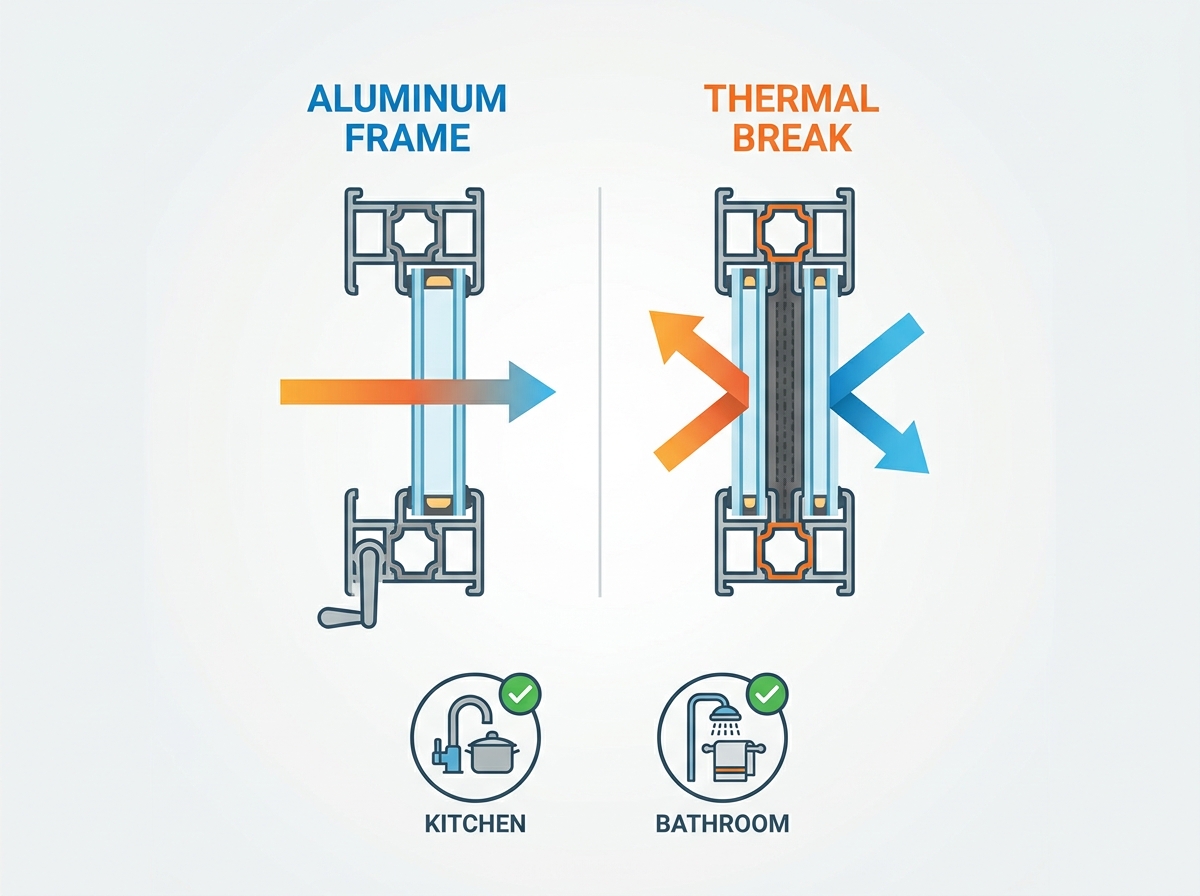
Historically, aluminum faced objections regarding thermal conductivity. Older metal frames would sweat in the winter and transfer heat in the summer. However, modern engineering facts demonstrate how current designs overcome these issues, delivering exceptional energy efficiency that rivals or beats other premium materials.
Modern thermal break windows feature a non-conductive polyurethane or polyamide barrier separating the interior and exterior aluminum extrusions. This technology stops thermal bridging entirely. It keeps the interior frame at room temperature despite harsh exterior weather conditions. This reduction in unwanted airflow lowers utility bills and maintains consistent indoor comfort.
The manufacturing process involves extruding two separate metal profiles—one for the inside, one for the outside. These are then mechanically crimped together with the structural polymer strut in the middle. This strut is highly engineered to handle the structural loads of the glass while completely blocking the transfer of thermal energy. The result is a frame that feels warm to the touch on the inside, even when it is freezing outside.
Thermal breaks prevent interior condensation, a critical factor in bathrooms to prevent mold and mildew growth on surrounding drywall and sills. Furthermore, the physical compression seal of locked aluminum casement windows eliminates cold drafts. This keeps wet bathrooms comfortable post-shower. Pairing thermally broken frames with double or triple-pane Low-E glass and argon gas fills maximizes this thermal performance.
When a casement unit is cranked shut and the locking lever is engaged, the sash is pulled tightly against multiple layers of bulb weatherstripping. This compression seal is fundamentally superior to the sliding friction seals found on double-hung or sliding units. It creates an airtight barrier that stops drafts entirely, which is essential when stepping out of a warm shower into the bathroom space.
Evaluating window materials requires a direct, unbiased comparison of conceptual trade-offs. Understanding maintenance cycles and aesthetic flexibility helps determine the best overall value for a renovation project. Contractors and architects weigh these factors heavily when specifying products for high-moisture zones.
| Material Type | Moisture Resistance | Frame Profile / Sightlines | Maintenance Requirements |
|---|---|---|---|
| Extruded Aluminum | Excellent (Impervious to rot and swelling) | Ultra-slim, maximizes glass area | Virtually zero (Factory finished) |
| Standard Vinyl | Good (Resists rot, but expands/contracts) | Thick and bulky, reduces glass area | Low (Prone to UV fading over time) |
| Solid Wood | Poor (Requires constant protection) | Moderate to thick | High (Regular painting and sealing) |
Maintenance cycles vary drastically between materials. Aluminum requires virtually zero maintenance, utilizing durable factory finishes. Wood demands regular sealing, painting, and active rot prevention. Vinyl remains susceptible to UV degradation, fading, and significant thermal expansion and contraction over time. Once a wood frame begins to rot at the sill, the entire unit usually requires replacement, leading to costly secondary damage to the surrounding drywall and framing.
Factory-applied finishes on metal frames, such as anodizing or high-performance powder coating, bond at a molecular level. They do not peel, flake, or blister like traditional house paint. A simple wipe down with mild soap and water is the only maintenance required to keep the frames looking brand new for decades. This hands-off longevity is a major selling point for homeowners looking to minimize weekend maintenance chores.
Aluminum offers diverse finish options, including anodized and powder-coated surfaces. These finishes allow the frames to perfectly match modern kitchen appliances, minimalist hardware, and bathroom fixtures. Contrast this with the bulky, thick-profile frames of vinyl. The sleek, minimalist architecture of aluminum prevents the dreaded "cheap upgrade" look.
Architects frequently specify dark bronze or black anodized frames to create a striking contrast against light-colored interior walls. This industrial-chic aesthetic is difficult to achieve with vinyl, which is typically limited to white or almond, as dark vinyl absorbs too much heat and warps. Metal frames provide the structural stability necessary to support dark, heat-absorbing colors without compromising the integrity of the unit.
Choosing this window type involves specific physical constraints and installation realities. Proper planning mitigates risks and ensures optimal performance. Before ordering units, the installation team must assess the exterior environment and the specific framing conditions of the rough opening.
The primary risk involves exterior clearance. Because the sash swings outward, you must measure for conflicts with exterior walkways, patios, landscaping, or exterior screens. Ensure the window can open fully without obstruction. If a window opens over a high-traffic deck, a fully extended casement sash can become a physical hazard for people walking by.
In situations where exterior clearance is limited, awning style units (which hinge at the top and push out at the bottom) might be a better alternative, though they offer slightly less ventilation volume. Careful site planning during the measurement phase prevents these operational conflicts from becoming post-installation headaches.
The internal components of aluminum crank windows dictate their lifespan. Specify stainless steel or heavy-duty corrosion-resistant hardware for the crank and hinges. This is especially vital in highly humid bathrooms where standard hardware might degrade. The operator mechanism contains gears that must remain lubricated and free of rust to function smoothly.
When specifying units for coastal environments or high-moisture bathrooms, upgrading to marine-grade stainless steel hardware is a mandatory step. Standard zinc-plated components will eventually corrode when exposed to constant condensation, leading to stripped gears and a window that refuses to open or close properly.
Hook-shaped casement locks embedded inside the frame pull the sash tightly shut. This offers superior security against forced entry compared to simple sliding window latches. Additionally, consider bathroom and kitchen egress requirements. Sizing impacts emergency escape code compliance, so verify local building codes during the planning phase.
A multi-point lock engages the sash at the bottom, middle, and top simultaneously with a single throw of the lever. This prevents an intruder from prying the corner of the sash open. For egress, building codes dictate specific minimum clear opening widths and heights. Casement units are excellent for egress because the entire sash swings out of the way, maximizing the escape opening relative to the overall frame size.
Evaluating the financial investment requires looking beyond the initial purchase price. Scalability and long-term ROI define the true value of these fixtures. Upgrading the building envelope with premium materials yields dividends in longevity and daily usability.
Thermally broken aluminum crank windows carry a higher initial price point than standard vinyl options. However, modeling the long-term ROI reveals a different picture. Based on a 30+ year lifespan, the lack of painting or maintenance costs, and zero risk of moisture-related failures, the lifetime value significantly outweighs the upfront premium. You install these units once, and they outlast the surrounding interior finishes.
When a cheap vinyl window fails after ten years due to seal failure or frame warping, the homeowner must pay for a new unit, the labor to tear out the old one, and the cost to repair the interior trim and exterior siding. Investing in a rigid, moisture-proof metal frame eliminates this secondary replacement cycle entirely, making it the more economical choice over the life of the home.
Premium, architectural-grade windows positively impact home appraisal values. This holds particularly true in high-ROI areas like kitchen and bathroom renovations. Upgrading to high-quality aluminum windows prevents prospective buyer turnoffs associated with cheap-looking vinyl replacements, securing your renovation investment.
Real estate professionals note that buyers immediately recognize the tactile difference between a heavy-duty metal crank window and a flimsy plastic slider. The smooth operation, the solid thud of the multi-point lock engaging, and the expansive glass area all signal to a buyer that the home was renovated with care and high-quality materials, justifying a higher asking price.
While they require planning for exterior clearance and a higher initial budget, aluminum crank windows stand as the objectively superior choice for over-sink and in-bathroom installations. They deliver ergonomic ease, design-forward aesthetics, and absolute moisture immunity.
A: Yes, modern designs are highly efficient. They require thermal breaks, compression seals, and Low-E glass to achieve high energy ratings. These features stop heat transfer and lower utility bills effectively.
A: They utilize a rotational crank mechanism located at the base. This requires minimal physical effort and eliminates the need to stretch or lean awkwardly over deep countertops to open the window.
A: No, aluminum does not rust. Modern anodized or powder-coated finishes prevent corrosion and material degradation, making them perfectly suited for high-moisture environments like bathrooms.
A: It features a non-conductive insulating barrier (usually polyurethane or polyamide) placed between the interior and exterior aluminum frames. This barrier prevents heat and cold transfer through the metal.
A: Yes. Because the window sash swings outward, screens are mounted on the interior frame. This keeps the screens clean and protected from exterior weather elements.
A: You can expect a realistic lifespan of 30 to 40+ years. While the heavy-duty hardware may need basic maintenance over time, the aluminum frame itself resists degradation almost indefinitely.


