
Views: 0 Author: Site Editor Publish Time: 2026-07-08 Origin: Site


Aluminum windows carry a historical stigma on construction sites. For decades, they meant poor insulation, high U-values, and winter condensation. Builders installed them because they were cheap. Homeowners paid the price in drafts and high utility bills. Today, aluminum dominates high-end, modern architectural designs. This shift creates a dilemma for custom home builders and buyers. You want minimalist aesthetics, slim sightlines, and expansive glass. You also must meet increasingly stringent new construction energy codes like IECC or Title 24. This conflict gets complicated by contradictory advice from window sales representatives and framing contractors. Some argue vinyl is the only logical choice for modern energy performance. Others insist aluminum is superior for structural integrity. The core build problem is balancing the structural needs for massive openings with strict thermal envelope requirements. Modern engineering has fundamentally changed aluminum glazing. This article evaluates whether the upfront premium for modern, thermally improved aluminum systems delivers a justifiable return on investment for new builds.
Legacy builder-grade aluminum windows were notorious for energy loss. These single-pane, uninsulated units offered zero resistance to temperature changes. You would see frost building up on the inside of the frames during northern winters. Today's high-performance architectural systems are entirely different. They are engineered to handle the demands of modern construction while maintaining strict energy standards. The industry has moved far beyond the basic extrusions used in the past.
Modern manufacturing techniques allow for complex internal geometries within the frame. These geometries accommodate heavy glass loads while providing space for advanced insulation materials. When you look at a cross-section of a modern architectural window, it resembles a highly engineered structural component rather than a simple metal box. This evolution was driven by the architectural demand for larger glass areas and the regulatory demand for lower energy consumption.
Aluminum is a highly conductive metal. Heat and cold transfer easily through the frame. This physical property is why legacy aluminum windows fail in extreme climates. Without intervention, the frame acts as a thermal bridge. It pulls heat out of the house in winter and draws it in during summer. This rapid heat transfer leads to interior condensation, drafts, and high energy consumption. On a job site, a highly conductive frame means the HVAC system works overtime to compensate for the perimeter heat loss.
Modern building codes do not tolerate this level of inefficiency. Inspectors look closely at the fenestration schedule to ensure the overall building envelope meets the required performance metrics. To keep aluminum in the specification book, manufacturers had to find a way to break the conductive path without sacrificing the material's inherent strength. The solution required a fundamental redesign of the extrusion process.
Modern engineering solves the conductivity problem with thermal break windows. A thermal break is a non-conductive barrier. It is typically made of polyamide or polyurethane. Manufacturers place it between the interior and exterior aluminum profiles. This barrier interrupts the conductive energy loss. By separating the metal components, the thermal break transforms a structural metal into a viable, code-compliant framing material.
The exterior frame handles the weather and wind loads. The interior frame stays close to room temperature. This separation prevents the interior surface from reaching the dew point, which eliminates the condensation issues that plagued older designs. The structural integrity of the window relies on the strength of the thermal break material, which is why high-grade polyamide is the industry standard for premium systems.
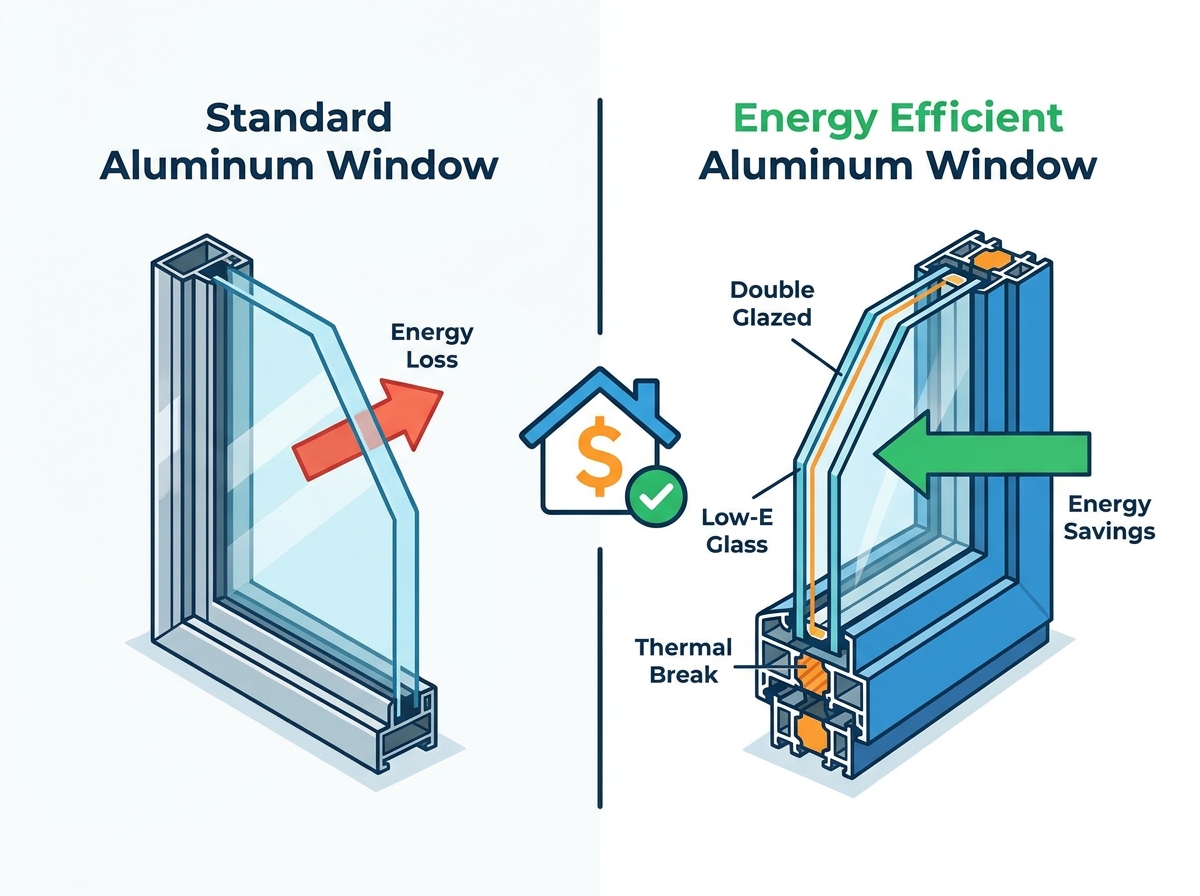
Achieving high efficiency requires a combination of advanced components. The frame alone is not enough. You need a holistic system to meet modern energy codes. We look at several specific technologies when evaluating window schedules for new builds. Each component plays a specific role in managing heat transfer, air leakage, and solar gain.
Polyamide thermal struts form the insulating core of modern aluminum frames. These structural components connect the inner and outer aluminum extrusions while blocking heat transfer. The width of the thermal strut directly correlates to the window's overall U-factor. Wider struts provide better insulation. This allows aluminum frames to compete with less conductive materials.
| Strut Width (mm) | Typical Application | Relative Thermal Performance |
|---|---|---|
| 14mm - 18mm | Mild climates, standard commercial | Baseline code compliance |
| 24mm - 32mm | Mixed climates, high-end residential | High performance, reduced condensation |
| 38mm+ | Extreme cold, Passive House designs | Maximum thermal resistance |
The manufacturing process involves rolling the aluminum extrusions onto the polyamide struts under high pressure. This creates a composite profile that acts as a single structural unit. The struts often feature complex internal webs to trap air and further reduce convective heat transfer within the frame cavity.
Glass makes up the majority of the window area. Using Low-E glass windows is essential for maximizing the efficiency of aluminum frames. Low-Emissivity coatings reflect radiant heat. Passive Low-E coatings are ideal for heating-dominated climates. They allow solar heat in while preventing interior heat from escaping. Solar control Low-E coatings are necessary for cooling-dominated climates. They block external heat to reduce air conditioning loads.
These microscopically thin metallic coatings are applied to specific glass surfaces within the insulated unit. The placement of the coating depends on the desired performance. For example, placing the coating on the #2 surface (the inside of the outer pane) is common for blocking solar heat gain. Placing it on the #3 surface (the outside of the inner pane) is better for retaining interior heat.
For most new builds, double glazed aluminum windows provide an excellent baseline performance. They meet standard energy codes and offer good thermal resistance. Upgrading to triple glazing provides marginal thermal gains but significantly increases weight. You must weigh the specific climate demands against the structural requirements before choosing triple glazing over double glazed units.
Heavy triple-pane units require beefier framing and specialized installation equipment. The added weight puts more stress on the operating hardware, which can lead to maintenance issues down the road. In many mixed climates, a high-performance double-glazed unit with premium Low-E coatings and a wide thermal break offers a better balance of performance and practicality.
Inert gas fills, such as argon or krypton, are injected between the glass panes. These gases are denser than air. They reduce convective heat transfer inside the insulated glass unit. This technology compensates for the frame's baseline conductivity. It lowers the overall U-factor of the window unit.
Argon is the industry standard because it is cost-effective and provides a noticeable improvement over air-filled units. Krypton is denser and more expensive. It is typically used in tighter spaces, such as the narrow cavities of triple-glazed units, where maximum insulation is required in a limited depth.
Precision-engineered compression seals in modern aluminum windows prevent unwanted airflow. Tight air infiltration ratings are necessary for passing blower door tests. Reducing draft-induced heat exchange maintains a consistent indoor temperature. It alleviates strain on HVAC systems.
High-quality weatherstripping ensures the window performs as tested in real-world conditions. Look for multi-point locking systems that pull the sash tight against the frame seals. Continuous perimeter weatherstripping is far superior to segmented seals, which can develop gaps over time.
Choosing the right window material involves weighing structural capabilities against thermal performance. You have to look at the specific demands of the floor plan. No single material is perfect for every application. The choice often comes down to the architectural style and the size of the required openings.
Vinyl offers superior thermal performance per dollar. However, vinyl has severe structural limitations. It is prone to warping, expansion, and contraction. It requires thick frames that obstruct views. Aluminum provides unmatched rigidity. It allows for massive glass expanses and ultra-narrow sightlines.
While vinyl wins on budget insulation, aluminum wins on architectural capability and lifespan. Vinyl frames can degrade under intense UV exposure, becoming brittle over time. Aluminum, especially with a high-quality finish, maintains its structural integrity and appearance for decades, even in harsh environments.
Contractors often give conflicting advice based on their priorities. Some insist vinyl is the only logical choice due to its easy installation. Others advocate exclusively for aluminum because of its structural strength and modern design appeal. The debate stems from differences in labor familiarity.
It also involves the structural requirements of modern floor plans and local climate nuances. A framing contractor used to standard punched openings will prefer lightweight vinyl. A custom builder working with floor-to-ceiling glass walls knows that aluminum is the only material that can handle the wind loads and dead weight without deflecting.
Fiberglass is the closest competitor to aluminum for modern aesthetics and strength. It offers excellent thermal resistance and structural integrity. However, fiberglass has manufacturing limitations. It offers fewer custom profiles and limited color options compared to extruded aluminum.
Aluminum provides greater design flexibility for custom builds. You can extrude aluminum into highly complex shapes to accommodate specialized hardware or unique architectural details. Fiberglass pultrusions are more rigid in their design possibilities, making them less adaptable for highly customized fenestration packages.
Wood-clad aluminum windows offer a hybrid solution. The exterior aluminum provides excellent weather resistance and low maintenance. The interior wood provides natural thermal resistance and traditional warmth. This option is ideal for homeowners who want the durability of metal outside and the classic look of wood inside.
These systems require careful detailing to ensure moisture does not get trapped between the aluminum cladding and the wood core. When engineered correctly, they offer a premium aesthetic that appeals to traditional and transitional architectural styles, though they typically feature wider sightlines than pure aluminum systems.
The decision to invest in high-performance aluminum windows depends on your specific project goals. You have to evaluate the site conditions and the architectural plans. It is not a simple calculation of energy savings. You are investing in the structural capability and the visual impact of the building envelope.
In cooling-dominated climates, aluminum excels at reflecting heat when paired with the right solar control glazing. In heating-dominated climates, extreme cold requires the highest-tier thermal breaks to prevent interior condensation. You must specify the thermal break width and glazing type based on your local climate zone.
For example, a build in the desert Southwest will prioritize a low Solar Heat Gain Coefficient (SHGC) to block the intense sun. A build in the Northeast will prioritize a low U-factor to retain winter heat. The aluminum frame must be specified with the appropriate thermal strut to support these regional performance goals.
If your new build requires floor-to-ceiling glass, multi-slide doors, or ultra-narrow sightlines, aluminum is often the only structurally viable choice. The material's strength allows architects to design massive openings. Vinyl or wood simply cannot support these loads without bulky reinforcements.
When you are dealing with a 12-foot tall sliding door system, the frame must resist significant wind loads while maintaining smooth operation. Aluminum's high strength-to-weight ratio makes it the standard for these large-format applications. The narrow profiles maximize the visible glass area, delivering the minimalist aesthetic that defines modern architecture.
Understanding National Fenestration Rating Council labels is critical. Focus on the U-factor, Solar Heat Gain Coefficient, and Air Leakage ratings. Builders often use energy modeling to offset slightly higher window U-factors with better roof or wall insulation.
This performance path approach allows you to keep aluminum windows in the specification book while still meeting strict energy codes. Instead of relying solely on the prescriptive code requirements, an energy modeler can demonstrate that the overall building performs efficiently, giving you the flexibility to use architectural aluminum where it matters most.
Thermally broken aluminum systems command a premium. You need to understand where the value lies and how to manage the installation. The upfront material cost is only one part of the equation. You must also factor in the specialized labor required to install these heavy systems correctly.
Thermally broken aluminum windows are often 30 to 50 percent more expensive than high-end vinyl. The return on investment does not come from a rapid payback via energy savings alone. The true value lies in longevity, reduced maintenance, and the ability to achieve specific architectural designs.
You are paying for the engineering that allows a narrow metal frame to perform like an insulated wall. You are also paying for the durability of the finish and the robust hardware required to operate heavy glass panels. Over a 30-year lifespan, the reduced need for replacement and maintenance helps offset the initial premium.
High-end, energy efficient aluminum windows significantly impact appraisal values. They enhance modern buyer appeal and overall aesthetic prestige in custom and luxury home markets. The sleek look and durable performance are major selling points.
Buyers in the luxury market expect premium materials. Standard vinyl windows can detract from the perceived value of a high-end custom home. Aluminum systems signal quality and architectural intent, which translates directly into higher resale values and stronger market demand.
Double and triple glazed aluminum systems are extremely heavy. Installation requires precise rough opening preparation. You need heavy-duty structural headers and specialized flashing techniques. Improper installation can lead to water intrusion, structural deflection, and compromised thermal performance.
Hire experienced installers familiar with heavy commercial-grade residential systems. The rough openings must be perfectly plumb, level, and square. Any deviation can cause the heavy frames to bind, leading to operational failures and premature seal degradation. Proper shimming and perimeter sealing are critical for maintaining the window's tested performance ratings.
Aluminum frames feature highly durable anodized or baked-on fluoropolymer finishes. These finishes resist fading, chalking, and corrosion. They offer a lifespan advantage over other materials. Review manufacturer warranties carefully.
Pay attention to coverage for seal failure, hardware performance, and finish degradation. A high-quality fluoropolymer finish (like Kynar) can last decades without significant color shift. Routine maintenance is minimal, typically requiring only basic cleaning of the tracks and occasional lubrication of the moving hardware components.
A: Traditional aluminum windows often cause condensation due to high conductivity. Modern thermal break windows use non-conductive barriers and warm-edge spacers to mitigate heat transfer. This significantly reduces or eliminates winter condensation issues.
A: Yes, double glazing with high-performance Low-E coatings and wide thermal struts can meet energy codes in cold climates. Extreme northern climates might require triple glazing for optimal comfort and code compliance.
A: Contractors base advice on structural requirements, budget constraints, and geographical location. Vinyl is cheaper and insulates well, making it popular for budget builds. Aluminum offers superior strength for large, modern designs, appealing to high-end custom builders.
A: The aluminum frames typically last 30 to 50 years due to their structural integrity and durable finishes. The insulated glass units may require replacement after 20 years if the seals eventually fail.
A: A good U-factor for modern thermally broken aluminum windows is typically around 0.30 or lower. This rating ensures the window provides adequate insulation to meet most current residential energy codes.


