
Views: 0 Author: Site Editor Publish Time: 2026-08-01 Origin: Site


High-contrast, slim-profile fenestration dominates recent residential architecture and custom builds. Homeowners and builders face a high-stakes decision when selecting these materials. You must balance the striking aesthetic of dark frames with the practical realities of material performance. Thermal efficiency and long-term durability require careful evaluation, specifically regarding fading and heat absorption. Dark frames absorb massive amounts of solar radiation. This physical reality tests the limits of window engineering.
This guide provides an objective, technical evaluation of black aluminum windows. We move past fleeting design trends to analyze structural integrity and finish longevity. You will understand climate suitability and the long-term value these units bring to contemporary homes. Making the right specification prevents costly failures down the road. We will examine the exact installation requirements and material science behind these systems.
Architects and homeowners aim for specific success criteria in modern builds. They want maximum natural light and minimal frame obstruction. High-contrast exterior and interior designs create sharp visual boundaries. Achieving these goals requires materials capable of supporting heavy glass loads without adding bulk. You cannot achieve this with weak framing materials.
Aluminum possesses an exceptional strength-to-weight ratio. This characteristic allows for expansive glass panels and narrow sightlines. Wood or standard composites require thicker profiles to carry the same structural load. Thicker profiles defeat the purpose of minimalist design. Aluminum extrusions remain rigid even when supporting massive triple-glazed units. This rigidity ensures smooth operation of large sliding or casement sashes over decades of use. When you frame a rough opening for a massive multi-slide door, the header deflection must be minimal. Aluminum frames handle the dead load of the glass without transferring stress to the operating mechanisms.
Finish sheen drastically alters both aesthetics and maintenance. Gloss finishes reflect light, highlighting surface imperfections and dust. Matte finishes absorb light, creating a flat, sophisticated shadow line. matte black windows hide minor fingerprints and smudges better than high-gloss alternatives. However, they require specific cleaning protocols. Abrasive cleaners can polish matte surfaces, leaving permanent shiny spots. On the job site, we always leave the protective film on matte finishes until the final clean to prevent accidental burnishing from drywall dust or rough handling.
Many builders worry that dark frames are a passing fad. The saturation of certain architectural styles fuels this anxiety. Yet, dark metal remains an architectural classic in modern design. Dark frames function as a shadow line. They draw the eye past the physical boundary and out to the landscape. Unlike bright white frames that stop the eye, dark metal recedes into the background. This visual trick ensures long-term design relevance. We see this consistently in high-end custom builds where the view is the primary selling point.
Dark interior frames act as picture frames for natural outdoor scenery. They define the view sharply. However, they introduce practical design challenges.
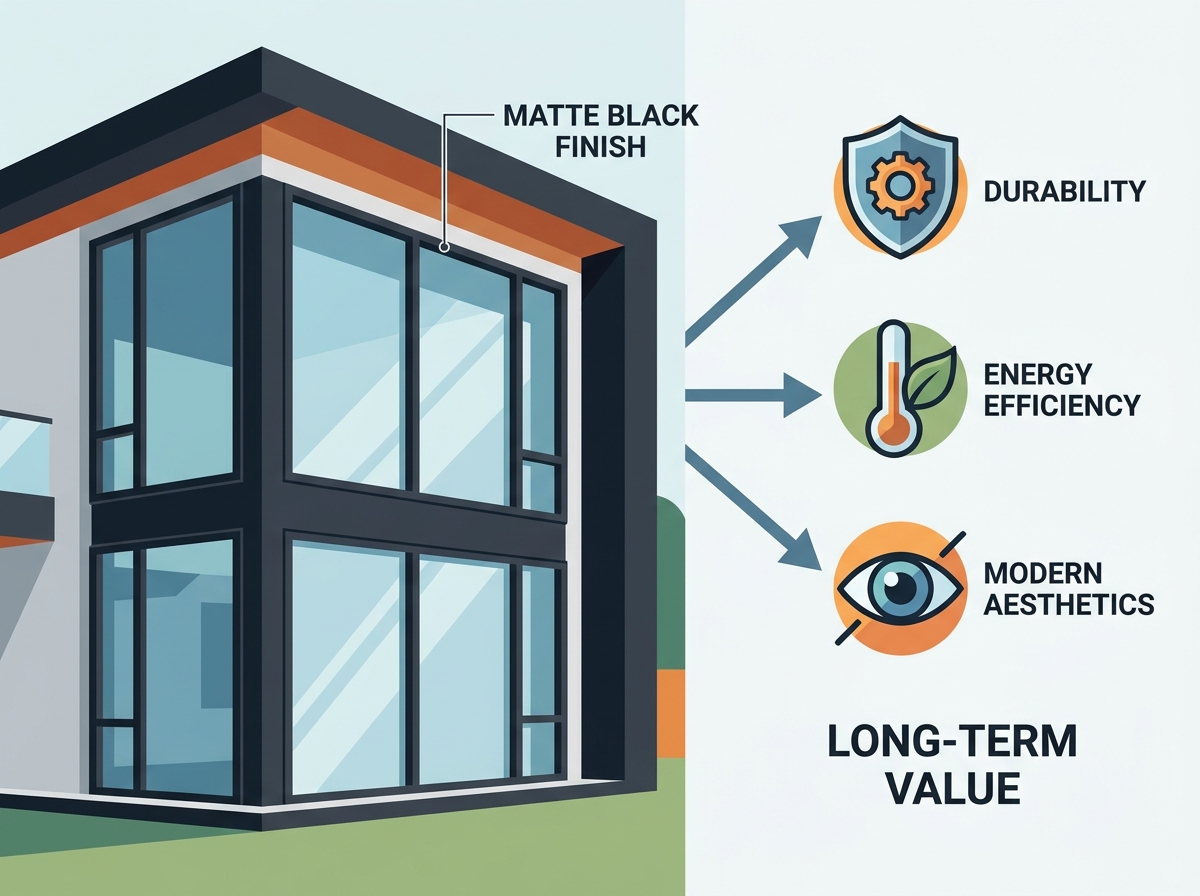
Selecting the right frame material dictates the lifespan of the installation. We must compare metal directly against the primary alternatives for dark frames. The wrong choice leads to catastrophic seal failure and water intrusion.
The physics of heat absorption heavily penalize dark frames. Dark surfaces absorb significant solar radiation, reaching extreme temperatures in direct sunlight. Dark vinyl is highly prone to warping, bowing, and seal failure under high UV exposure. Vinyl expands and contracts dramatically with temperature swings. This movement breaks the glass seals, leading to fogging and argon gas loss. Metal maintains dimensional stability. It transfers heat but does not warp or lose structural integrity under thermal stress. We frequently replace warped dark vinyl units that are less than five years old.
Fiberglass and wood-clad options offer different trade-offs in rigidity, maintenance, and profile thickness. Fiberglass is thermally superior to standard metal. It expands at roughly the same rate as glass, protecting seals. However, modern aluminum windows often provide the crispest edges and thinnest profiles. Wood-clad requires exterior maintenance and carries thicker sightlines. Metal delivers the exact minimalist geometry modern architecture demands. Pultruded fiberglass simply cannot achieve the sharp, 90-degree interior corners that extruded metal provides.
| Material | Dimensional Stability (Dark Colors) | Profile Thickness | Maintenance Level | Seal Failure Risk |
|---|---|---|---|---|
| Aluminum | Excellent. Will not warp or bow under heat. | Ultra-thin. Ideal for modern designs. | Low. Requires basic cleaning. | Low |
| Vinyl | Poor. High risk of warping and seal failure. | Thick. Bulky sightlines. | Low. | High |
| Fiberglass | Very Good. Expands similarly to glass. | Medium. Thicker than metal. | Low. | Low |
| Wood-Clad | Good. Wood interior remains stable. | Thick. Traditional sightlines. | High. Requires exterior upkeep. | Medium |
The manufacturing process dictates the lifespan of the window finish. Dark colors expose weak manufacturing instantly. You cannot cut corners on the finish specification.
Liquid paint degrades quickly under UV exposure. Powder coating and anodizing offer superior protection. Meeting stringent AAMA standards is critical. AAMA 2604 and 2605 standards dictate rigorous testing for color retention and chalk resistance. High-grade powder coating fuses the color to the metal. Anodizing changes the surface chemistry of the metal itself. Both methods prevent the chalky, faded look that plagues cheap dark frames after a few summers. Always specify AAMA 2605 for south-facing elevations in high-UV climates.
Touching dark metal frames in direct summer sunlight reveals their heat absorption. They get extremely hot. Thermal expansion affects the entire building envelope. Metal has a predictable expansion rate. When properly installed with appropriate sealants and expansion joints, this movement is easily managed. The frame will not permanently deform. We use specific backer rods and high-movement silicone sealants to accommodate this expansion without breaking the weather barrier.
Standard dark finishes can sometimes appear too harsh. Matching specific exterior cladding or opting for deep charcoal or bronze requires flexibility. custom color aluminum windows solve this problem. Manufacturers can match nearly any architectural palette. Specifying custom colors involves longer lead times. It also carries a different production schedule compared to off-the-shelf extrusions. Plan project timelines accordingly. You must approve physical strike-offs before full production begins.
Real-world homeowner feedback highlights specific cleaning realities. Matte finishes show dust, water spots, and pollen more readily than traditional white or wood frames. Optimal, scratch-free maintenance protocols involve gentle cleaning.
Historical skepticism regarding metal centers on energy efficiency. Metal conducts heat efficiently. This is a massive liability for building envelopes. Older commercial buildings demonstrate this flaw perfectly with their freezing interior frames during winter.
Modern engineering solves this conductivity issue. A thermal break consists of polyurethane or polyamide barriers separating the interior and exterior metal profiles. This physical separation breaks the conductive path. It mitigates the natural conductivity. Thermally broken frames prevent winter heat loss and summer heat gain. They are non-negotiable for residential applications. The polyamide struts are mechanically crimped into the extrusions, providing structural integrity while stopping heat transfer dead in its tracks.
Interior condensation destroys drywall and breeds mold. Non-thermally broken metal frames in cold climates guarantee condensation. The cold exterior frame transfers directly to the warm interior. Moisture in the air immediately turns to liquid on the cold metal. Buyers must verify baseline U-factor and Solar Heat Gain Coefficient (SHGC) ratings. Ensure the units meet local building code compliance for energy efficiency. We look for a Condensation Resistance (CR) rating of at least 50 for northern climate zones.
Weighing the initial capital expenditure against long-term benefits requires a practical look at lifecycle value. You are investing in the building envelope's longevity.
Metal carries a higher initial cost than vinyl. However, replacing warped vinyl units after ten years destroys any initial savings. Metal offers superior longevity. It outlasts vinyl significantly, providing better lifecycle value. Fiberglass sits between the two in both cost and performance. When you factor in the labor cost of tearing out failed units, the initial investment in metal makes financial sense.
Historically, dark finishes carried a massive premium. Today, major manufacturers standardize dark finishes as a production-line color. This standardization has reduced the historical premium over white or anodized silver. Standard stock dark finishes are highly accessible. Premium custom colors still command higher prices due to batch processing and line changeovers.
High-end fenestration influences appraisal values and curb appeal. Buyers in luxury or architecturally significant neighborhoods expect premium materials. Flimsy vinyl frames detract from a modern home's perceived value. Sturdy, slim-profile metal aligns with premium valuations. Appraisers note the quality of the building envelope during their assessments.
Even the best materials fail if applied incorrectly. Highlight the points of failure during adoption to protect the investment. Installation is where most projects go wrong.
The dark frame trend requires a skeptical lens. Dark metal frames clash with traditional or historic renovations. They look out of place against ornate trim. They succeed brilliantly in industrial, contemporary, and mid-century modern applications. Match the material to the architectural vernacular. Do not force a modern material into a Victorian facade.
The rigidity of metal demands perfectly plumb, level, and square rough openings. Metal does not bend or flex to accommodate framing errors. Specialized installers familiar with thermally broken systems are necessary. Improper installation leads to water intrusion and air leaks. The flashing details around metal frames require meticulous attention to prevent envelope failure. We use liquid-applied flashing and rigid sill pans to ensure water drains outward. Shims must be placed exactly at the structural load points to prevent the frame from rolling under the weight of the glass.
Dark metal units provide a highly durable, structurally superior choice for contemporary homes. They deliver the necessary slim sightlines without sacrificing strength. Success depends on utilizing advanced thermal breaks and high-grade powder-coated or anodized finishes. Filter your choices based on climate, prioritizing thermal breaks in extreme weather. Avoid cheap dark vinyl in favor of entry-level metal or fiberglass to ensure dimensional stability. Match the frame style strictly to the architectural design of the home.
A: Yes, if poorly manufactured. However, finishes meeting AAMA 2604 or 2605 standards resist UV fading and chalking for decades. High-grade powder coating or anodizing fuses the color securely, ensuring the frames maintain their dark, crisp appearance despite heavy sun exposure.
A: Color rarely dictates a massive price swing within the metal category today. Dark finishes are now a standard production color for most major manufacturers. While metal itself costs more than vinyl, choosing standard dark finishes over white usually involves little to no upcharge.
A: The exterior frame absorbs heat, but modern thermally broken frames prevent that heat from transferring indoors. Polyamide struts separate the exterior metal from the interior metal. Combined with Low-E glass coatings, this technology neutralizes the heat absorbed by the dark exterior.
A: Yes. Dark colors contrast sharply with light-colored dust, pollen, and hard water stains. Matte finishes hide fingerprints well but show environmental debris clearly. Regular cleaning with mild soap and a soft microfiber cloth is required to keep them looking pristine.
A: Yes. Thermally broken extrusions allow for split-finish or dual-color capabilities. The thermal strut separates the two metal halves, meaning the exterior profile can be powder-coated dark while the interior profile is painted white to match interior decor.
A: Dark vinyl absorbs massive amounts of heat, causing the plastic to expand, contract, and eventually warp. This dimensional instability breaks the glass seals, leading to fogging and operational failures. Metal remains structurally stable under the same high-heat conditions.
A: Yes, provided they are thermally broken. The integration of polyamide thermal struts stops conductive heat transfer. When paired with double or triple glazing and argon gas fills, modern units meet strict building codes and achieve excellent U-factors.


