
Views: 0 Author: Site Editor Publish Time: 2026-08-04 Origin: Site


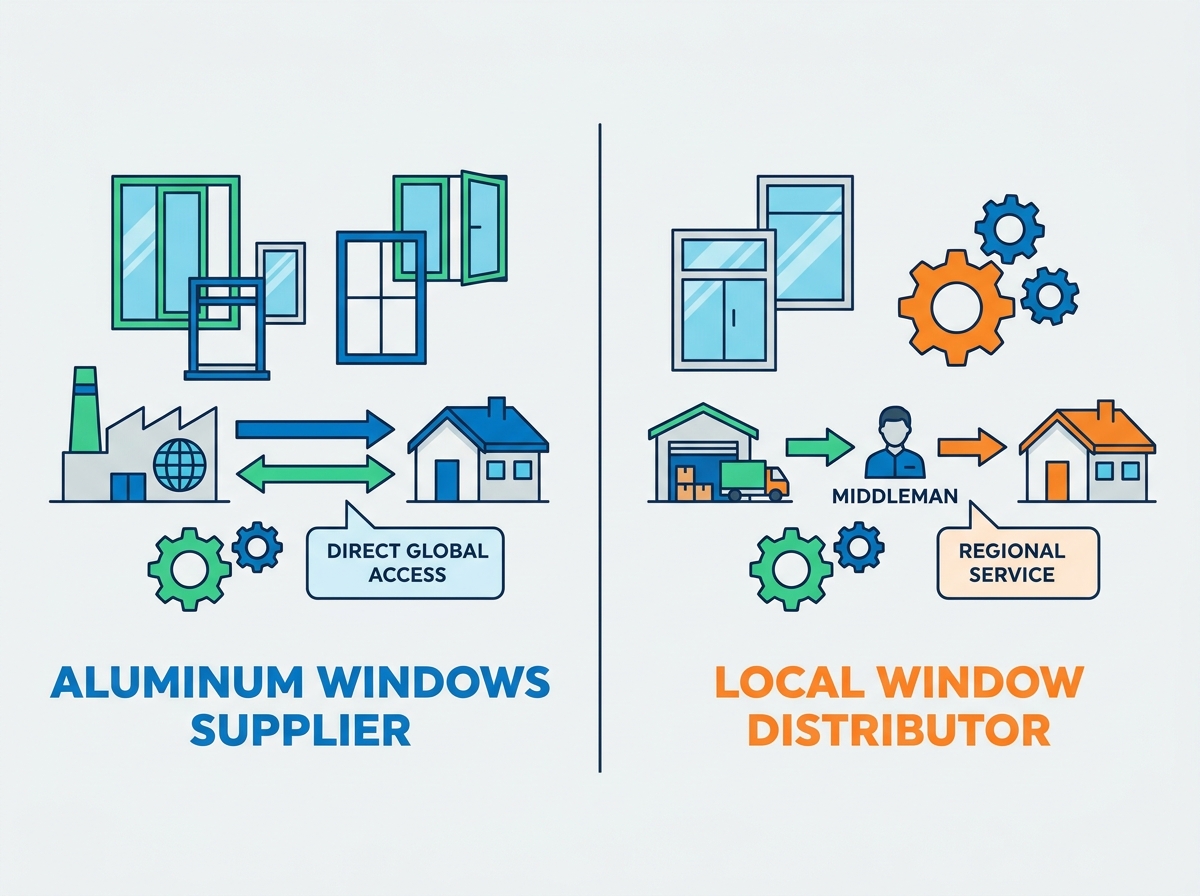
Sourcing fenestration products for modern construction projects presents a distinct logistical and structural challenge. Project managers and developers must choose between direct factory procurement and local distribution networks. This decision directly impacts project timelines, architectural flexibility, and overall building envelope performance. A direct manufacturer handles custom fabrication, global logistics, and bulk distribution, operating at the source of production. Conversely, a local window distributor acts as a regional middleman, stocking standard sizes for immediate delivery and handling domestic retail brands. We will break down how to align your procurement path with project scale, budget constraints, and specific architectural demands.
Understanding the fundamental differences between these two sourcing models allows contractors to optimize their supply chain. Direct procurement caters to large-scale developments requiring specific architectural profiles and rigorous performance testing. Local distribution serves immediate, smaller-scale needs where speed outweighs customization. Tailoring the procurement path ensures you meet structural requirements while maintaining project momentum and site efficiency.
Supply chain positioning dictates the flow of materials, site scheduling, and project control. Direct factory sourcing eliminates middleman markups and warehouse handling. You deal directly with the production facility, gaining transparency into the manufacturing process, extrusion quality, and assembly timelines. This direct line of communication allows project engineers to verify structural calculations and thermal performance data straight from the source. Local distributors offer localized convenience but add retail padding, warehousing overhead, and sales commissions to the final procurement equation. They act as a buffer, which simplifies purchasing for small jobs but complicates custom requests.
Pricing structures differ significantly based on the sourcing model. Direct factory wholesale pricing structures cater to bulk orders and high-volume commercial developments. You leverage economies of scale by purchasing directly from the source, optimizing capital allocation for large multi-family or high-rise projects. Distributor retail pricing includes freight padding and operational overhead necessary to maintain local showrooms, inventory, and regional sales staff. When ordering hundreds of units, the distributor's overhead becomes a substantial line item that does not contribute to the physical quality of the building materials.
Lead times and inventory management require careful planning based on your chosen route. Construction schedules must adapt to the realities of material availability and fabrication queues.
Managing these timelines requires a robust critical path method (CPM) schedule. If a project demands unique window shapes or specific thermal breaks, the local distributor will simply place an order with a manufacturer, adding another layer of communication and potential delay. Direct sourcing puts the project manager in control of the fabrication schedule, allowing for real-time updates on extrusion, powder coating, and glazing phases.
Sourcing custom aluminum windows directly opens up immense architectural freedom. You can specify tailored extrusion profiles, non-standard dimensions, and unique geometric configurations. Factories accommodate specific structural demands that off-the-shelf products cannot meet. This flexibility proves essential for luxury residential builds, high-rise commercial structures, and institutional projects requiring massive curtain walls or ribbon windows. Engineers can specify the exact thickness of the aluminum walls within the extrusion to handle higher wind loads without changing the exterior sightlines.
Direct manufacturers offer high-performance finishing options tailored to specific environmental conditions. You can select PVDF coatings and powder coating compliant with rigorous AAMA 2603, 2604, or 2605 standards. Integrated glazing options include double or triple-pane thermal performance, low-E coatings, argon gas fills, and acoustic lamination. These custom configurations ensure the building envelope meets strict energy codes and acoustic requirements. For projects near airports or busy highways, specifying an asymmetrical glass makeup with a PVB interlayer drastically reduces sound transmission.
Local distributors impose distinct limitations on architectural design. They restrict buyers to standardized manufacturer catalogs and pre-set dimension grids. This lack of flexibility forces architects to alter their designs to fit available inventory, often compromising the original aesthetic vision. Distributor networks struggle to accommodate bespoke architectural requirements without initiating lengthy and complex special order processes. If a rough opening is framed slightly out of standard spec, a distributor will require you to reframe the opening, whereas a direct manufacturer can fabricate the window to fit the existing condition.
| Feature | Direct Manufacturer | Local Distributor |
|---|---|---|
| Extrusion Profiles | Custom dies, variable wall thickness, bespoke sightlines. | Standard catalog profiles only. |
| Glazing Options | Triple-pane, custom low-E, acoustic PVB, dynamic tinting. | Standard double-pane, basic low-E coatings. |
| Finishes | AAMA 2605 PVDF, custom color matching, marine-grade anodized. | Limited standard colors (white, bronze, black). |
| Hardware | Multi-point locking, heavy-duty commercial hinges, custom handles. | Standard residential-grade hardware. |
Extreme environments require rigorous engineering and testing. Direct suppliers design fenestration systems to withstand severe meteorological events. This includes engineering frames and glazing to handle hurricane-force winds, seismic activity, and extreme thermal cycling. Factory-direct procurement allows you to specify the exact structural thresholds required for your specific geographic location. For coastal projects, this means specifying design pressures (DP ratings) that exceed local code minimums to ensure long-term durability against driving rain and flying debris.
Structural integrity relies on comprehensive protection mechanisms built into the frame design. High-performance windows feature advanced water penetration resistance and engineered weep-hole drainage designs. Air infiltration ratings must meet strict local building codes to ensure energy efficiency and prevent drafts. Aluminum frames require specific anodized or painted finishes to provide corrosion resistance against humid or coastal climates. Polyamide thermal breaks must be engineered into the extrusion to prevent thermal bridging, stopping condensation from forming on the interior frames during cold weather.
Compliance and certifications validate the performance of the window systems. Compare manufacturer testing data directly from the factory against local distributor compliance verification. Direct suppliers provide raw testing data for AAMA, NFRC, CE, and AS2047 standards. This transparency ensures the products installed meet the exact specifications required by local building inspectors and structural engineers. When you work with a direct aluminum window supplier, you receive the actual lab reports detailing the water column tests and structural deflection limits.
Partnering with a global window export supplier requires a firm grasp of international logistics. You must understand container loading optimization to maximize freight efficiency and protect the materials. Factories utilize heavy-duty seaworthy packaging, including custom wooden crates and steel stillages, to prevent breakage during maritime transit. Managing these logistics effectively keeps the project on schedule and prevents costly site delays. Proper staging at the factory ensures that the units needed for the first floor are loaded last, allowing for immediate installation upon arrival.
Navigating international shipping involves coordinating multiple moving parts. Project managers must handle customs clearance, import tariffs, and port logistics. You must coordinate delivery timelines precisely with active construction phases for apartments, hotels, and large-scale residential developments. Effective communication with the factory ensures containers arrive exactly when the site is ready for installation. Utilizing a freight forwarder simplifies this process, handling the drayage from the port to the job site and managing the chassis rental.
Sourcing through local distributors simplifies the logistical burden significantly. They manage domestic flatbed transport and localized job-site delivery. Distributors offer on-site physical support and immediate troubleshooting during the installation phase. They also provide simplified returns and damage replacement protocols, minimizing downtime if a unit arrives compromised. If a glass unit is cracked during installation, a local distributor can often source a replacement piece of glass locally within days, whereas an international replacement might take weeks.
Determining when to source directly from an aluminum windows supplier depends heavily on project scale and timeline flexibility. Multi-family residential developments, hotels, and commercial offices with repeat window configurations benefit most from direct factory procurement. Bespoke architectural projects demanding unique profiles also require factory-direct capabilities. Projects with a flexible lead time window of twelve weeks or more prioritize bulk quantity procurement efficiently. The upfront planning required pays off through superior material quality and exact architectural matching.
Local distributors serve a different segment of the construction market. Use a local distributor for single-family home renovations or urgent replacement projects where the building envelope is already exposed to the elements. Projects utilizing standard window dimensions with zero lead-time flexibility rely on local inventory. Builders lacking the capacity or personnel to manage international import compliance, container unloading, and heavy machinery operation should utilize local distribution networks.
Evaluating an overseas manufacturer requires strict due diligence and technical verification. Assess factory production capacity and the sophistication of their machinery, such as CNC extrusion and milling equipment. Review their internal quality control protocols to ensure consistent manufacturing standards across thousands of units. Request documentation on their testing facilities, material sourcing, and aluminum billet purity. A reliable factory will gladly provide video tours of their assembly lines and testing chambers.
Review the supplier's past portfolio performance in similar climate zones. A factory producing windows for a coastal environment must demonstrate expertise in corrosion resistance, marine-grade hardware, and high wind loads. Test their communication efficiency and technical engineering support during the initial quoting phase. Ensure they provide robust warranty backing, clear terms for international claims, and detailed shop drawings before any production begins. The quality of their shop drawings often indicates the precision of their manufacturing.
Evaluating local distributors requires a different set of criteria focused on service and reliability. You must verify their ability to support the project locally.
Maximizing returns on your fenestration procurement requires balancing material quality against convenience, customization against speed, and direct control against local service. Aligning the supply chain model with your project scale ensures optimal structural performance and aesthetic success. Careful planning, accurate scheduling, and thorough vetting of your chosen partner prevent costly delays and ensure the building envelope performs exactly as engineered.
Take the following actionable steps to finalize your procurement strategy:
A: Plan for 10 to 16 weeks when sourcing directly from an overseas manufacturer. This timeframe accounts for custom fabrication, quality control testing, maritime transit, and customs clearance. Always factor in potential port delays during peak shipping seasons and coordinate closely with your framing schedule.
A: Yes, direct manufacturers specialize in custom extrusion profiles. They utilize CNC machinery and custom dies to create bespoke geometric configurations and non-standard dimensions that local distributors typically cannot provide from standard residential catalogs.
A: You can manage customs clearance through a licensed customs broker, or the supplier can arrange it if you negotiate DDP (Delivered Duty Paid) shipping terms. Clarify the Incoterms before finalizing the purchase order to understand your exact liabilities.
A: Reputable direct suppliers manufacture products to meet international standards like AAMA, NFRC, CE, and AS2047. You must request the specific testing data, including DP ratings and U-factors, and verify it with your local building inspector prior to ordering.
A: Direct suppliers use heavy-duty seaworthy packaging to minimize breakage. However, you should always secure comprehensive marine cargo insurance. If breakage occurs, the insurance covers the replacement value, and the factory will expedite the replacement units or glass panels.
A: Use a local distributor for projects requiring immediate material delivery, single-family home renovations, or when your project utilizes standard window dimensions. Distributors are ideal when you lack the infrastructure, space, or equipment to manage international logistics and container unloading.


