
Views: 0 Author: Site Editor Publish Time: 2026-07-29 Origin: Site


When homeowners and architects embark on a renovation or new construction project, one of the most critical decisions they face involves selecting the right fenestration materials. The debate between choosing an aluminum window and a vinyl alternative has been ongoing for decades, with each material offering distinct characteristics. However, when evaluating long-term value, structural integrity, and aesthetic versatility, the conversation shifts significantly. Modern engineering has transformed metal frames from their historically conductive past into highly advanced, thermally efficient architectural elements. Understanding the nuances of these materials is essential for making an informed investment that enhances both the property's visual appeal and its overall energy performance over the lifespan of the building.
For many years, vinyl was championed as the ultimate budget-friendly, low-maintenance option. It resists rot and does not require painting, making it a staple in mass-market residential construction. Yet, as building standards have evolved and architectural tastes have leaned toward expansive glass panels and minimalist sightlines, the limitations of vinyl have become more apparent. Vinyl frames can warp under extreme temperature fluctuations, and their inherent lack of structural rigidity necessitates thicker, bulkier profiles that obstruct natural light. In contrast, premium metal alternatives have undergone a technological renaissance, emerging as the preferred choice for high-end residential and commercial applications where durability and refined design are paramount.
To fully appreciate the long-term value proposition, one must examine the fundamental material properties that dictate performance. Vinyl, or polyvinyl chloride (PVC), is a synthetic plastic polymer. While it offers decent baseline insulation, it is susceptible to expansion and contraction when exposed to intense solar heat or freezing temperatures. Over time, this thermal cycling can lead to seal failures, sticking sashes, and a degraded appearance. Furthermore, vinyl's color palette is often limited, as dark colors absorb more heat, exacerbating the material's tendency to warp.
Conversely, aluminum is a highly robust, naturally occurring metal that boasts an exceptional strength-to-weight ratio. Historically, the primary drawback of an aluminum frame was its high thermal conductivity; it easily transferred heat and cold, leading to condensation and energy loss. However, the introduction of thermal break technology revolutionized the industry. By inserting a non-conductive structural barrier between the interior and exterior metal extrusions, manufacturers successfully halted thermal bridging. Today, a well-engineered metal frame provides the structural resilience required for large architectural openings without compromising on climate control or interior comfort.
The transition from rudimentary metal frames to sophisticated fenestration systems represents a significant leap in building science. The modern aluminum window is a marvel of engineering, utilizing specific alloys designed to maximize both strength and longevity. For instance, top-tier products like DAW Casement Windows are constructed using heavy-duty 6063-T5 Thermal Break Aluminum Alloy. This specific alloy is renowned in the architectural world for its excellent extrusion characteristics, high tensile strength, and superior surface finish capabilities. The T5 temper indicates that the metal has been thermally treated and artificially aged, ensuring optimal mechanical properties that far exceed the structural limits of standard vinyl profiles.
Because of this immense structural integrity, these frames can support heavier, thicker glass units—such as triple glazing—without requiring the bulky reinforcing inserts that vinyl frames often need. This allows for narrower sightlines and larger expanses of unobstructed glass. The design of these casement systems specifically omits a center meeting rail, providing an uninterrupted, expansive view that seamlessly connects the indoor living space with the outdoor environment. This architectural elegance is something that thicker, plastic-based frames struggle to replicate effectively.
When assessing long-term value, durability is arguably the most critical metric. A window must withstand decades of exposure to wind, rain, UV radiation, and temperature extremes. Vinyl degrades over time under prolonged UV exposure; it can become brittle, chalky, and prone to cracking. Once a vinyl frame is compromised structurally, it generally requires complete replacement, as it cannot be easily repaired or repainted.
Aluminum, on the other hand, is virtually impervious to UV degradation. It does not rust, rot, or become brittle with age. The heavy-duty 6063-T5 alloy used in premium casement systems provides a rigid framework that maintains its dimensional stability regardless of the climate. This rigidity ensures that the operable sashes remain perfectly aligned with the frame year after year, preventing the drafts and operational difficulties that frequently plague aging vinyl units.
Beyond the frame material itself, weather resistance relies heavily on the quality of the seals and hardware. Vinyl units often rely on basic weatherstripping that can flatten or tear over time. High-quality metal casement systems employ far more advanced sealing technologies. For example, DAW Casement Windows utilize a compression seal mechanism that presses tightly against the frame when closed. This design is fundamentally superior to sliding seals, as the mechanical force of the locking system actively compresses the weatherstripping, creating an airtight and watertight barrier.
To further enhance this weather resistance, these systems are equipped with triple-seal EPDM (Ethylene Propylene Diene Monomer) gaskets. EPDM is a highly durable synthetic rubber widely used in automotive and aerospace applications for its outstanding resistance to heat, ozone, and weather. The use of triple-seal EPDM gaskets ensures that even under severe wind-driven rain, the interior of the home remains completely protected. This level of meticulous weatherproofing significantly extends the lifespan of the installation and contributes heavily to its long-term value.
Energy efficiency is a primary concern for modern homeowners, driven by both environmental awareness and the desire to reduce utility costs. Vinyl has long marketed itself as the energy-efficient choice due to the low conductivity of plastic. However, the narrative has shifted dramatically with the advent of advanced thermal break technology. Today, an energy efficient aluminum window can meet or exceed the performance of premium vinyl, particularly when paired with high-performance glazing packages.
The thermal break within the 6063-T5 aluminum alloy frame acts as an absolute barrier to heat transfer. When combined with sophisticated glass options, the overall thermal performance is exceptional. These casement systems offer extensive glass configurations, including Double or Triple Glazing. Furthermore, the inclusion of Low-E (low-emissivity) coatings reflects interior heat back into the room during winter while blocking solar heat gain during summer. The addition of Argon-filled airspaces between the glass panes minimizes convective heat transfer, and the use of Tempered glass ensures safety and durability. This comprehensive approach to energy efficiency ensures that the building envelope remains highly insulated, providing substantial long-term savings on heating and cooling bills.
An often-overlooked aspect of window performance is acoustic insulation. As urban areas become denser and noise pollution increases, the ability of a window to block exterior sound is a major factor in residential comfort. Vinyl frames, being lighter and less dense, often struggle to block lower-frequency noises. The mass and rigidity of a heavy-duty aluminum frame inherently provide better sound dampening properties.
When equipped with triple glazing, specialized acoustic glass, and the airtight compression created by triple-seal EPDM gaskets, these metal casement systems achieve remarkable acoustic performance. They boast an STC (Sound Transmission Class) rating of up to 40-45 dB. This high STC rating means that they can effectively neutralize loud exterior noises, such as heavy traffic or neighborhood disturbances, transforming the interior space into a quiet, peaceful sanctuary. This level of acoustic control is a premium feature that adds immense value to the property.
Architectural trends heavily favor clean lines, minimalist profiles, and maximum natural light. Vinyl frames, due to their structural limitations, require thick profiles that intrude upon the glass area. They also present challenges when it comes to color customization. Painting vinyl is notoriously difficult and often voids the manufacturer's warranty, leaving homeowners stuck with standard white or beige.
Aluminum excels in aesthetic versatility. The extrusion process allows for incredibly precise, narrow profiles that maximize the viewing area. Furthermore, the finishing options for metal frames are vastly superior in both variety and durability. A custom aluminum window can be tailored to match any architectural style or interior design scheme. These premium casement systems are available in sophisticated standard colors such as Matte Black, Anthracite Grey, and Classic White. For projects requiring specific branding or unique palettes, custom RAL colors are readily available.
Beyond solid colors, advanced manufacturing techniques allow aluminum to mimic the warmth of traditional materials without the associated maintenance. These frames offer beautiful wood grain finishes applied via state-of-the-art heat-transfer technology. This process bakes the wood grain pattern directly into the powder-coated surface, resulting in a highly durable finish that looks like real wood but will never rot, peel, or require varnishing.
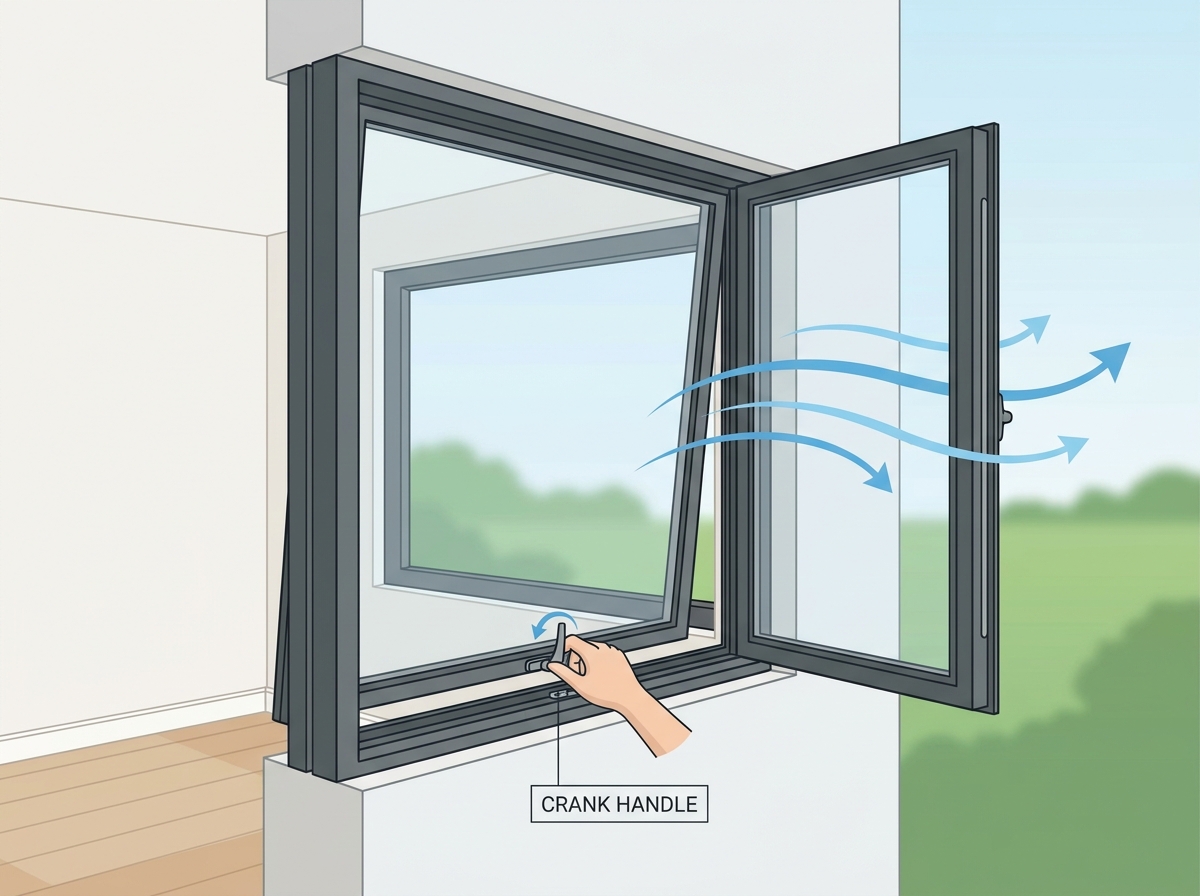
The aesthetic appeal is further enhanced by the hardware and operational styles. These systems operate using sleek, ergonomic crank handles for effortless opening and closing. The standard configuration is an Outswing design (hinged on either the left or right side), which is highly efficient for catching side breezes and directing fresh air into the home. For specific architectural needs, inswing configurations are also available upon request. The hardware is not just functional; it is integrated into a Multi-point Security Locking system that secures the sash at multiple points along the frame with a single turn of the handle, providing superior security and a perfectly tight weather seal.
The versatility of these high-performance casement systems makes them suitable for a wide variety of applications throughout a home or commercial building. Because they feature a fully opening sash, they provide excellent ventilation, making them highly suitable for kitchens and bathrooms where moisture and odor control are essential. The crank operation is particularly practical for installation above sinks, countertops, or large appliances, where reaching up to slide a traditional sash would be difficult or impossible.
Furthermore, because they are designed without a center meeting rail, they are ideal for living rooms and bedrooms with scenic views. The unobstructed glass area acts as a picture frame for the outdoors, while the robust 6063-T5 alloy ensures that even large-scale installations remain structurally sound against wind loads. The availability of various types—including Single Casement, Double / French Casement, and Push-Out Casement—allows architects and builders to maintain a consistent aesthetic language across different functional requirements within the same project.
To maximize usability without compromising the design, these systems offer sophisticated screening and grille options. They can be equipped with integrated fiberglass mesh screens for standard insect protection, or stainless steel security mesh screens for enhanced safety and durability. These screens are designed to integrate seamlessly with the frame, avoiding the clunky, tacked-on appearance often seen with cheaper vinyl alternatives.
For homes with traditional, transitional, or specific historical architectural styles, the glass can be customized with internal or external decorative grilles. These are available in classic Colonial patterns, elegant Prairie styles, or entirely custom geometric patterns. Because the grilles can be placed internally between the panes of double or triple glazing, they offer the classic divided-light look while allowing for incredibly easy glass cleaning, combining historical aesthetics with modern convenience.
When investing in premium building materials, verifiable performance through independent testing and certification is crucial. Vinyl windows often meet basic regional codes, but high-end aluminum systems are engineered to pass the most stringent global standards. This commitment to quality assurance guarantees that the product will perform exactly as specified over its lifespan.
These specific casement systems carry an impressive array of international certifications. They are AS2047 certified, ensuring they meet rigorous standards for structural performance and water penetration resistance. They hold CE certification, indicating compliance with European health, safety, and environmental protection standards. Furthermore, they are NFRC (National Fenestration Rating Council) certified, providing accurate, unbiased energy performance ratings that builders and homeowners can trust. Finally, the manufacturing process itself is ISO9001 certified, guaranteeing consistent quality control and meticulous production standards from the extrusion of the 6063-T5 alloy to the final assembly of the multi-point locking hardware.
DAW Casement Windows represent the pinnacle of modern fenestration, offering an unparalleled combination of structural durability, energy efficiency, and aesthetic elegance. Engineered from heavy-duty 6063-T5 Thermal Break Aluminum Alloy and featuring advanced Double or Triple Glazing with Low-E and Argon gas, they provide exceptional thermal and acoustic insulation (up to 40-45 dB STC). With practical features like effortless crank operation, multi-point security locking, and a fully opening outswing sash that maximizes ventilation without obstructing views, they are ideal for living rooms, bedrooms, and hard-to-reach areas above kitchen sinks. Backed by AS2047, CE, NFRC, and ISO9001 certifications, and available in versatile finishes including Matte Black, custom RAL, and heat-transferred wood grain, these windows deliver a secure, weather-resistant, and visually stunning architectural solution designed for exceptional long-term value.


