
Views: 0 Author: Site Editor Publish Time: 2026-08-22 Origin: Site


When architects, builders, and homeowners set out to design the perfect transition between indoor and outdoor living spaces, the choice of patio door becomes a defining element of the entire project. Among the most popular and premium options available today, the debate often centers around the specific benefits and drawbacks of different operational styles. Choosing between sliding systems and aluminum folding doors requires a comprehensive understanding of how each design impacts space, light, energy efficiency, and daily usability. Integrating high-quality aluminum folding doors into a residential or commercial property can dramatically transform the environment, creating expansive, unobstructed openings that seamlessly merge the interior with the exterior. This comprehensive guide will explore the intricate details, performance metrics, and aesthetic considerations necessary to make an informed decision for your next architectural endeavor.
The evolution of modern architecture has placed a premium on natural light, open floor plans, and the blurring of boundaries between the inside of a home and the natural world outside. Traditional swinging doors and standard-sized windows are often insufficient for achieving this grand vision. As a result, large-format glazing solutions have become the standard in luxury home building and high-end renovations. Both folding and sliding mechanisms offer unique advantages in this regard, but they operate on fundamentally different principles. Understanding these mechanical and structural differences is crucial for selecting a system that not only looks beautiful but also performs flawlessly under the specific environmental conditions of the building site.
In recent years, advancements in metallurgical engineering and glass manufacturing have allowed these large door systems to achieve unprecedented levels of thermal performance and structural integrity. Aluminum, in particular, has emerged as the material of choice for premium door frames due to its exceptional strength-to-weight ratio, resistance to corrosion, and ability to maintain precise tolerances over decades of use. When evaluating the options for your project, it is essential to look beyond the surface aesthetics and delve into the engineering that dictates how the doors will function, insulate, and secure the property.
To truly appreciate the nuances of these two distinct architectural features, one must first understand their basic mechanics and how they interact with the surrounding building envelope. While both serve the primary function of providing egress and admitting light, their operational footprints and the visual experiences they create are markedly different. The decision between the two often comes down to the specific spatial constraints of the room and the desired visual impact when the doors are fully opened.
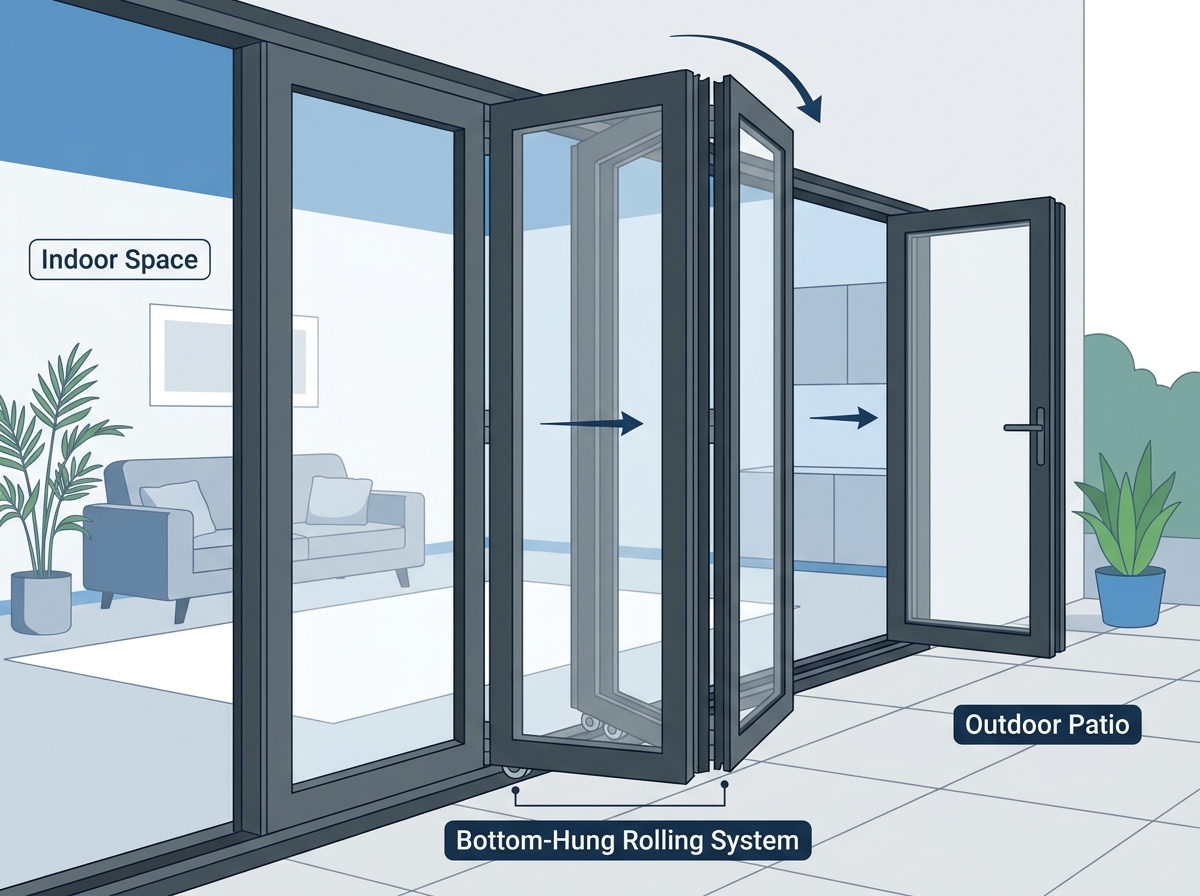
At their core, aluminum folding doors operate on a track system that allows multiple glass panels to fold back against one another in a concertina or accordion style. When fully opened, these panels stack neatly to one side (or both sides, depending on the configuration), effectively removing the physical barrier between the interior and exterior. This capability to create a 100 percent clear opening is the defining characteristic and primary appeal of aluminum bifold doors. The engineering required to support the weight of multiple heavy glass panels while ensuring smooth, effortless operation is significant. High-quality systems utilize robust, precision-engineered hinges and rolling mechanisms to distribute the load and guide the panels seamlessly along the track.
The structural integrity of the aluminum frame is paramount in these systems. Because the panels fold outward or inward, the frames must be rigid enough to prevent sagging or warping over time, which would otherwise compromise the weather seal and the ease of operation. The use of premium aluminum alloys ensures that the frames remain dimensionally stable, even when subjected to extreme temperature fluctuations and high wind loads. Furthermore, the folding mechanism allows for incredible versatility in design, accommodating wide openings that would be challenging or impossible to span with a single swinging door.
In contrast to the folding mechanism, sliding doors operate by gliding horizontally along a track, with one or more panels sliding behind a fixed panel or into a concealed wall pocket. The most common configuration involves two panels, where one is operable and the other is stationary. More expansive systems, often referred to as multi-slide or lift-and-slide doors, can incorporate multiple operable panels that stack behind each other. While sliding doors offer large expanses of uninterrupted glass when closed, their primary limitation is that they typically cannot provide a 100 percent clear opening unless they are designed to disappear entirely into a wall pocket, which requires significant structural planning during the framing phase of construction.
Sliding systems are often favored in situations where interior or exterior space is severely limited. Because the panels do not project outward or inward when opening, they do not interfere with furniture placement or exterior landscaping. However, the overlapping nature of the panels means that the sightlines—the vertical frame members visible when the doors are closed—can be more prominent than those of a folding system, depending on the specific profile design. The choice between the two systems often hinges on balancing the desire for a completely unobstructed opening against the practical constraints of the available space.
One of the most critical factors in choosing between folding and sliding configurations is how the doors will interact with the physical space of the room and the adjoining outdoor area. The architectural layout, the placement of furnishings, and the intended flow of foot traffic all play a role in determining which system will provide the most functional and elegant solution.
When you opt for folding glass doors, you are investing in the ability to completely open up a wall. This is particularly advantageous for entertaining spaces, where the seamless flow between a living room and a patio or deck is highly desirable. However, it is important to account for the stacking space required when the doors are open. The folded panels will protrude either inward or outward, requiring a dedicated clearance zone. If the patio is narrow or the interior room is small, this protrusion can be an obstacle. Careful planning is required to ensure that the stacked panels do not impede walkways or clash with outdoor furniture.
Sliding doors, conversely, are highly space-efficient in terms of their operational footprint. Because they glide parallel to the wall, they require zero clearance for opening and closing. This makes them an excellent choice for balconies, narrow decks, or rooms where interior space is at a premium. The trade-off, as mentioned, is that a standard sliding system will always have at least one fixed panel occupying a portion of the opening. For a 12-foot wide opening with a two-panel sliding door, only 6 feet will be passable when fully opened. While multi-slide systems can improve this ratio, they still require track space for each panel to stack upon, which can result in a very wide sill that must be stepped over.
The visual impact of large patio doors is a major consideration for architects and homeowners alike. The goal is often to maximize the amount of glass and minimize the visible framing, thereby framing the outdoor view as a piece of living art. Both folding and sliding systems have distinct visual characteristics that can influence the overall aesthetic of the space.
Folding systems typically feature multiple panels, which means there are more vertical frame members (stiles) visible across the expanse of the opening when the doors are closed. However, modern engineering has allowed for the development of incredibly slim profiles. For instance, high-quality systems are designed with flush handles and hidden hinges for a clean, minimalist aesthetic. This attention to detail ensures that even with multiple panels, the visual interruption is kept to an absolute minimum. The hardware becomes virtually invisible, allowing the focus to remain on the view and the sleek lines of the aluminum framing.
Sliding doors often boast larger individual glass panels, which can result in fewer vertical sightlines when closed. A massive two-panel sliding door can provide a breathtaking, almost uninterrupted view. However, the frames of sliding doors, particularly the interlocking stiles where the panels meet, can sometimes be bulkier to accommodate the weather stripping and structural requirements of the sliding mechanism. Ultimately, the aesthetic choice depends on whether the priority is the look of the doors when they are closed (where sliding doors might offer slightly larger glass expanses) or the look and feel when they are open (where folding doors provide the ultimate unobstructed transition).
In contemporary construction, energy efficiency is not merely a preference; it is often a strict regulatory requirement. Large expanses of glass can be significant sources of heat gain in the summer and heat loss in the winter if not properly engineered. When comparing premium door systems, the thermal performance of the frame and the glazing are of paramount importance.
Aluminum is a highly conductive material, which historically made it a poor choice for insulation. However, modern manufacturing has solved this problem through the use of thermal breaks. A high-performance door features a thermally broken aluminum frame to reduce heat transfer and resist corrosion. This involves inserting a non-conductive structural material, typically a specialized polyamide or polyurethane, between the interior and exterior aluminum profiles. This thermal barrier effectively prevents the cold outside air from chilling the interior frame in winter, and stops the exterior heat from radiating inward during the summer.
The implementation of thermal break technology is critical for maintaining a comfortable indoor climate and reducing reliance on artificial heating and cooling systems. It also prevents condensation from forming on the interior frames during cold weather, which can lead to water damage and mold growth over time. When evaluating any aluminum door system, verifying the presence and quality of the thermal break is a fundamental step in ensuring long-term performance and durability.
The glass itself is the most significant component of any patio door in terms of surface area, and its insulating properties are vital. Standard configurations for premium doors include Low-E (low-emissivity), dual-pane tempered glass with argon gas insulation. The Low-E coating is a microscopically thin layer of metallic particles applied to the glass surface that reflects long-wave infrared thermal heat. This means it reflects heat back into the room during the winter and reflects the sun's heat away during the summer. The argon gas fill between the panes provides a denser barrier than standard air, further reducing thermal transfer.
The combination of thermally broken frames and advanced glazing results in exceptional energy efficiency metrics. For instance, a well-engineered system can achieve a U-Factor of ≤ 0.29 and a Solar Heat Gain Coefficient (SHGC) of ≤ 0.23. These impressive numbers indicate a highly efficient barrier against thermal transfer, ensuring that the home remains comfortable year-round while minimizing energy costs. Furthermore, systems that meet stringent energy codes, such as Title-24 standards, provide peace of mind that the installation complies with some of the most rigorous environmental regulations in the industry.
For projects requiring even greater performance or specific functional characteristics, extensive glass customization is often available. Options such as triple-pane glazing for extreme climates, laminated or impact-rated glass for hurricane zones or enhanced security, and tinted or frosted glass for privacy and glare reduction allow architects to tailor the doors to the precise needs of the environment and the client.
Large glass doors are sometimes perceived as potential vulnerabilities in a building's security perimeter. However, premium aluminum folding and sliding systems are engineered with robust security features that provide formidable resistance to forced entry.
The locking system is the primary defense against intrusion. High-end folding doors are equipped with a concealed 3-point multi-point locking system for security. Unlike standard single-point deadbolts, a multi-point system engages the door frame at several different locations simultaneously—typically at the top, middle, and bottom—with the simple turn of a single handle or key. This distributes the locking force along the entire height of the door, making it incredibly difficult to pry open. The concealed nature of the mechanism not only enhances the clean aesthetic of the door but also protects the hardware from tampering and environmental degradation.
The operational hardware of the door also contributes to its overall security and longevity. A superior folding door utilizes a bottom-hung rolling system with adjustable hinges for smooth operation. In a bottom-hung system, the weight of the heavy glass panels is supported entirely by the bottom track, which rests on the solid foundation of the floor. This is generally considered more structurally sound and reliable than top-hung systems, which require a massive, reinforced header to support the hanging weight of the doors. The adjustable hinges allow for precise calibration during installation and over the life of the door, ensuring that the panels remain perfectly aligned, the weather seals remain tight, and the locking mechanisms engage flawlessly.
Weather protection is another critical aspect of structural integrity. To prevent water infiltration and air drafts, premium systems include full-perimeter weather stripping for high-performance weather sealing. This continuous seal ensures that when the doors are locked closed, they form an impenetrable barrier against wind-driven rain and extreme weather conditions, protecting the interior of the home from the elements.
Every architectural project is unique, and the ability to customize large door systems is essential for achieving the desired aesthetic and functional goals. The versatility of aluminum allows for a wide range of finishes, colors, and massive sizing capabilities.
One of the most impressive features of modern aluminum folding systems is their ability to span massive distances. These systems are designed to accommodate a maximum size of up to 10 ft. tall and 30 ft. wide. This extraordinary scale allows architects to design truly monumental openings that completely dissolve the barrier between the interior living space and the exterior landscape. Whether creating a sweeping panoramic view of the ocean or opening a large living room to an expansive backyard patio, these massive dimensions provide unparalleled design freedom.
These large-scale custom patio doors are suitable for creating seamless indoor-outdoor connections and can be configured for spaces ranging from intimate patios to grand openings. The structural rigidity of the thermally broken aluminum frames ensures that even at these maximum dimensions, the doors remain stable, secure, and easy to operate.
The visual integration of the doors into the overall design scheme is facilitated by a variety of color and finish options. Standard frame colors typically include classic Black and White, which complement a vast array of contemporary and traditional architectural styles. Black frames, in particular, have become incredibly popular in modern design for their ability to create striking, graphic lines that frame the outdoor view like a photograph.
The hardware—the handles, hinges, and locking mechanisms—also plays a crucial role in the aesthetic. Premium systems offer hardware finishes in Stainless Steel, Bronze, or Black, allowing designers to coordinate the door hardware with other fixtures and finishes throughout the home. This level of detail ensures a cohesive and polished look that reflects the high quality of the installation.
The performance and longevity of any premium door system are heavily dependent on the quality of the installation and the adherence to proper maintenance protocols. Large, heavy glass panels require precise leveling, plumbing, and adjustment to ensure smooth operation and a watertight seal.
Given the complexity and weight of these systems, professional installation is highly recommended. Professional installation services are available, covering measuring, fitting, and adjustments. Experienced installers have the specialized tools and knowledge required to properly prepare the opening, install the tracks perfectly level, and calibrate the hinges and rollers for effortless operation. They also ensure that the weather stripping is correctly seated and that the multi-point locking mechanisms engage smoothly.
However, for highly skilled contractors or experienced builders, an optional DIY Installation Kit includes flanges, J moldings, and professional-grade silicone sealant. This comprehensive kit provides all the necessary components to achieve a professional-grade installation, provided the installer has the requisite expertise. To further assist with the process, extensive technical resources, including spec sheets, installation guides, and AutoCAD files, are available for download, ensuring that architects and builders have all the information they need to integrate the doors seamlessly into their plans.
A significant indicator of a product's quality and the manufacturer's confidence in its durability is the warranty provided. Premium aluminum folding doors represent a substantial investment, and peace of mind is essential. A robust system includes a 10-Year Warranty, protecting the buyer against defects in materials and workmanship. This long-term coverage ensures that the doors will continue to perform flawlessly, maintain their energy efficiency, and secure the home for a decade or more, representing excellent long-term value for the property owner.
Maintenance for high-quality aluminum doors is generally minimal compared to wood systems, which require regular sanding, painting, or staining. The durable powder-coated or anodized finishes on aluminum frames resist fading, chipping, and peeling. Routine maintenance typically involves simply cleaning the glass, wiping down the frames with a mild detergent, and occasionally clearing the bottom track of debris to ensure the rollers continue to glide smoothly. The stainless steel or bronze hardware may require occasional lubrication, but overall, the system is designed for low-maintenance longevity.
In conclusion, the decision to install large-format patio doors is a transformative one for any property. While sliding doors offer excellent space efficiency and large individual glass panels, aluminum folding doors provide the unmatched ability to completely open a wall and merge indoor and outdoor environments. By prioritizing advanced engineering, such as thermal breaks, multi-point locks, and high-performance glazing, homeowners and builders can achieve both breathtaking aesthetics and rigorous energy efficiency.
The DAW Aluminum Bifold Door represents a premier solution for creating expansive, seamless indoor-outdoor living spaces, accommodating grand openings up to 10 feet tall and 30 feet wide. Engineered with a thermally broken aluminum frame, Low-E dual-pane tempered glass with argon gas, and full-perimeter weather stripping, it delivers exceptional energy efficiency (U-Factor ≤ 0.29, SHGC ≤ 0.23) that meets rigorous Title-24 standards. Security and ease of use are prioritized through a concealed 3-point multi-point locking system and a smooth bottom-hung rolling system with adjustable hinges. With customizable glass options, sleek flush handles, hidden hinges, and a comprehensive 10-Year Warranty, this door system provides architects, builders, and homeowners with a highly durable, visually stunning, and low-maintenance architectural feature.


