
Views: 0 Author: Site Editor Publish Time: 2026-08-08 Origin: Site


When homeowners and builders evaluate fenestration options for residential or commercial projects, the debate often centers on maximizing natural airflow, enhancing energy efficiency, and ensuring long-term durability. Among the most popular choices for achieving these goals are aluminum double hung windows and casement windows. Both styles offer distinct advantages, but understanding their specific ventilation mechanics, structural benefits, and maintenance requirements is crucial for making an informed decision. High-quality aluminum double hung windows provide exceptional versatility, allowing occupants to control the volume and direction of incoming breezes while maintaining a sleek, traditional aesthetic. By comparing these two prominent window types, property owners can better assess which design aligns with their architectural vision and indoor air quality needs.
To fully appreciate the ventilation capabilities of modern fenestration, one must first examine the operational design of aluminum double hung windows. Unlike fixed or single-sash designs, these units feature dual-operating sashes. This means that both the top and bottom halves of the window can move independently. This dual-action capability is the cornerstone of their ventilation efficiency. When both the upper and lower sashes are opened simultaneously, it creates a natural convection loop within the room. Warm, stale air, which naturally rises, can escape through the top opening, while cooler, fresh outdoor air is drawn in through the bottom opening. This continuous cycle of air exchange is highly effective for rapidly cooling a space during the warmer months without relying on mechanical air conditioning systems.
The structural composition of these units further enhances their appeal. DAW aluminum double hung windows are constructed with fusion-welded frames and sashes, a manufacturing technique that provides added strength and rigidity to the entire assembly. This robust construction ensures that the operable parts maintain their alignment over time, preventing the sashes from binding or sticking during operation. Furthermore, the inclusion of block and tackle balance systems guarantees smooth sash operation, allowing users to effortlessly adjust the size of the top and bottom openings to fine-tune the airflow. Whether you need a gentle breeze or maximum air circulation, the precise control offered by these mechanisms makes them an ideal choice for varying weather conditions.
While aluminum double hung windows excel at creating convection currents, casement windows operate on a fundamentally different principle. Casement windows are hinged at the side and crank outward, operating much like a door. When fully opened, the entire window area is unobstructed, allowing for maximum ventilation. The outward-angled sash of a casement window can act as a scoop, catching passing breezes and directing them into the home. This makes casements particularly effective in areas where the prevailing winds run parallel to the exterior wall. However, this outward-swinging design can be problematic in spaces where exterior clearance is limited, such as near walkways, patios, or dense landscaping.
In contrast, the vertical sliding operation of double hung aluminum windows requires zero exterior space. They remain flush with the wall whether open or closed, making them highly versatile for any architectural layout. Additionally, the ability to open only the top sash is a significant safety feature for households with small children or pets, providing fresh air while keeping the lower portion securely closed. When comparing the two, the choice often comes down to the specific spatial constraints of the building and the preferred method of air circulation—convection versus direct breeze capture.
Ventilation is only one aspect of a window's performance; energy efficiency is equally critical. Modern aluminum frames have evolved significantly from their older, thermally conductive predecessors. Today's advanced designs incorporate sophisticated engineering to minimize heat transfer. DAW units feature a multi-chambered design specifically engineered to create a thermal barrier within the frame. This internal structure disrupts the flow of thermal energy, helping to keep interiors cooler in the summer and warmer in the winter. For those seeking even higher levels of insulation, these windows are available with optional foam-filled frames, which further enhance their resistance to temperature fluctuations.
The glazing options play a massive role in the overall energy efficiency of the unit. These windows feature NFRC-certified thermal performance ratings, providing builders and homeowners with verified data to guide their selections. The base performance values reflect units equipped with a 3/4-inch insulated glass unit (IGU), a warm-edge spacer, and no grilles. From this baseline, several high-performance glass packages are available to meet specific climate demands. The HP Glass Package offers a U-Factor of 0.37, a Solar Heat Gain Coefficient (SHGC) of 0.28, Visible Transmittance (VT) of 0.51, and an R-Value of 2.70. For regions requiring stricter solar control, the HPSC Glass Package provides a U-Factor of 0.33, an SHGC of 0.21, a VT of 0.40, and an R-Value of 3.03.
For the most demanding energy efficiency requirements, the HP2+ and HP2+SC packages deliver exceptional results. The HP2+ Glass Package achieves a U-Factor of 0.30, an SHGC of 0.27, a VT of 0.49, and an R-Value of 3.33. The HP2+SC Glass Package matches the U-Factor of 0.30 and R-Value of 3.33 but lowers the SHGC to 0.20 and the VT to 0.39, making it highly effective at blocking unwanted solar heat gain in hot climates. It is important to note that performance data is based on these specific configurations, and impact resistance testing for high winds and debris is limited to select models.
Effective ventilation should never come at the expense of weather protection or home security. When the windows are closed, they must form a tight, impenetrable seal against the elements. To achieve this, these units are equipped with interlocking meeting rails. When the top and bottom sashes are closed and locked, these rails interlock tightly, creating a robust physical barrier. This design is complemented by high-quality weatherstripping that seals the perimeter against wind and rain infiltration, ensuring that the home remains dry and comfortable even during severe storms.
Security is addressed through the inclusion of standard cam-style locks. These locks not only secure the sashes together to prevent unauthorized entry but also pull the interlocking meeting rails tightly against each other, reinforcing the weather seal. This dual function of security and weather protection is a hallmark of well-engineered fenestration. While some homeowners might consider single hung windows for their projects, the dual-operating nature of the double hung design offers superior flexibility without compromising on these essential security and weatherproofing features.
The adaptability of a window system to various construction scenarios is a key factor for contractors and architects. These aluminum units are highly versatile, proven to be suitable for both replacement applications and entirely new construction projects. Their design accommodates a wide range of wall thicknesses and exterior finishes. They are compatible with standard 2x4 and 2x6 walls, utilizing optional jamb extensions to ensure a perfect, seamless fit with the interior trim. This flexibility simplifies the installation process, reducing labor time and minimizing the potential for errors on the job site.
Specialized installation requirements are also addressed. For example, homes with stucco exteriors often present unique challenges when replacing fenestration. To solve this, specialized frames are available specifically for installation over existing window frames in homes with stucco exteriors. This prevents the need to cut into the stucco, preserving the integrity of the home's exterior cladding and preventing potential water intrusion issues. Furthermore, optional sash replacement kits allow for window updates without disturbing existing interior trim and plaster, making them an excellent choice for historic renovations or projects where preserving the interior aesthetic is paramount.
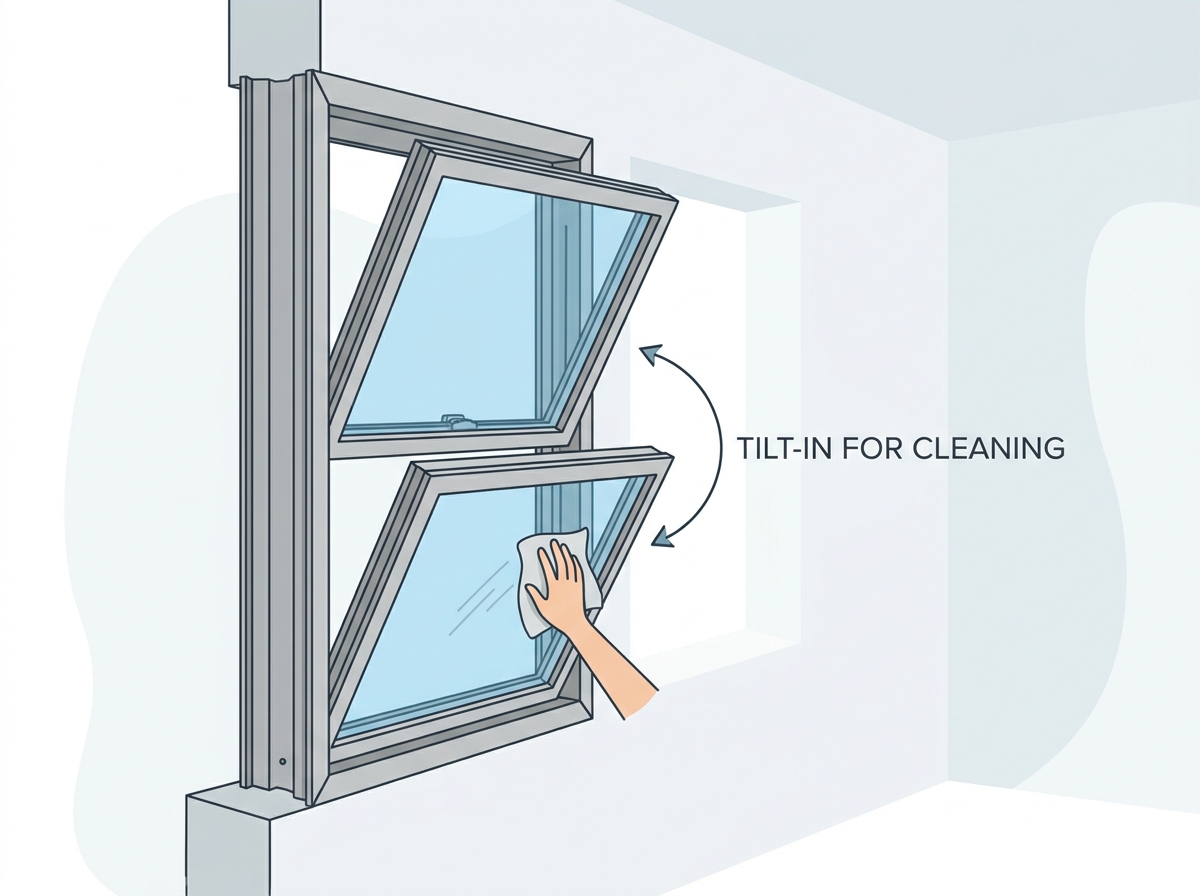
Long-term satisfaction with any building material depends heavily on its maintenance requirements and durability. Aluminum is inherently resistant to rust, rot, and degradation from UV exposure, making it an exceptionally low-maintenance material. However, the operational components and glass surfaces still require periodic cleaning. One of the most significant advantages of this specific design is that the sashes feature a tilt-in mechanism. Both the upper and lower sashes tilt inward, allowing homeowners to clean the exterior glass surfaces safely and easily from inside the home. This eliminates the need for ladders or exterior scaffolding, which is particularly beneficial for multi-story residences.
The confidence in the longevity and performance of these units is reflected in the manufacturer's support. These products are backed by a transferable Limited Lifetime Warranty. This comprehensive warranty provides peace of mind for the original purchaser and adds tangible value to the property, as the warranty can be transferred to subsequent owners if the home is sold. This level of support underscores the reliability of the fusion-welded construction, the durable balance systems, and the advanced thermal barriers integrated into the design.
Beyond functional performance, the aesthetic integration of windows into a building's architecture is a primary concern for designers. Aluminum frames offer a sleek, narrow profile that maximizes the visible glass area, allowing more natural light to enter the space and providing expansive, unobstructed views. This minimalist aesthetic is highly sought after in contemporary and modern architectural styles, yet the traditional double hung operation allows these units to blend seamlessly with classic and transitional home designs as well.
While standard configurations meet the needs of most projects, the availability of custom hung windows ensures that unique architectural openings can be accommodated without sacrificing performance or visual consistency. Whether matching historical sightlines or creating a bold modern facade, the structural rigidity of aluminum allows for large expanses of glass and precise custom sizing. The combination of high-performance glass packages, versatile installation options, and robust construction makes these units a comprehensive solution for diverse architectural demands.
When selecting fenestration, it is essential to view the purchase as a long-term investment in the property's infrastructure. The initial cost must be weighed against the ongoing savings in energy consumption, the reduction in maintenance expenses, and the enhancement of indoor comfort. The multi-chambered thermal barriers, optional foam-filled frames, and NFRC-certified glass packages work in concert to significantly reduce heating and cooling loads. Over time, these energy savings can offset a substantial portion of the initial investment.
Furthermore, the durability of fusion-welded aluminum frames ensures that the windows will not warp, rot, or degrade over time, eliminating the need for costly replacements or extensive repairs. The block and tackle balance systems are engineered for thousands of smooth operational cycles, ensuring that the ventilation benefits remain easily accessible for decades. Coupled with the transferable Limited Lifetime Warranty, the total cost of ownership for these units is highly competitive, making them a financially sound choice for both residential and commercial applications.
The importance of indoor air quality has become increasingly prominent in modern building science. Proper ventilation is essential for diluting indoor pollutants, managing humidity levels, and creating a healthy living environment. By strategically placing operable windows, homeowners can utilize cross-ventilation techniques to flush out stale air rapidly. The dual-operating sashes of these units are particularly effective in this regard. By opening the bottom sash on the windward side of the home and the top sash on the leeward side, occupants can create a powerful natural draft that efficiently exchanges the entire volume of air within a room.
This natural ventilation strategy not only improves air quality but also reduces the reliance on mechanical HVAC systems, leading to lower energy consumption and a reduced carbon footprint. The precise control offered by the smooth-operating sashes allows users to adjust the ventilation rate to match the current weather conditions, ensuring comfort without causing uncomfortable drafts. Whether utilized in a single-family home, a multi-family complex, or a commercial office space, the ability to effectively manage indoor air quality through natural ventilation is a significant advantage of this window style.
DAW Aluminum Double Hung Windows represent a highly engineered fenestration solution that perfectly balances superior ventilation control, robust structural integrity, and advanced thermal efficiency. By featuring dual-operating sashes with a convenient tilt-in mechanism, they provide effortless natural air circulation and safe, indoor cleaning capabilities. Their fusion-welded, multi-chambered frames—available with optional foam filling—and NFRC-certified glass packages deliver exceptional energy performance for both new construction and replacement projects. Supported by a transferable Limited Lifetime Warranty and designed for versatile installation across various wall depths and exterior finishes, these windows offer homeowners and builders a durable, low-maintenance, and highly practical investment that enhances both indoor comfort and architectural value.


