
Views: 0 Author: Site Editor Publish Time: 2026-08-02 Origin: Site


When homeowners and builders evaluate fenestration options for residential or commercial properties, the decision often comes down to balancing aesthetics, energy efficiency, and natural ventilation. Among the most critical factors in this decision-making process is how effectively a window style can channel fresh air into a living space. In this comprehensive analysis, we will explore the distinct differences between two of the most popular window configurations on the market today. Specifically, we will examine how an aluminum casement window compares to a traditional sliding window when the primary objective is maximizing airflow and indoor air quality. By understanding the mechanical operation, structural design, and ventilation dynamics of these two styles, property owners can make informed decisions that enhance the comfort and functionality of their environments.
The pursuit of optimal indoor air quality has never been more prominent in architectural design. Natural ventilation reduces reliance on mechanical cooling systems, lowers energy consumption, and introduces fresh, oxygen-rich air into enclosed spaces. Achieving this requires windows that are specifically engineered to capture and direct breezes. While sliding windows have been a staple in residential construction for decades due to their simple operation and space-saving horizontal movement, they present inherent limitations regarding ventilation capacity. Conversely, the hinged design of casement windows offers a fundamentally different approach to airflow management. Throughout this detailed guide, we will dissect the performance characteristics of both window types, with a particular focus on the advanced engineering found in modern DAW Casement Windows.
To fully appreciate the ventilation benefits of an aluminum casement window, it is essential to understand its basic anatomy and operational mechanics. Unlike windows that slide along a track, a casement window is attached to its frame by one or more hinges at the side. This allows the entire window sash to swing open outward, much like a door. The outswing configuration is the standard opening type, although inswing options are available upon request for specific architectural requirements. This swinging motion is typically controlled by mechanical hardware, allowing the user to precisely adjust the angle of the opening to capture passing breezes.
The structural integrity of these windows is paramount, especially when the sash is fully extended and exposed to wind loads. Modern iterations are constructed using heavy-duty 6063-T5 Thermal Break Aluminum Alloy. This specific grade of aluminum provides exceptional strength-to-weight ratios, ensuring that even large window sashes remain stable and resist warping or twisting over time. The robust nature of the aluminum frame allows for narrower sightlines compared to vinyl or wood alternatives, maximizing the glass area and, consequently, the amount of natural light entering the room.
Furthermore, the design of these windows inherently eliminates the need for a center meeting rail. In sliding or double-hung windows, the meeting rail is the vertical or horizontal bar where the two sashes overlap and lock together. By removing this obstruction, casement windows provide a clear, expansive view of the outdoors. This uninterrupted pane of glass not only enhances the visual connection to the exterior landscape but also contributes to a cleaner, more modern aesthetic that complements a wide range of architectural styles.
In contrast to the hinged operation of casement windows, sliding windows operate by gliding horizontally along a track within the window frame. Typically, a sliding window consists of two or more sashes, with at least one sash being operable while the other remains stationary. To open the window, the user unlatches the lock and pushes the operable sash sideways, causing it to overlap with the fixed sash. This design is highly favored in locations where exterior space is limited, such as adjacent to walkways, patios, or decks, because the window does not protrude outward when open.
The simplicity of the sliding mechanism makes these windows relatively easy to operate and maintain. However, the reliance on a track system means that the tracks must be kept clean and free of debris to ensure smooth operation. Additionally, the overlapping nature of the sashes introduces specific challenges related to weather sealing and, most notably, ventilation capacity. Because the operable sash must slide over the stationary sash, it is physically impossible to open the entire window area simultaneously.
When the primary goal is to maximize airflow and natural ventilation, the operational differences between these two window styles become highly significant. The way a window opens dictates not only the volume of air that can enter the space but also the window's ability to actively capture and direct that air.
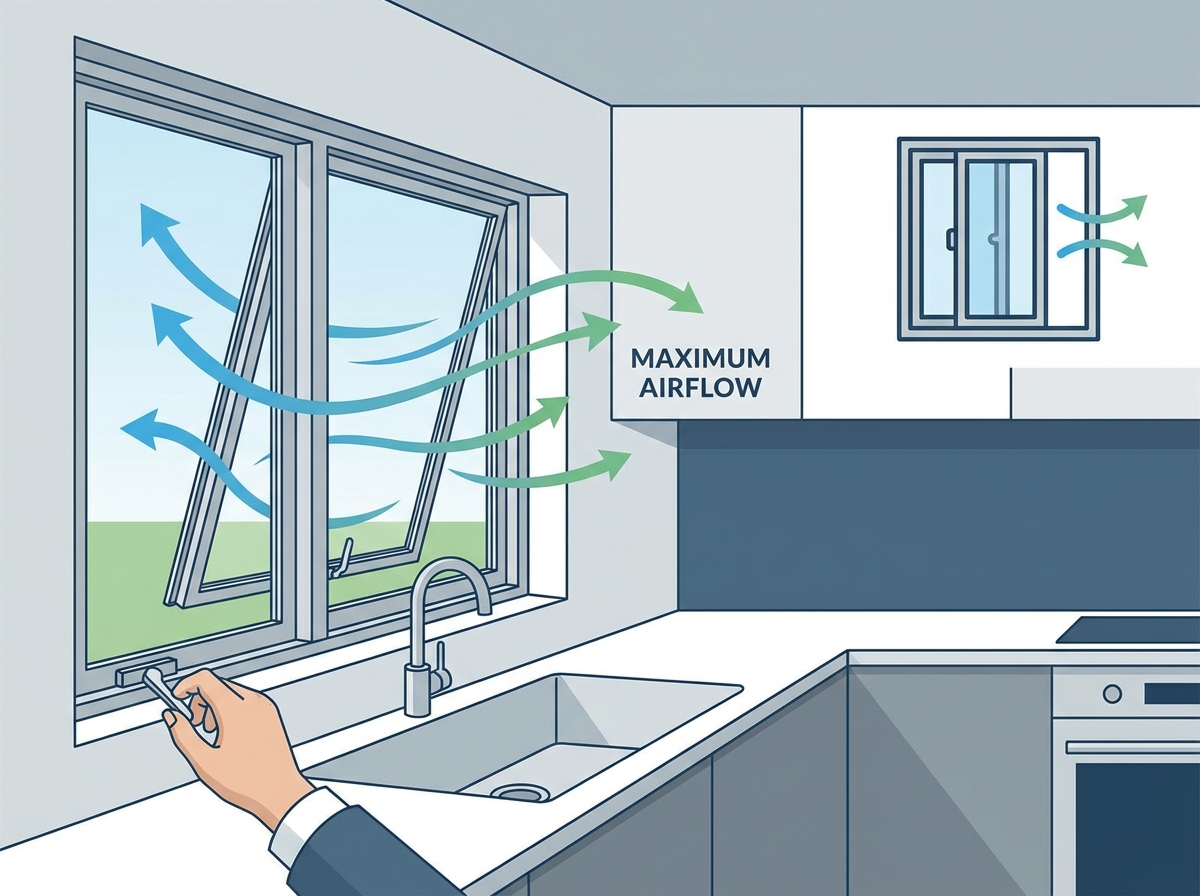
The most substantial advantage of an aluminum casement window in terms of airflow is its fully opening sash. Because the sash swings outward on its side hinges, the entire window area can be opened to the outdoors. This means that a casement window provides nearly 100% ventilation capacity relative to its size. When fully extended, there are no overlapping sashes or fixed panels obstructing the passage of air, allowing for rapid and efficient air exchange within the room.
Beyond simply offering a larger opening, the mechanics of the outward-swinging sash actively enhance ventilation. When the sash is open at an angle, it acts as a structural flap or sail that extends beyond the exterior wall of the building. In this position, the sash can catch breezes that are moving parallel to the side of the house and funnel them directly into the interior space. This "breeze-catching" ability is unique to casement and awning windows and is incredibly effective at promoting cross-ventilation, even on days when the wind is not blowing directly toward the window opening.
Sliding windows, by their very design, are inherently limited in their ventilation capacity. Because the operable sash must slide over the fixed sash, only half of the total window area can be opened at any given time. For example, if you have a sliding window that is four feet wide, the maximum opening you can achieve is only two feet wide. This 50% reduction in potential airflow significantly limits the window's ability to quickly ventilate a room compared to a casement window of the exact same overall dimensions.
Furthermore, sliding windows sit flush with the exterior wall when open. They do not protrude outward and, therefore, cannot catch and redirect passing breezes. Air will only enter a sliding window if the wind is blowing directly into the opening. This passive approach to ventilation makes sliding windows less effective at cooling a home naturally, particularly in areas with variable wind directions or low wind speeds.
While the fundamental design of casement windows offers superior airflow, the specific engineering and materials used in their construction dictate their overall performance, energy efficiency, and durability. DAW Casement Windows represent a premium tier of fenestration, incorporating advanced technologies to ensure optimal functionality in diverse climates.
One of the historical drawbacks of aluminum windows was their high thermal conductivity, which allowed heat to transfer easily between the interior and exterior of a building. Modern engineering has solved this issue through the implementation of thermal break technology. A thermal break casement window is constructed with a non-conductive material—typically a specialized polyamide strut—placed between the interior and exterior aluminum profiles. This thermal barrier effectively interrupts the transfer of heat and cold, drastically improving the window's insulation properties.
The use of heavy-duty 6063-T5 Thermal Break Aluminum Alloy ensures that these windows are not only highly energy-efficient but also exceptionally robust. This structural integrity is vital for supporting the weight of advanced glazing options without compromising the smooth operation of the hinges or the alignment of the sash. The strength of the aluminum also allows for larger window dimensions, providing expansive views and even greater ventilation potential without the risk of the frame bowing or flexing under wind pressure.
A window's ability to ventilate is only valuable if it can also effectively seal out the elements when closed. Casement windows excel in this regard due to their operational mechanics. When a casement window is closed and locked, the sash is pulled tightly against the frame. DAW Casement Windows utilize a compression seal mechanism combined with triple-seal EPDM gaskets. EPDM (Ethylene Propylene Diene Monomer) is a highly durable synthetic rubber that resists weathering, ozone, and UV exposure. The triple-seal design creates an airtight and weather-resistant barrier that prevents drafts, water infiltration, and energy loss.
This tight compression seal also contributes significantly to the window's acoustic performance. By eliminating gaps where air—and therefore sound waves—can penetrate, these windows provide excellent sound insulation. With STC (Sound Transmission Class) ratings up to 40-45 dB, they are highly effective at blocking exterior noise, making them an ideal choice for homes located in busy urban environments or near major roadways.
The unique operational characteristics of casement windows make them particularly well-suited for specific areas within a home. Understanding these ideal use cases can help homeowners maximize the benefits of their window investments.
Rooms that generate high levels of moisture, odors, or heat—such as kitchens and bathrooms—require efficient ventilation to maintain indoor air quality and prevent mold growth. The fully opening sash of a casement window provides the rapid air exchange necessary for these spaces. Additionally, the operational hardware makes them incredibly convenient for hard-to-reach areas.
For example, windows installed above kitchen sinks or deep countertops can be difficult to open if they require lifting a heavy sash or sliding a panel horizontally. A crank casement window solves this problem entirely. Equipped with smooth-operating crank handles, these windows can be easily opened and closed with one hand, even in tight spaces or when reaching over obstacles. This ergonomic advantage ensures that homeowners can effortlessly control ventilation exactly where it is needed most.
In living rooms and bedrooms, the primary goals are often maximizing natural light and enjoying unobstructed views of the outdoors. Because casement windows are designed without a center meeting rail, they offer a clear, expansive view that sliding or double-hung windows cannot match. Whether configured as a single casement, a double/French casement (where two sashes open outward from the center without a central mullion), or a push-out casement, these windows create a seamless visual connection to the exterior landscape while still providing the option for maximum ventilation when desired.
Modern architectural design demands flexibility, and premium window systems must offer a wide range of customization options to suit various aesthetic preferences and functional requirements. A custom casement window allows builders and homeowners to tailor every aspect of the unit to their specific project needs.
The visual impact of a window frame is a critical component of a building's exterior and interior design. DAW Casement Windows are available in a variety of standard color options, including Matte Black, Anthracite Grey, and Classic White. For projects requiring specific color matching, custom RAL colors can be applied. Furthermore, for those who desire the structural benefits of aluminum but prefer the traditional look of timber, wood grain finishes are available. These finishes are applied using advanced heat-transfer technology, creating a highly durable and realistic wood appearance that requires a fraction of the maintenance associated with actual wood frames.
The glass package is arguably the most important component of any window regarding energy efficiency. These casement windows offer extensive glass options, including double or triple glazing. To further enhance thermal performance, the glass can be treated with Low-E (low-emissivity) coatings to reflect heat, filled with Argon gas to reduce thermal transfer, and tempered for increased safety and durability.
Aesthetically, the windows can be customized with various grille options. Whether a project calls for internal grilles suspended between the panes of glass for easy cleaning, or external grilles that provide a more traditional divided-light appearance, the options are extensive. Grille patterns can be configured in classic Colonial styles, elegant Prairie designs, or entirely custom geometric patterns to match the architectural vernacular of the home.
When maximizing airflow, it is essential to keep insects and debris out of the living space. These windows offer integrated screen options designed to complement the window's operation. Homeowners can choose between standard fiberglass mesh screens for general insect protection or stainless steel security mesh for added durability and peace of mind. Because the window sash swings outward, the screens are typically installed on the interior of the frame, keeping them protected from the exterior elements and ensuring they remain clean and functional for years to come.
Beyond ventilation and aesthetics, the security and reliability of a window system are paramount concerns. Casement windows are inherently difficult to breach from the outside because the sash is pulled tight against the frame and the locking hardware is entirely internal. To maximize this natural security advantage, these windows are equipped with a multi-point security locking system. When the locking lever is engaged, the sash is secured to the frame at multiple points simultaneously, providing exceptional resistance against forced entry and ensuring the compression seal is perfectly tight.
The quality and performance of these window systems are validated by rigorous testing and adherence to international manufacturing standards. They hold several key certifications that attest to their reliability. The AS2047 certification ensures compliance with strict Australian standards for window performance, including structural deflection, operating force, air infiltration, and water penetration resistance. The CE mark indicates conformity with health, safety, and environmental protection standards for products sold within the European Economic Area. Furthermore, NFRC (National Fenestration Rating Council) certification provides verified ratings for energy performance, while ISO9001 certification guarantees that the manufacturing processes adhere to internationally recognized quality management systems.
DAW Casement Windows represent a superior architectural solution for spaces where maximum ventilation, unobstructed views, and robust weather resistance are required. By utilizing heavy-duty thermal break aluminum, advanced compression sealing, and a fully opening sash design, these windows dramatically outperform traditional sliding alternatives in airflow management and energy efficiency. With extensive customization options ranging from specialized glazing and integrated screens to versatile hardware and finishes, they offer practical value for kitchens, bathrooms, and expansive living areas alike, making them an ideal investment for homeowners and builders focused on long-term performance, indoor comfort, and modern aesthetic appeal.


