
Views: 0 Author: Site Editor Publish Time: 2026-08-21 Origin: Site


When homeowners and architects set out to design the perfect transition between indoor and outdoor living spaces, the choice of patio doors becomes a defining architectural decision. Among the most popular and premium options available today, aluminum bifold doors stand out as a transformative design element. Deciding between bifold configurations and traditional sliding doors requires a deep understanding of how each system operates, the structural benefits they offer, and how they integrate into modern home designs. Both styles offer expansive glass panels and natural light, but their mechanics, aesthetic impact, and functional capabilities differ significantly. This comprehensive guide explores the nuances of these door systems, focusing on the specific engineering, energy efficiency, and design flexibility that make bifold systems a compelling choice for contemporary renovations and new construction projects.
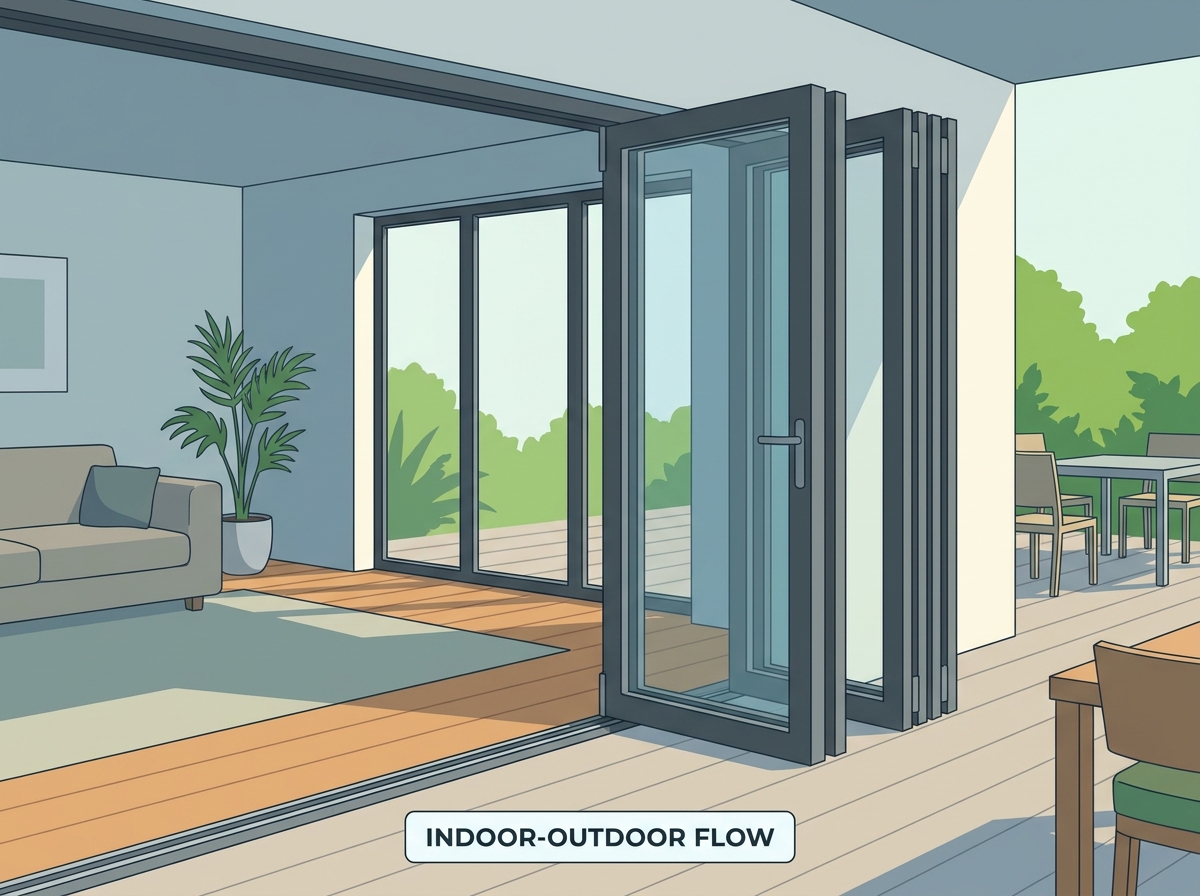
The architectural landscape has shifted heavily toward open-concept designs that blur the boundaries between the interior of a home and the natural environment outside. In this context, the doors you choose are not merely functional barriers; they are dynamic walls that can be manipulated to redefine the living space. Traditional sliding doors operate on a track system where one or more panels glide past each other, overlapping to create an opening. While this design is space-efficient and widely used, it inherently limits the maximum clear opening width to a fraction of the total door span. In contrast, bifold systems are engineered to fold back in an accordion-like fashion, stacking neatly against the wall to reveal an unobstructed, grand opening that can span impressive widths. Understanding these fundamental mechanical differences is the first step in evaluating which system aligns with your spatial requirements and lifestyle aspirations.
The comparison between bifold and sliding door systems extends far beyond their opening mechanisms. It encompasses considerations of thermal performance, security, ease of operation, and visual integration with the home's architecture. Sliding doors are often favored for their simplicity and the fact that they do not require clearance space to swing open or closed. They are a staple in residential construction, providing reliable performance and large, uninterrupted views when closed. However, the overlapping panels mean that the transition space is always partially obstructed. For homeowners seeking to create a true indoor-outdoor living experience, this limitation can be a significant drawback. Bifold systems, on the other hand, are designed specifically to eliminate this barrier, offering a panoramic, barrier-free transition that completely opens up a room to a patio, deck, or garden.
The operational mechanics of bifold systems are a marvel of modern door engineering. Unlike sliding doors that rely on simple inline rollers, bifold doors utilize a complex system of hinges, pivots, and specialized tracks to manage the weight and movement of multiple folding panels. The DAW Aluminum Bifold Door, for example, features a highly engineered bottom-hung rolling system. This design choice is critical for ensuring smooth operation, especially for large-scale installations. By placing the weight-bearing mechanism at the bottom, the system reduces the structural load on the upper header, which can simplify installation and prevent sagging over time. The inclusion of adjustable hinges within this system allows for precise alignment, ensuring that the doors glide effortlessly along the track and fold compactly, even after years of regular use. This level of mechanical sophistication is what enables these doors to span massive openings while remaining easy to operate with minimal physical effort.
Furthermore, the structural integrity required to support expansive glass panels dictates the choice of frame material. Aluminum has emerged as the premier material for these applications due to its exceptional strength-to-weight ratio. It allows for narrower sightlines—the visible frame around the glass—compared to wood or vinyl, maximizing the glass area and the influx of natural light. When comparing bifold and sliding doors, the rigidity of aluminum ensures that the folding panels remain perfectly aligned and secure, resisting the warping or expansion that can plague other materials in fluctuating weather conditions. This structural stability is paramount when dealing with the dynamic forces exerted during the folding and stacking process.
One of the historical challenges with metal-framed doors has been their thermal conductivity. Aluminum is naturally a highly conductive material, which, in the past, made it susceptible to heat loss in the winter and heat gain in the summer. However, modern engineering has completely resolved this issue through the implementation of thermal break technology. The DAW Aluminum Bifold Door utilizes thermally broken aluminum frames, a critical feature that dramatically enhances energy efficiency. A thermal break is a continuous barrier of highly insulating material positioned between the interior and exterior aluminum profiles. This barrier effectively interrupts the conductive thermal energy transfer through the frame, preventing the cold outside air from chilling the interior frame and vice versa. This technology not only improves the overall insulation of the home but also prevents condensation from forming on the interior surfaces of the doors during cold weather.
The thermal performance of a door system is a combination of its frame and its glazing. In large-format doors, the glass constitutes the vast majority of the surface area, making the choice of glazing absolutely critical for energy conservation. The DAW system comes standard with double-pane Low-E (low-emissivity) tempered glass filled with argon gas. Low-E coatings are microscopically thin, transparent layers of metal or metallic oxide applied to the glass surface. These coatings are designed to reflect radiant heat while allowing visible light to pass through. In the summer, the coating reflects the sun's heat away from the home, and in the winter, it reflects the interior heat back into the room. The addition of argon gas—a dense, inert gas—between the glass panes further reduces heat transfer compared to standard air. This combination of thermally broken frames and advanced glazing results in exceptional energy metrics, specifically a U-Factor of ≤ 0.29 and a Solar Heat Gain Coefficient (SHGC) of ≤ 0.23, ensuring that the doors meet stringent energy codes, including Title-24 standards.
Beyond standard double-pane configurations, the versatility of these systems allows for significant customization to meet specific environmental or aesthetic needs. For extreme climates or areas requiring enhanced acoustic insulation, triple-pane glass options are available. Homeowners can also opt for laminated glass, which provides superior impact resistance and sound reduction, making it an excellent choice for homes in severe weather zones or noisy urban environments. Additionally, tinted and frosted glass options are available for those who require enhanced privacy or specific light control without sacrificing the expansive feel of folding glass doors. This level of customization ensures that the door system can be tailored to the precise requirements of any architectural project.
When installing expansive glass doors, security is a paramount concern for any homeowner. The sheer size of the opening necessitates a robust locking mechanism that can secure multiple panels simultaneously. Traditional sliding doors typically rely on a single latch mechanism, which can sometimes be vulnerable to forced entry if not properly reinforced. Bifold systems address this concern through advanced, multi-point locking technology. The DAW Aluminum Bifold Door features a concealed 3-point multi-point locking system. When the handle is engaged, the system simultaneously deploys heavy-duty locking bolts at three distinct points along the frame—typically at the top, bottom, and center. This distributes the locking force across the entire height of the door, providing exceptional security and ensuring a tight, weatherproof seal against the frame.
The aesthetic appeal of modern architectural doors lies in their ability to blend seamlessly into the surrounding design while providing high-performance functionality. To achieve a clean, uncluttered look, the hardware must be as carefully considered as the frame and glass. The DAW system utilizes flush handles and hidden hinges to maintain a minimalist aesthetic. By concealing the hinges within the frame profile and utilizing handles that sit flush against the door surface, the visual interruptions are minimized, allowing the focus to remain on the expansive views and the sleek aluminum profiles. This attention to detail is crucial for contemporary designs where clean lines and unobtrusive hardware are highly valued.
To further integrate the doors into the home's interior and exterior palettes, a range of finish options is available. The aluminum frames are treated with a durable powder-coated paint finish, which provides superior resistance to scratching, chipping, and fading compared to traditional liquid paint. The frames are available in classic black and white, offering striking contrast or seamless blending depending on the architectural style. Complementing the frames, the hardware finishes can be selected in stainless steel, bronze, or black, allowing for precise coordination with other fixtures and design elements throughout the home. This comprehensive approach to aesthetics ensures that the doors enhance the overall visual harmony of the living space.
The primary architectural advantage of bifold systems is their unparalleled ability to open up a space. While sliding doors offer large glass areas, they can only open as wide as the overlapping panels allow—typically half or two-thirds of the total opening width. Bifold doors, however, are designed to fold and stack neatly to one or both sides, revealing up to 90% of the total opening. This capability transforms the relationship between indoor and outdoor environments. When fully opened, the boundary between the living room and the patio dissolves, creating a single, expansive entertainment area. This is particularly beneficial for homes that frequently host gatherings or for those situated in climates that encourage outdoor living for significant portions of the year.
The scalability of bifold systems is another significant advantage. They can be engineered to fit a wide range of opening sizes, from standard patio door replacements to massive architectural features. The DAW Aluminum Bifold Door can be configured to accommodate maximum sizes up to 10 feet tall and 30 feet wide. This extraordinary scale allows architects and builders to design truly grand openings that flood interior spaces with natural light and provide breathtaking, uninterrupted views of the surrounding landscape. Whether designing a modern coastal retreat or a sophisticated urban loft, the ability to specify custom patio doors of this magnitude provides immense creative freedom and structural flexibility.
The weather sealing of these massive openings is handled with meticulous precision. To ensure that the doors perform flawlessly in adverse weather conditions, they are equipped with full-perimeter weather stripping. This continuous seal prevents drafts, water infiltration, and dust from entering the home when the doors are closed. The combination of the multi-point locking system, the thermally broken frames, and the comprehensive weather stripping creates a highly resilient barrier against the elements, ensuring that the comfort of the interior space is maintained regardless of the weather outside.
The installation of large-format architectural doors is a critical process that requires precision and expertise. Because bifold systems rely on a complex interplay of tracks, hinges, and heavy glass panels, the frame must be installed perfectly plumb, level, and square. Any deviation can result in operational issues, uneven sightlines, or compromised weather sealing. For this reason, professional installation services are highly recommended and readily available. Professional installers possess the specialized tools and experience necessary to handle the heavy panels, precisely measure and fit the frames, and make the minute adjustments required for smooth, effortless operation.
However, for experienced builders or highly skilled homeowners, a DIY Installation Kit is available as an optional package. This kit includes essential components such as installation flanges, J moldings, and high-quality silicone sealant, providing the necessary materials to properly integrate the door frame into the building envelope. While undertaking a DIY installation for doors of this scale requires careful planning and a thorough understanding of structural framing and waterproofing techniques, the availability of a comprehensive kit ensures that the correct materials are utilized for a secure and watertight fit.
Maintenance for premium aluminum bifold doors is remarkably straightforward, contributing to their long-term value. Unlike wood doors that require regular sanding, staining, or painting to protect against rot and weather damage, powder-coated aluminum is virtually maintenance-free. Routine care simply involves cleaning the glass with standard glass cleaners and wiping down the aluminum frames with a mild soap and water solution. It is also important to periodically inspect and clean the bottom track to ensure that debris does not impede the rolling mechanism. The adjustable hinges allow for minor tweaks over time if the building settles, ensuring that the doors continue to operate perfectly for decades. Supported by a comprehensive 10-Year Warranty, these door systems represent a secure, long-term investment in the home's infrastructure and aesthetic appeal.
The DAW Aluminum Bifold Door represents a premium architectural solution for homeowners seeking to seamlessly merge their indoor and outdoor living spaces. By combining thermally broken aluminum frames, advanced Low-E argon-filled glass, and a sophisticated bottom-hung rolling system, these doors deliver exceptional energy efficiency, smooth operation, and robust security through a concealed 3-point locking mechanism. With the ability to span grand openings up to 10 feet tall and 30 feet wide, and offering extensive customization in glass types and minimalist hardware finishes, they provide unparalleled design flexibility. Backed by Title-24 compliance and a 10-year warranty, this bifold system is an ideal, high-performance upgrade for modern patios and expansive architectural projects.


