
Views: 0 Author: Site Editor Publish Time: 2026-08-22 Origin: Site


When homeowners and architects begin the process of designing the perfect indoor-outdoor transition for a residential or commercial space, the choice of fenestration becomes one of the most critical decisions in the entire project. Among the myriad of options available on the modern market, the decision frequently narrows down to a comparison between an aluminum bifold door and a traditional sliding door system. Both options offer unique advantages, distinct operational mechanics, and specific aesthetic profiles that can dramatically alter the feel, functionality, and energy efficiency of a living environment. Understanding the nuanced differences between these two popular door systems is essential for making an informed decision that aligns with your specific architectural goals, spatial constraints, and performance requirements. The aluminum bifold door, in particular, has seen a massive surge in popularity due to its ability to completely open up a wall, merging interior living spaces with exterior patios, decks, or gardens in a way that traditional sliding doors simply cannot match. This comprehensive analysis will explore the structural, functional, and aesthetic differences between these systems, providing a detailed framework for evaluating which option is best suited for your next renovation or construction project.
The history of patio doors is a fascinating journey through architectural innovation and material science. Decades ago, the standard for connecting a home's interior to its backyard was a simple, often drafty, wooden or early-generation vinyl sliding door. These early iterations, while revolutionary at the time for their ability to let in natural light, were plagued by operational issues, poor thermal performance, and limited opening capacities. As architectural tastes evolved toward more open floor plans and a desire for stronger connections with nature, the demand for more expansive and reliable door systems grew. This demand spurred significant advancements in both the materials used and the mechanical systems employed to operate these large expanses of glass.
The introduction of aluminum as a primary framing material marked a turning point in the industry. Aluminum offered unparalleled strength-to-weight ratios, allowing for narrower sightlines and larger panes of glass without compromising structural integrity. However, early aluminum doors suffered from poor energy efficiency due to the material's high thermal conductivity. The development of the thermal break—a non-conductive barrier placed between the interior and exterior halves of the aluminum frame—solved this critical issue, paving the way for the high-performance aluminum bifold doors we see today. These modern systems not only provide exceptional durability and sleek aesthetics but also meet stringent energy codes, making them a viable option for a wide range of climates and architectural styles.
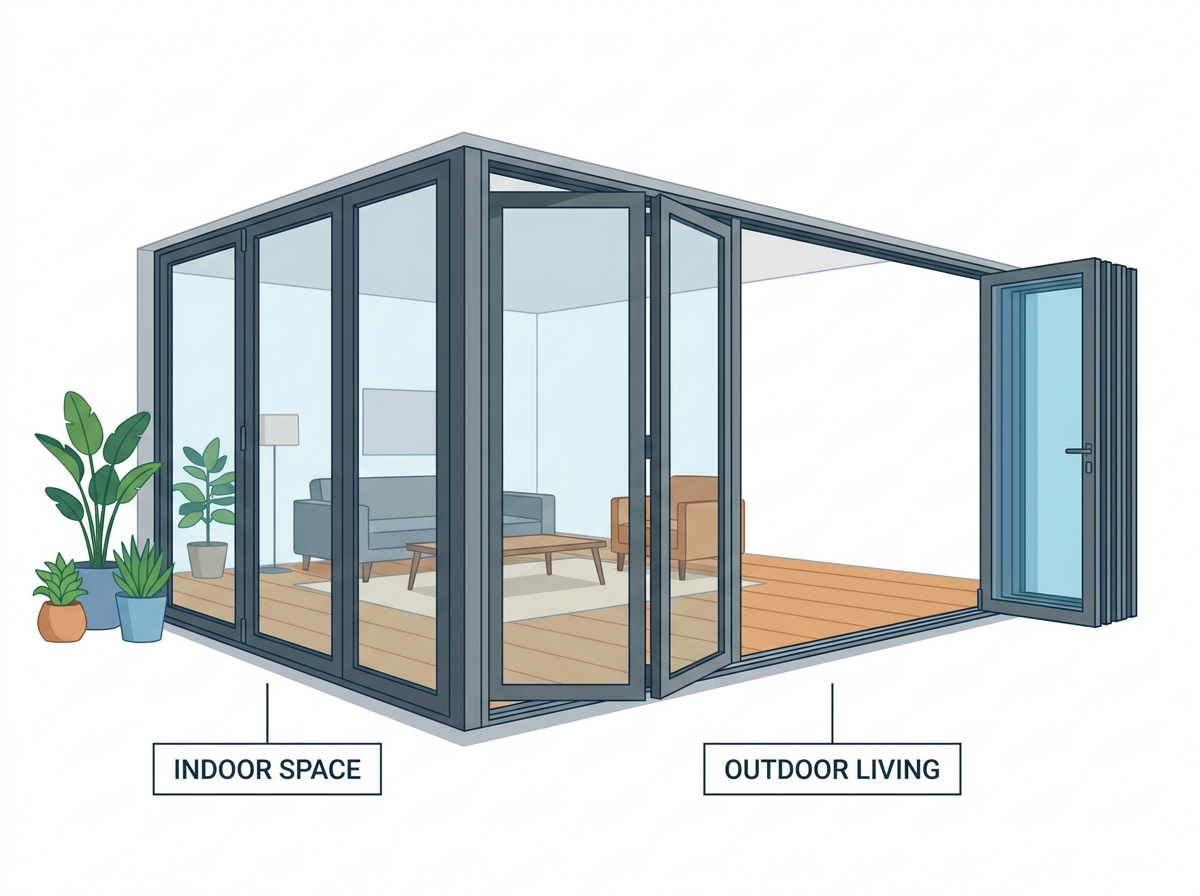
While sliding doors have also benefited from these material advancements, their fundamental operational mechanism remains largely the same. A sliding door typically consists of two or more large panels, where at least one panel slides horizontally past a fixed panel on a track. This design inherently limits the maximum clear opening to a fraction of the total door width—usually around fifty percent for a standard two-panel slider. In contrast, an aluminum bifold door operates on a folding mechanism, where multiple panels are hinged together and fold away to one or both sides, creating an almost completely unobstructed opening that can span impressive widths. This fundamental difference in operation is the primary driver behind the growing preference for bifold systems in luxury and contemporary home designs.
To truly appreciate the advantages and potential drawbacks of an aluminum bifold door, it is necessary to understand the complex mechanics that allow these massive systems to operate smoothly and reliably. Unlike a simple hinged door or a basic slider, a bifold system relies on a sophisticated interplay of tracks, rollers, hinges, and locking mechanisms. The weight of the glass panels, which can be substantial, must be perfectly balanced and supported to ensure effortless operation over the lifespan of the door.
One of the most critical components of any bifold system is the rolling mechanism. The DAW Aluminum Bifold Door, for example, utilizes a bottom-hung rolling system. In a bottom-hung configuration, the primary weight of the door panels is supported by the bottom track, with the top track serving primarily as a guide to keep the panels aligned. This approach has several distinct advantages, particularly in retrofit applications or in structures where the overhead header may not be engineered to carry the immense hanging weight of top-hung systems. By transferring the load to the floor, bottom-hung systems often simplify installation and reduce the structural requirements of the surrounding framing.
Furthermore, the DAW system incorporates adjustable hinges alongside its bottom-hung rolling system. This adjustability is crucial for accommodating minor settling in the building structure over time or slight imperfections in the initial installation. The ability to fine-tune the alignment of the panels ensures that the door continues to operate smoothly, maintains a tight weather seal, and allows the locking mechanisms to engage correctly without undue force. The combination of a robust bottom-hung roller and adjustable hinges is a hallmark of a well-engineered bifold system designed for long-term reliability.
The smooth operation of these doors is not merely a matter of convenience; it is a safety and longevity issue. If a bifold door requires excessive force to open or close, it places undue stress on the hinges, the track, and the frame itself, potentially leading to premature wear and failure. Therefore, the engineering behind the rolling system is a primary differentiator between entry-level products and premium architectural solutions.
When evaluating an aluminum bifold door versus a sliding door, the most immediate and obvious difference lies in how they utilize space and the size of the clear opening they provide. This distinction is often the deciding factor for homeowners and architects aiming to create a specific spatial experience.
Sliding doors are incredibly space-efficient in terms of their operational footprint. Because the panels slide parallel to the wall, they do not require any clearance space inward or outward to open. This makes them an excellent choice for tight spaces, such as small balconies, crowded patios, or rooms where furniture must be placed close to the door. However, as previously mentioned, this space efficiency comes at the cost of the opening capacity. A standard sliding door will always leave a significant portion of the doorway blocked by the fixed panels, limiting the physical connection between the indoor and outdoor environments.
Conversely, an aluminum bifold door is designed to maximize the clear opening. When fully opened, the panels fold neatly and stack against the wall, creating an expansive, unobstructed passageway. The DAW Aluminum Bifold Door can be configured to accommodate maximum sizes of up to 10 ft. tall and 30 ft. wide, allowing for truly monumental openings that completely transform the relationship between a home's interior and its exterior surroundings. This capability is ideal for entertaining, allowing large groups of people to move freely between spaces, and for maximizing natural ventilation.
However, it is important to consider the stacking space required by a bifold door. When the panels are folded open, they protrude either inward or outward, depending on the specific configuration chosen. This stacked bundle of panels requires dedicated space, which must be factored into the overall design of the room or patio. If space is severely limited, the stacking requirement of a bifold door might pose a logistical challenge, whereas a sliding door would present no such issue. Therefore, the choice between the two systems requires a careful balancing of the desire for a massive clear opening against the practical constraints of the available floor space.
In contemporary construction and renovation, energy efficiency is no longer an optional upgrade; it is a fundamental requirement driven by building codes, environmental consciousness, and the desire to reduce long-term utility costs. Both aluminum bifold doors and sliding doors must meet rigorous thermal performance standards to be considered viable options for modern homes.
Aluminum, by its very nature, is an excellent conductor of heat and cold. Without intervention, an aluminum door frame would act as a thermal bridge, drawing heat out of the home during the winter and allowing unwanted heat to enter during the summer. To combat this, high-quality aluminum doors incorporate a thermal break. The DAW Aluminum Bifold Door features thermally broken aluminum frames specifically designed to reduce heat transfer. This thermal break typically consists of a reinforced polyamide strut that separates the interior and exterior aluminum extrusions, effectively interrupting the conductive pathway.
Beyond the frame, the glazing (glass) plays a massive role in the overall energy efficiency of the door system. The DAW Aluminum Bifold Door comes standard with double-pane Low-E tempered glass filled with argon gas. The Low-E (low-emissivity) coating reflects radiant heat, helping to keep the interior comfortable regardless of the exterior temperature, while the argon gas between the panes provides an additional layer of insulation compared to standard air. For projects requiring even higher performance, glass customization options such as triple-pane, laminated, impact-rated, tinted, and frosted glass are available.
The combination of a thermally broken frame and advanced glazing allows the DAW Aluminum Bifold Door to achieve impressive energy efficiency metrics, specifically a U-Factor of ≤ 0.29 and a Solar Heat Gain Coefficient (SHGC) of ≤ 0.23. These specifications indicate a high level of resistance to heat flow and solar radiation, ensuring that the expansive glass areas do not compromise the home's thermal envelope. Furthermore, these performance characteristics enable the door to meet stringent Title-24 standards, which are critical for compliance in many energy-conscious jurisdictions.
Sliding doors also utilize thermal breaks and advanced glazing to achieve similar energy ratings. However, the weather sealing mechanisms between the two types of doors differ significantly. Sliding doors rely on interlocking weather stripping where the panels overlap, which can sometimes be a weak point for air infiltration if not perfectly aligned. Bifold doors, on the other hand, compress their weather seals when closed and locked. The DAW Aluminum Bifold Door is equipped with full-perimeter weather stripping for robust weather sealing, ensuring a tight, draft-free closure when the system is fully engaged.
Security is a paramount concern for any exterior door, and large expanses of glass naturally raise questions about vulnerability. Both bifold and sliding doors incorporate sophisticated locking mechanisms to ensure the safety of the home's occupants and possessions.
Traditional sliding doors often rely on a single-point latch mechanism, which, historically, could be bypassed with relative ease. Modern sliding doors have improved significantly, often incorporating multi-point locks and anti-lift devices to prevent the panels from being removed from their tracks from the outside. However, the structural nature of sliding panels can sometimes present security challenges that require specialized hardware to overcome.
Bifold doors, due to their hinged design and the way they interlock when closed, offer inherently strong security profiles. The DAW Aluminum Bifold Door includes a concealed 3-point multi-point locking system. This means that when the primary handle is engaged, the door locks at three separate points along the frame simultaneously, distributing the locking force and making it exceptionally difficult to force the door open. The concealed nature of the locking system not only enhances security by protecting the mechanism from tampering but also contributes to the clean, uncluttered aesthetic of the door.
The use of tempered glass as a standard feature in the DAW Aluminum Bifold Door further enhances security. Tempered glass is significantly stronger than standard annealed glass and, in the event of breakage, shatters into small, relatively harmless granular chunks rather than large, dangerous shards. For areas prone to severe weather or for homeowners seeking the ultimate in security, the availability of impact-rated and laminated glass options provides an additional layer of protection against forced entry and environmental hazards.
The visual impact of a large patio door cannot be overstated. It is a dominant architectural feature that significantly influences the interior design and the exterior facade of a building. The choice between an aluminum bifold door and a sliding door often comes down to the desired aesthetic and how well the door integrates with the overall design vision.
Sliding doors offer a classic, minimalist look. Because the panels sit completely flush within the frame and slide parallel to one another, they present a clean, uninterrupted expanse of glass when closed. The frames can be remarkably thin, maximizing the viewing area and minimizing the visual intrusion of the door itself. This minimalist aesthetic is highly sought after in ultra-modern and contemporary designs where the goal is to make the barrier between indoors and outdoors as invisible as possible.
Bifold doors, while also capable of achieving very narrow sightlines, introduce a different visual dynamic. The vertical stiles where the panels hinge together create a distinct rhythm across the opening. When closed, an aluminum bifold door presents a more structured, architectural appearance compared to a slider. To enhance this aesthetic, the DAW Aluminum Bifold Door is designed with flush handles and hidden hinges. This commitment to a clean aesthetic ensures that the mechanical components do not detract from the overall beauty of the door, maintaining sleek lines and a sophisticated profile.
Customization is key to ensuring the door perfectly complements the home's design. The DAW Aluminum Bifold Door features a durable powder-coated paint finish, available in standard frame colors of Black and White. These versatile colors suit a wide range of architectural styles, from stark industrial to classic contemporary. To further refine the look, the hardware finishes are available in Stainless Steel, Bronze, and Black, allowing for precise coordination with other fixtures and finishes throughout the home. The ability to customize the glass—whether choosing tinted glass for glare reduction or frosted glass for privacy—adds another layer of design flexibility, ensuring the door meets both aesthetic and functional requirements.
The performance and longevity of any complex door system are heavily dependent on the quality of the installation and the commitment to regular maintenance. The massive size and weight of these doors demand precision engineering and careful handling during the installation process.
Installing a large bifold or sliding door is typically a job for experienced professionals. The framing must be perfectly plumb, level, and square; otherwise, the doors will not operate correctly, the weather seals will fail, and the locking mechanisms will not engage. However, recognizing the growing trend of capable homeowners undertaking significant renovation projects, the DAW Aluminum Bifold Door offers an optional DIY installation kit. This kit includes essential components such as flanges, J moldings, and silicone sealant, providing the necessary materials for a successful installation. Whether the door is installed professionally or via the DIY kit, access to comprehensive technical resources is crucial. DAW provides downloadable spec sheets, installation guides, and AutoCAD files to ensure that architects, builders, and ambitious DIYers have the information they need to execute a flawless installation.
Once installed, the maintenance requirements for aluminum bifold doors and sliding doors are relatively similar and generally minimal. The powder-coated finish on the DAW Aluminum Bifold Door is highly durable and resistant to fading, chipping, and peeling, requiring only occasional cleaning with mild soap and water to maintain its appearance. The tracks, whether bottom-hung for a bifold or the sliding track for a slider, must be kept clear of debris, dirt, and pet hair to ensure smooth operation. The bottom-hung rolling system of the DAW door is designed for durability, but regular inspection and light lubrication of the hinges and rollers will prolong the life of the hardware and maintain effortless functionality.
Long-term reliability is a significant concern when investing in premium fenestration. To provide peace of mind and guarantee the quality of their product, the DAW Aluminum Bifold Door includes a 10-year warranty. This warranty underscores the manufacturer's confidence in the materials, engineering, and construction of the door, assuring homeowners that their investment is protected against defects and premature failure.
The decision between an aluminum bifold door and a sliding door is rarely a simple matter of one being universally better than the other. It is a nuanced choice that depends entirely on the specific requirements of the project, the spatial constraints of the building, and the aesthetic preferences of the homeowner.
If the primary goal is to maximize the clear opening and create an unparalleled, seamless transition between the interior living space and the exterior environment, custom patio doors in a bifold configuration are often the superior choice. The ability of an aluminum bifold door to fold completely out of the way transforms a room, making the patio or deck feel like a natural extension of the indoor living area. This is particularly effective in homes designed for entertaining or in climates where indoor-outdoor living is a significant part of the lifestyle.
However, this expansive opening capability must be weighed against the practical considerations of stacking space. If the patio is small or if interior furniture placement limits the area where the panels can fold and stack, a bifold door may prove cumbersome. In these scenarios, a sliding door, with its zero-clearance operational footprint, might be the more practical solution, even if it means sacrificing a portion of the clear opening.
From an aesthetic standpoint, the choice is highly subjective. The sleek, minimalist lines of a sliding door appeal to certain architectural styles, while the structured, rhythmic appearance of folding glass doors complements others. The DAW Aluminum Bifold Door's commitment to a clean aesthetic, achieved through flush handles and hidden hinges, ensures that it can integrate beautifully into high-end, contemporary designs without looking overly mechanical or cluttered.
Energy efficiency and security are critical factors where both modern bifold and sliding systems excel, provided they are engineered to high standards. The DAW Aluminum Bifold Door's thermally broken frames, Low-E argon-filled glass, and concealed 3-point multi-point locking system demonstrate that you do not have to sacrifice performance or safety to achieve stunning visual results and expansive openings.
Ultimately, the best approach is to carefully evaluate the specific layout of your home, consider how you intend to use the space, and consult with architectural and fenestration professionals. By understanding the mechanical differences, spatial requirements, and performance capabilities of these systems, you can select the door that will elevate your home's design and enhance your living experience for years to come.
The DAW Aluminum Bifold Door presents a highly engineered, aesthetically refined solution for creating seamless indoor-outdoor transitions in spaces ranging from intimate patios to grand architectural openings. By combining thermally broken aluminum frames and energy-efficient double-pane Low-E tempered glass (U-Factor ≤ 0.29, SHGC ≤ 0.23) with a robust bottom-hung rolling system and adjustable hinges, it delivers smooth operation and excellent thermal performance that meets Title-24 standards. Its design prioritizes a clean aesthetic through flush handles, hidden hinges, and powder-coated finishes in Black or White, while ensuring security and weather resistance via a concealed 3-point multi-point locking system and full-perimeter weather stripping. Capable of spanning up to 10 ft. tall and 30 ft. wide, and supported by a 10-year warranty, comprehensive technical resources, and an optional DIY installation kit, this bifold door system offers exceptional practical value and customization flexibility for homeowners, builders, and architects demanding reliable, high-performance fenestration.


